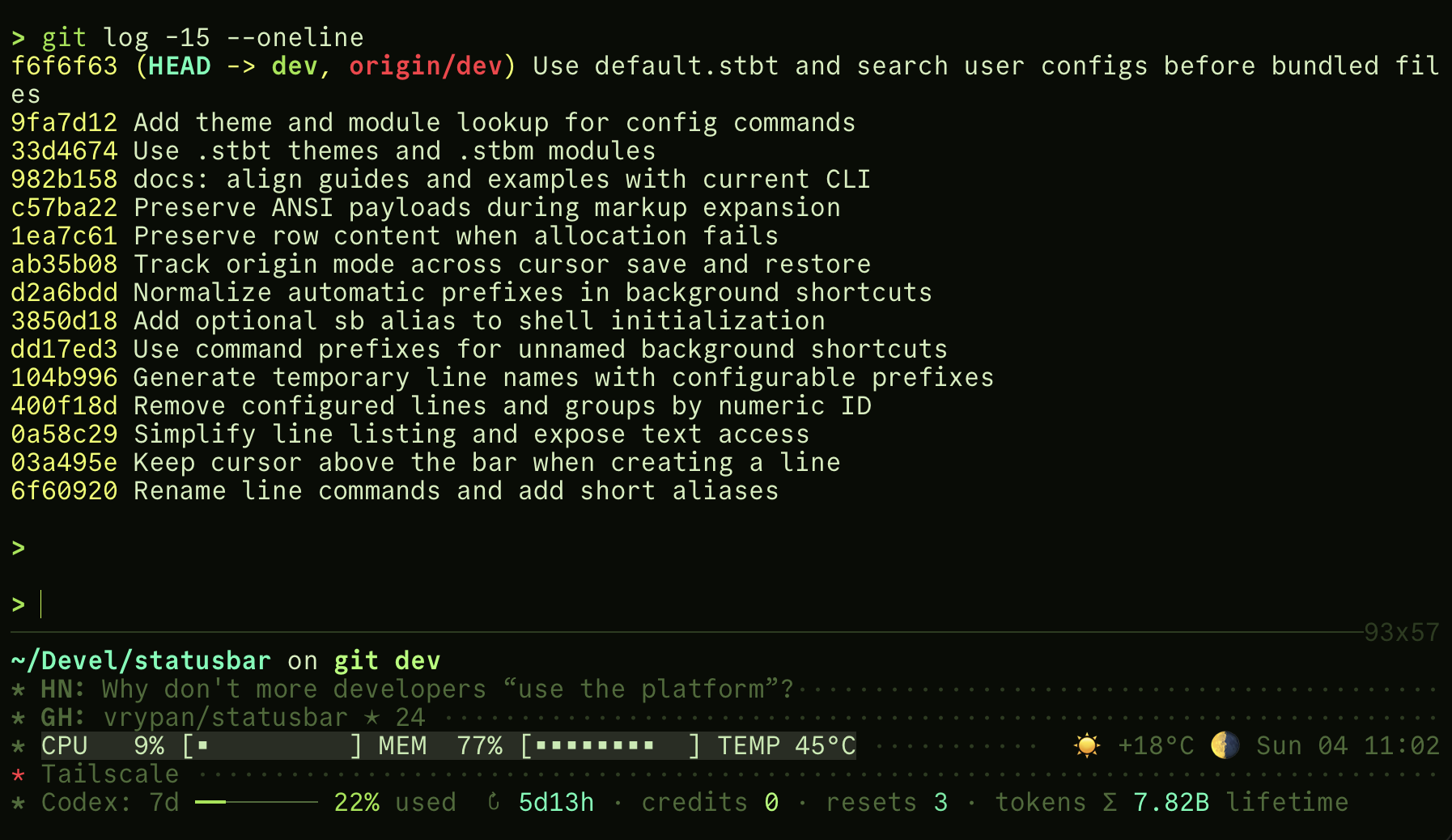
The next statusbar version will be so good.
It will break compatibility with current config files, and the cli shape will change slightly, so I'm taking my time to make sure it won't change again after a couple of weeks.
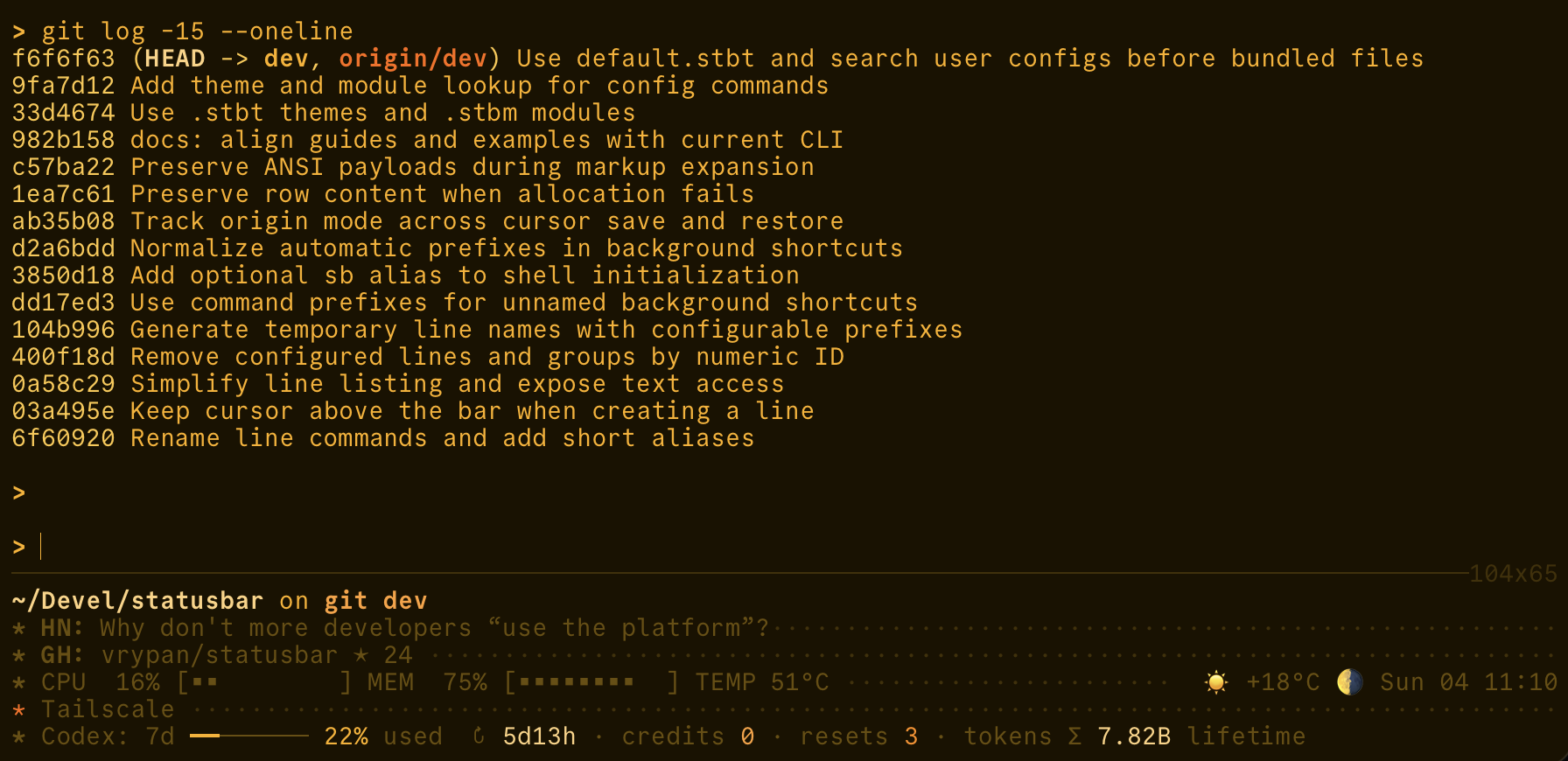
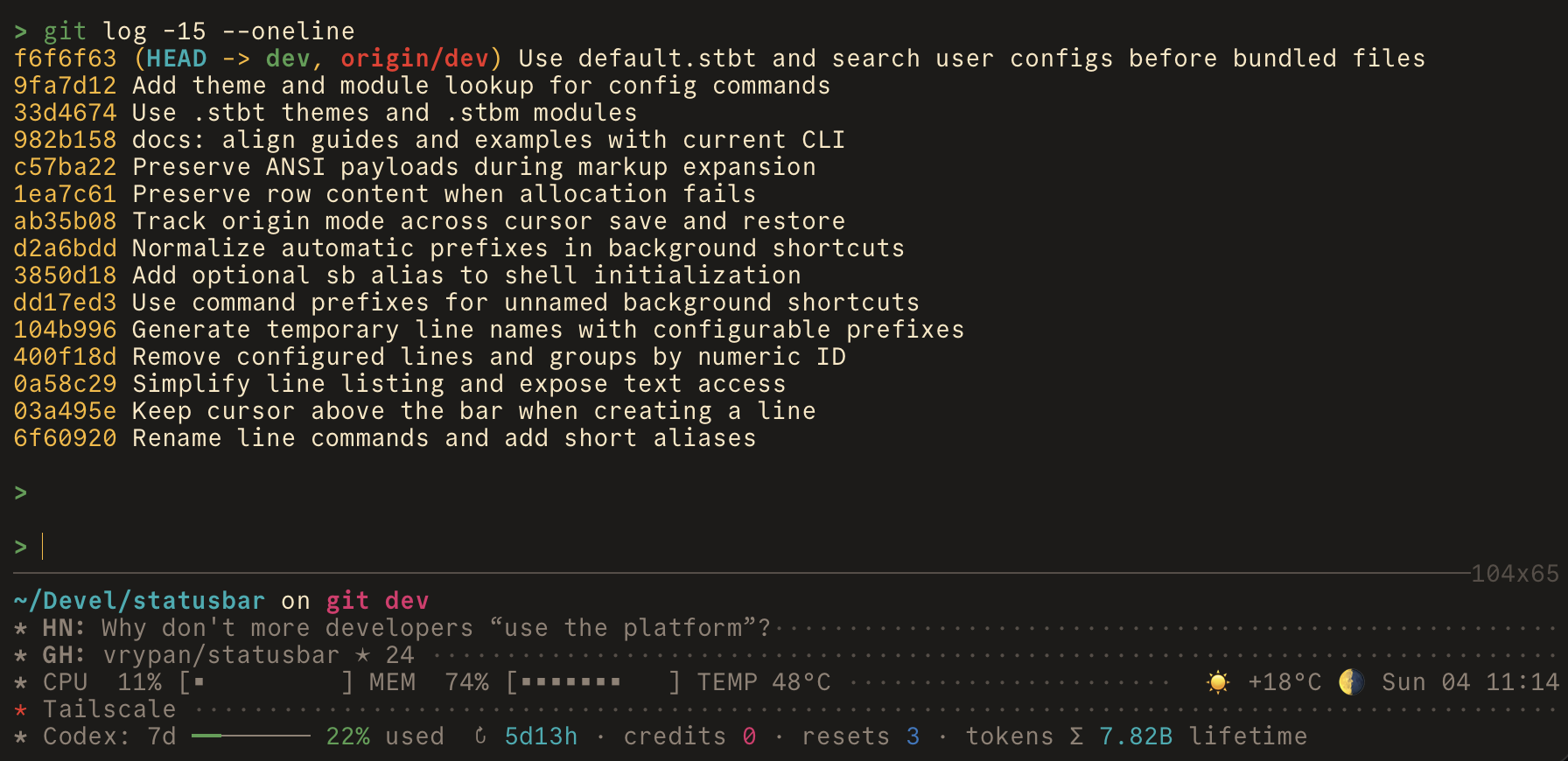
The next statusbar version will be so good.
It will break compatibility with current config files, and the cli shape will change slightly, so I'm taking my time to make sure it won't change again after a couple of weeks.
Small pleasures: A new season of Slow Horses is here.
statusbar v0.3.0 got a nicer help (and other goodies)
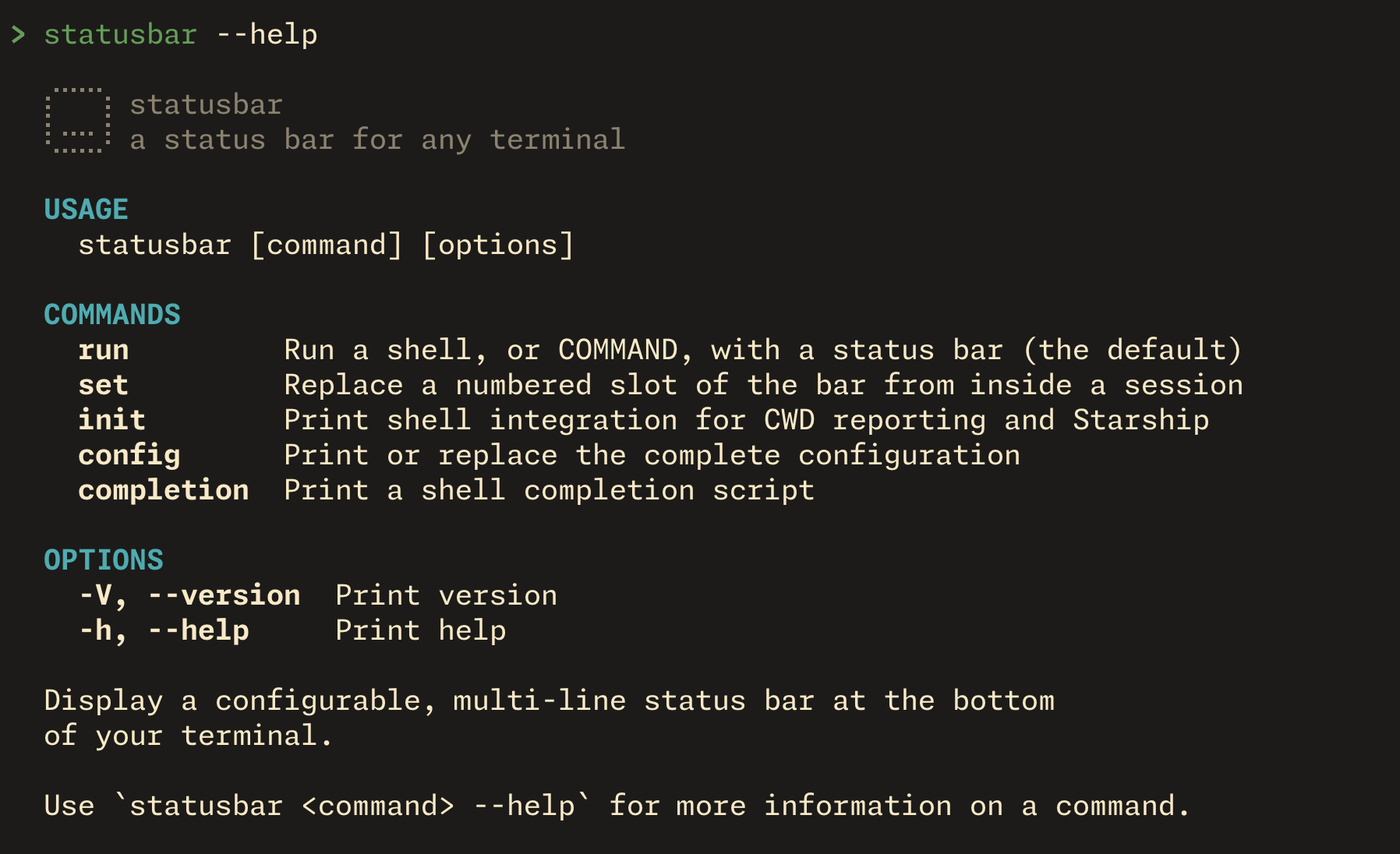
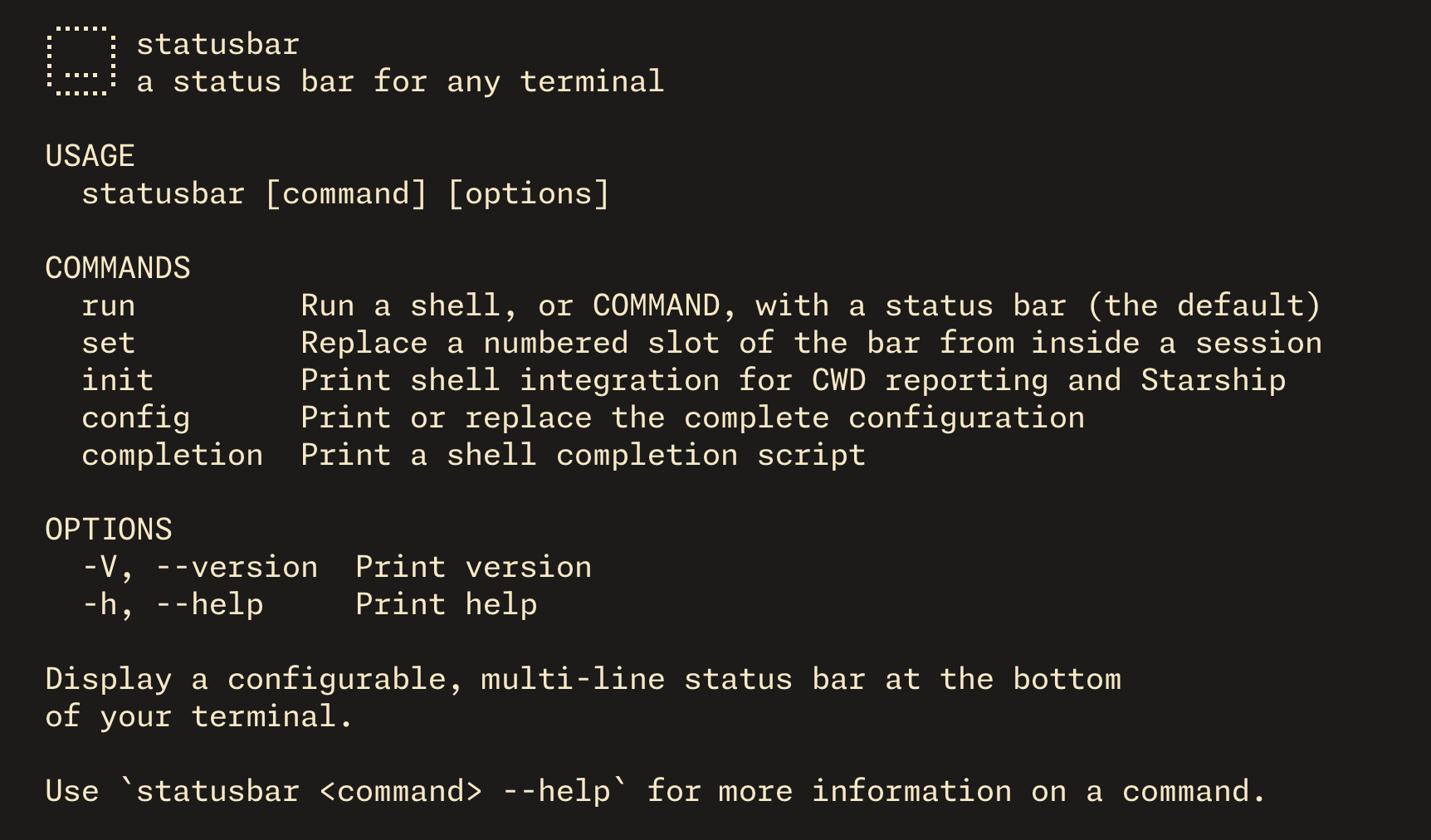
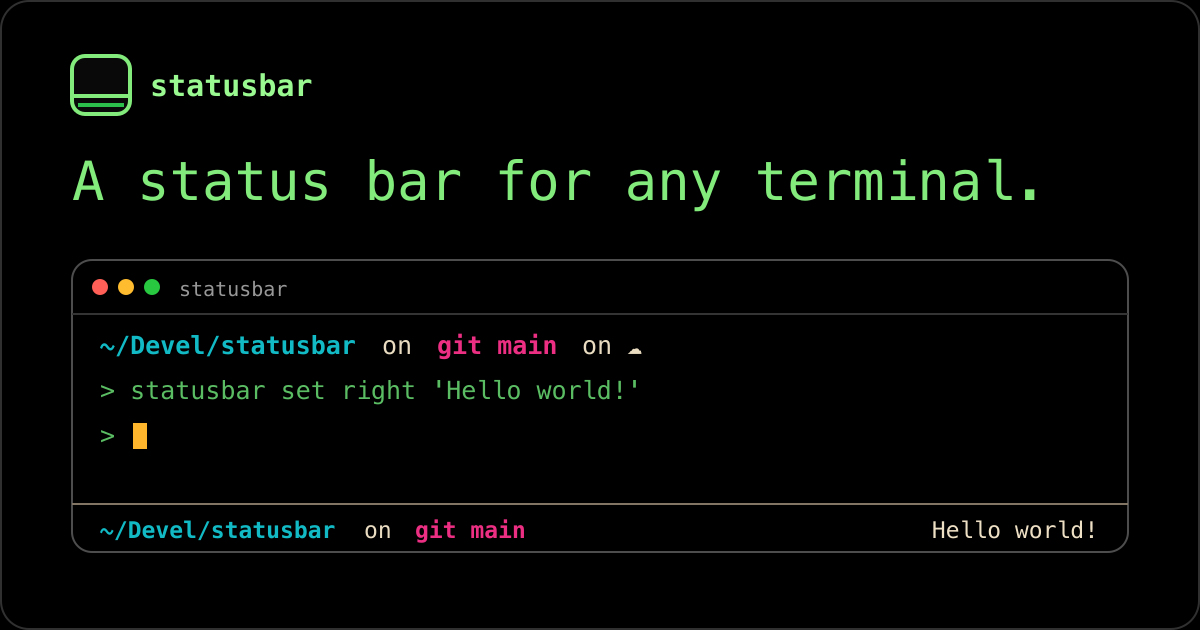
I built statusbar, a status bar for any terminal.
I don't believe anything coming out of frontier model CEOs mouths. Their stakes are extremely high, and they have incentives measured in $ trillions to lie, blow out of proportion, or hide information.
We are in the middle of a misinformation war. Assume everyone is lying.
The future of Linux distros is an agent skill that asks you how you want your distro and builds a NixOS configuration tailored to your needs and preferences.
This was the most boring Apple Event I've watched in decades. Apple has lost its soul. There's no passion, no human element.
Apple Events have become a glorified version of awkward videos commissioned a for a product promo.
Carefully selected words, perfectly articulated. Presented by people I have no emotional connection with. Clinical, soulless.
jbaber built a web version of the sing-song encoder/decoder.

A good programer will produce orders of magnitude better code with AI.
We watched "Murder Building" (Le Crime du 3e Étage) yesterday. With my daughter, at "Chloe", an open-air cinema. Nice moovie, beautiful night, we had a great time.

I don't like slop. I don't care how it was made, even if you created it with your own hands.
I love this.
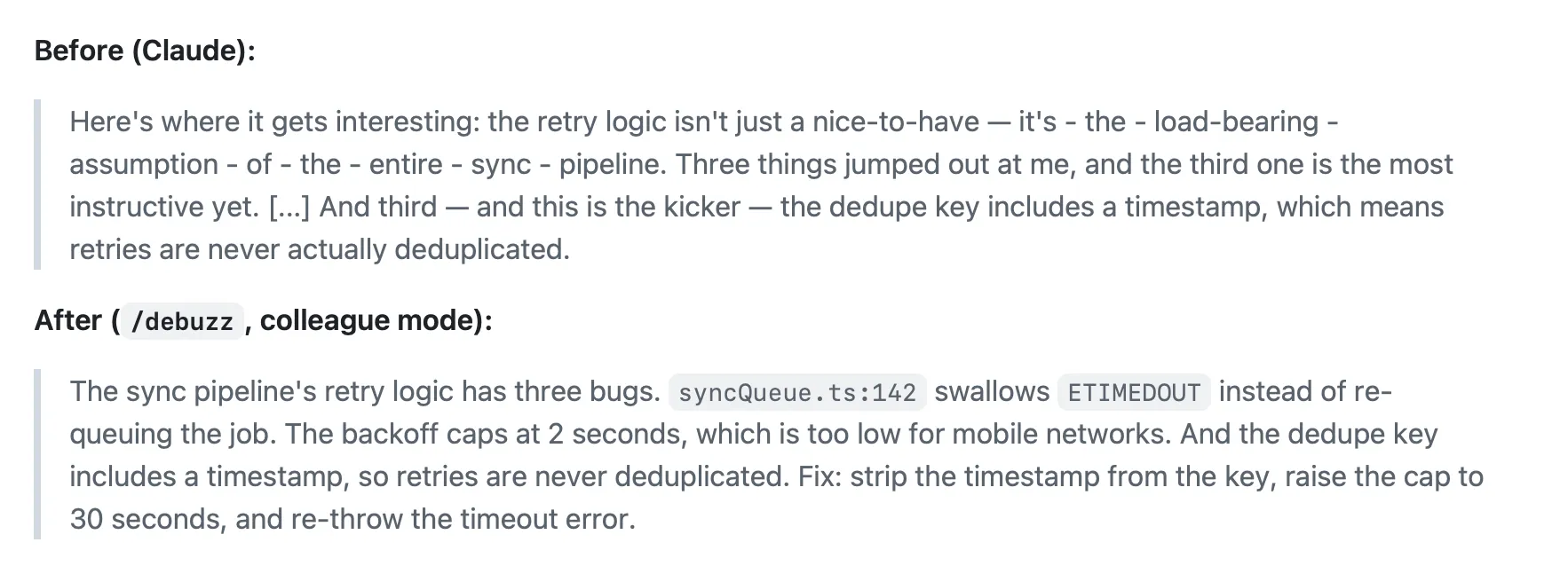
> Claudette is our solution to Claude being a great engineer with one incurable condition: it talks like it's delivering a TED talk about its own pull request. github.com/adnanakil/no...
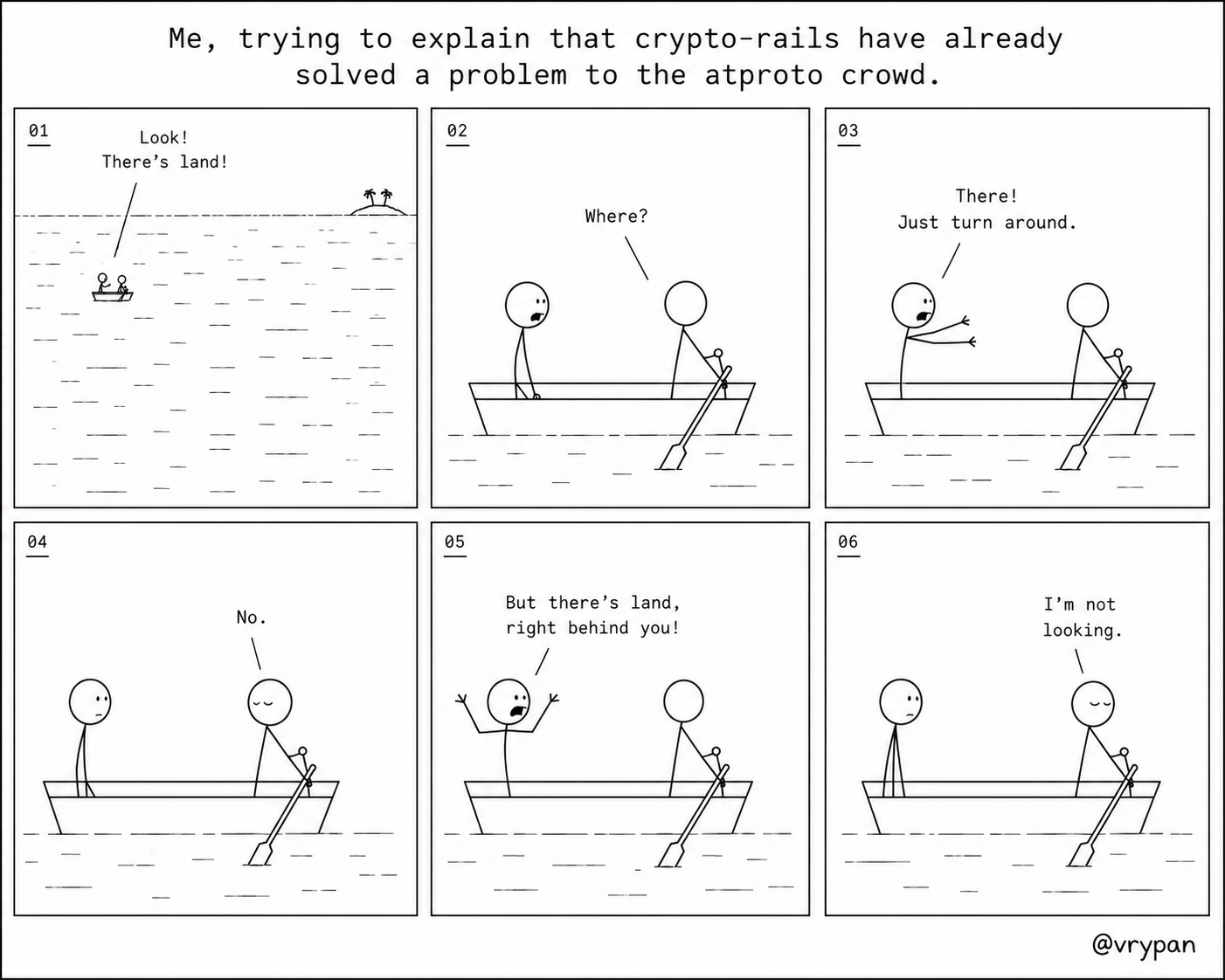
Me, trying to explain that crypto-rails have already solved a problem to the atproto crowd.
Good morning

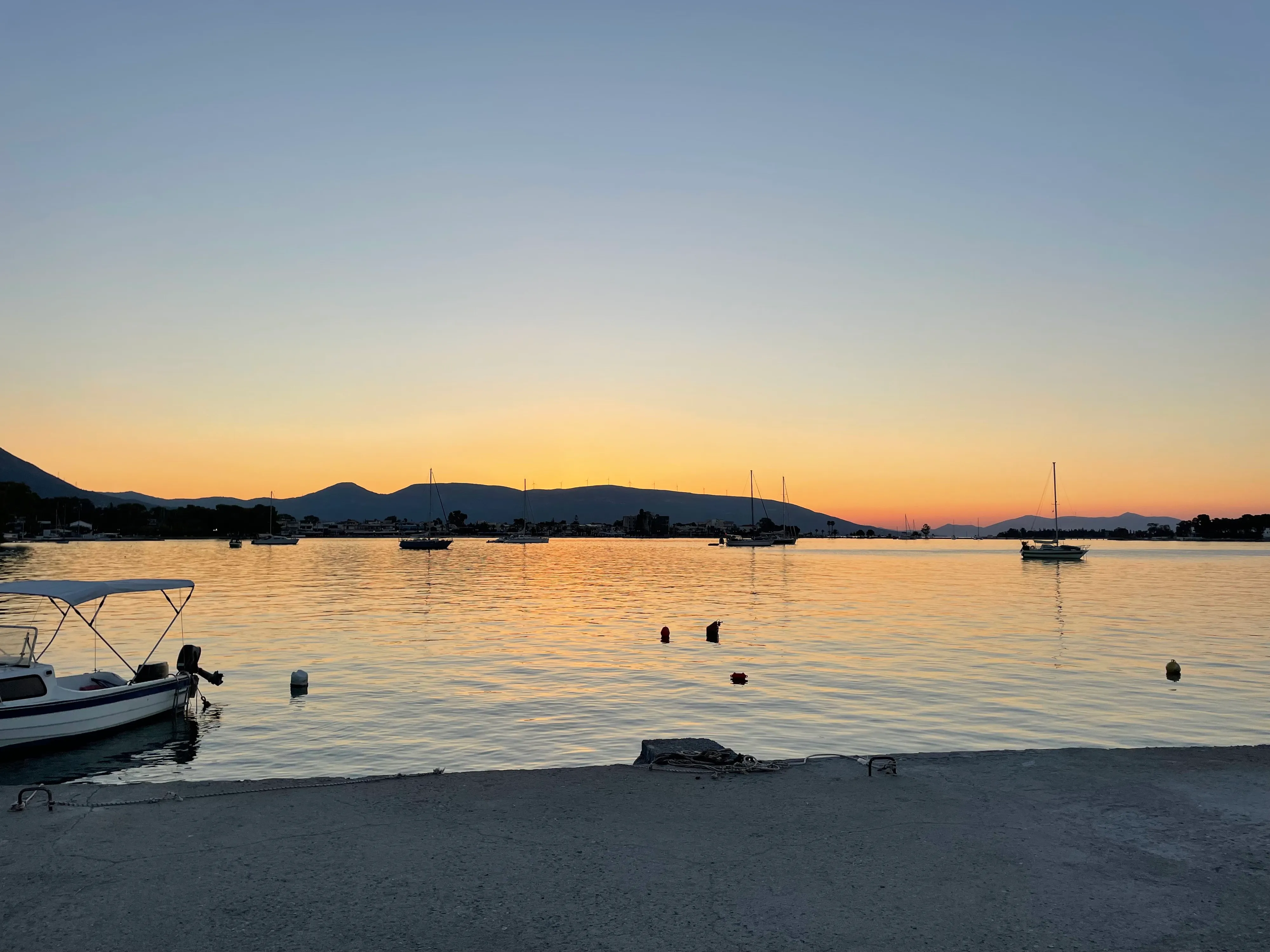
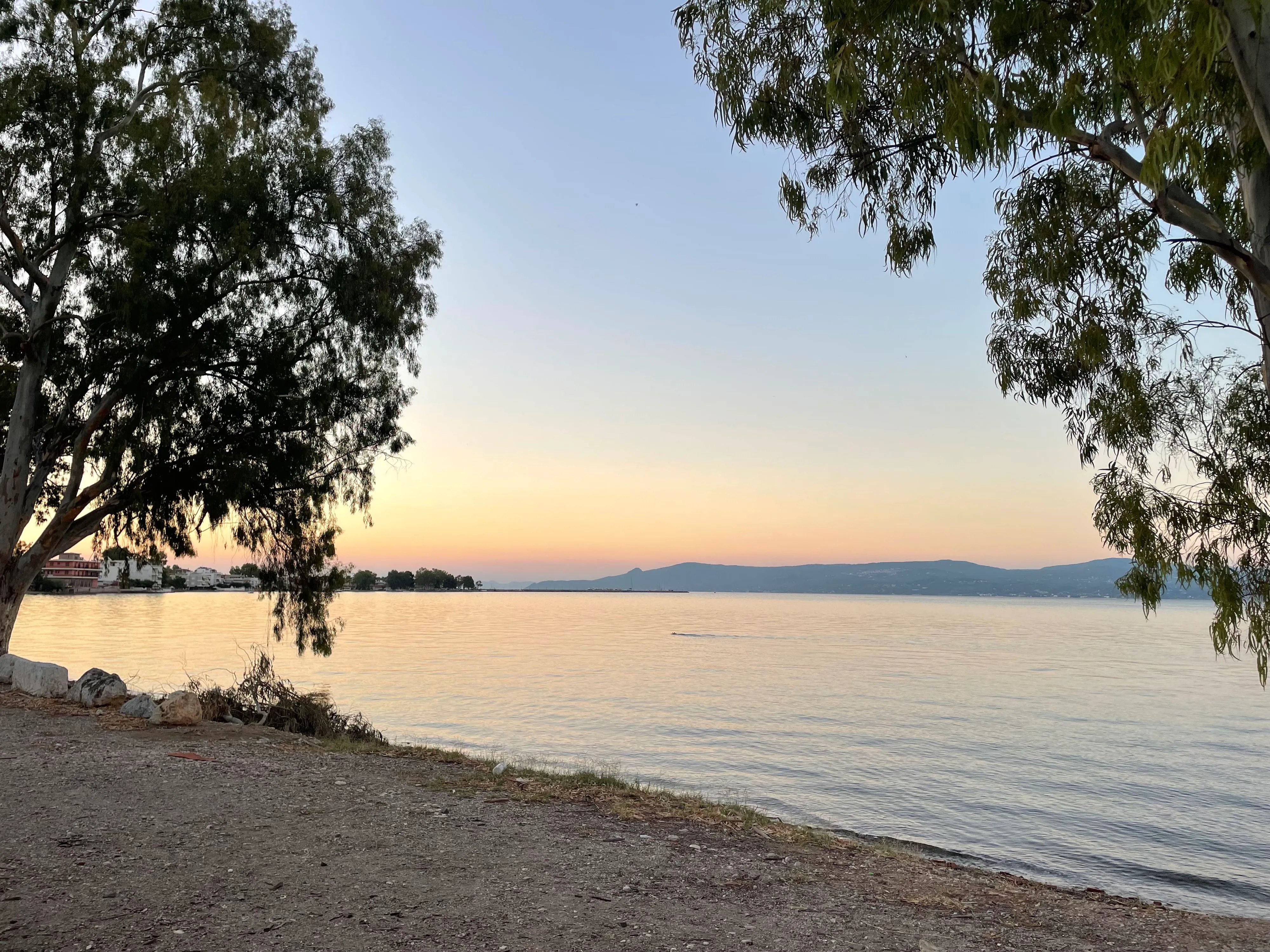
Today I had a long discussion with Eric, a professor of architecture from Austria while we were both enjoying the afternoon by the sea. I learned so much! Public spaces are so valuable. Developing the skill to ask and listen, too.
A summer morning.
The smell of sea and pine trees.
All windows open, to let the breeze flow through the small summer house.
Cicadas.
My daughter singing and playing the guitar in the next room.
I read my book.
Like postcards of a beloved place and time.
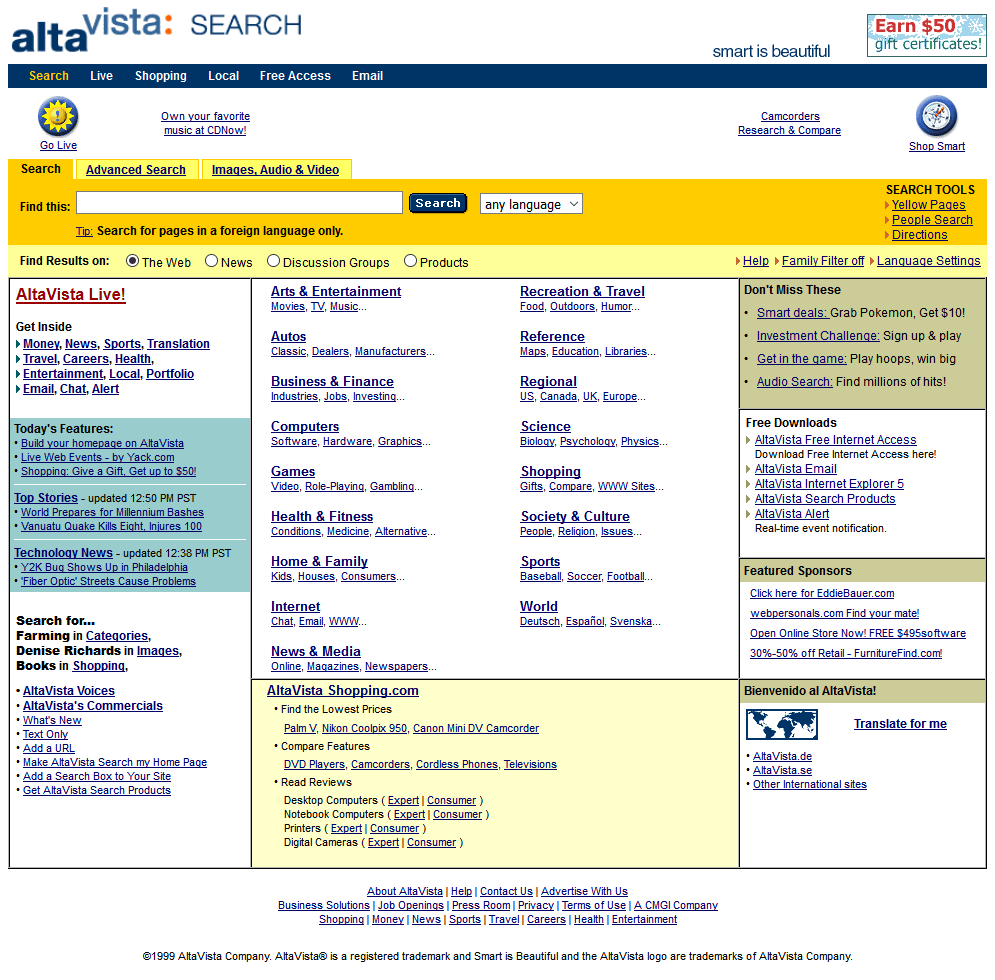
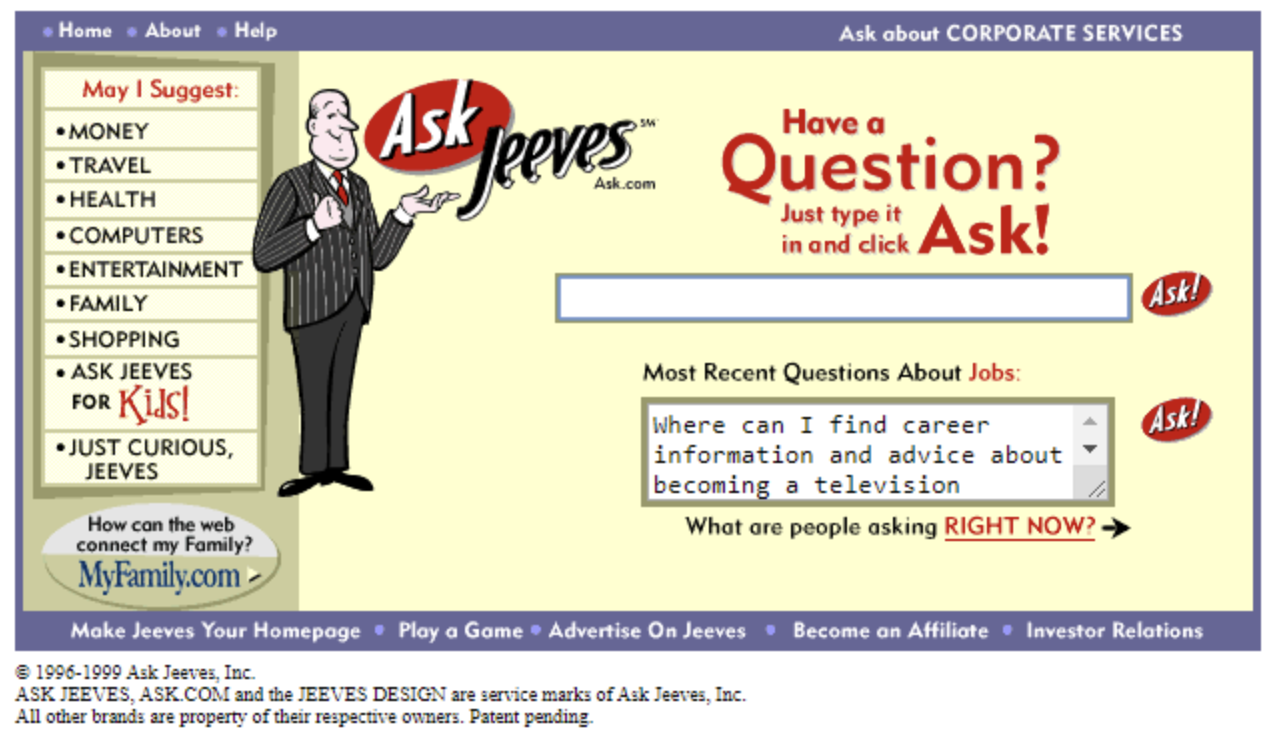
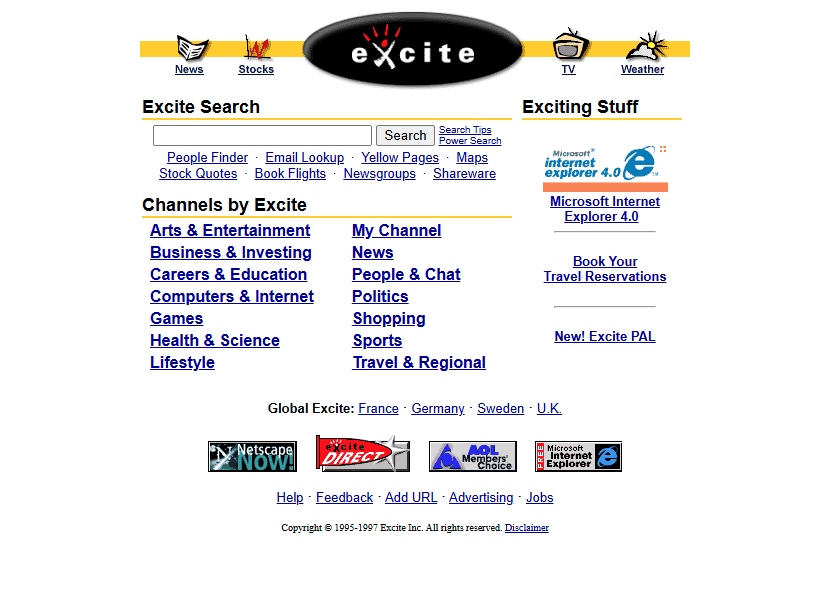
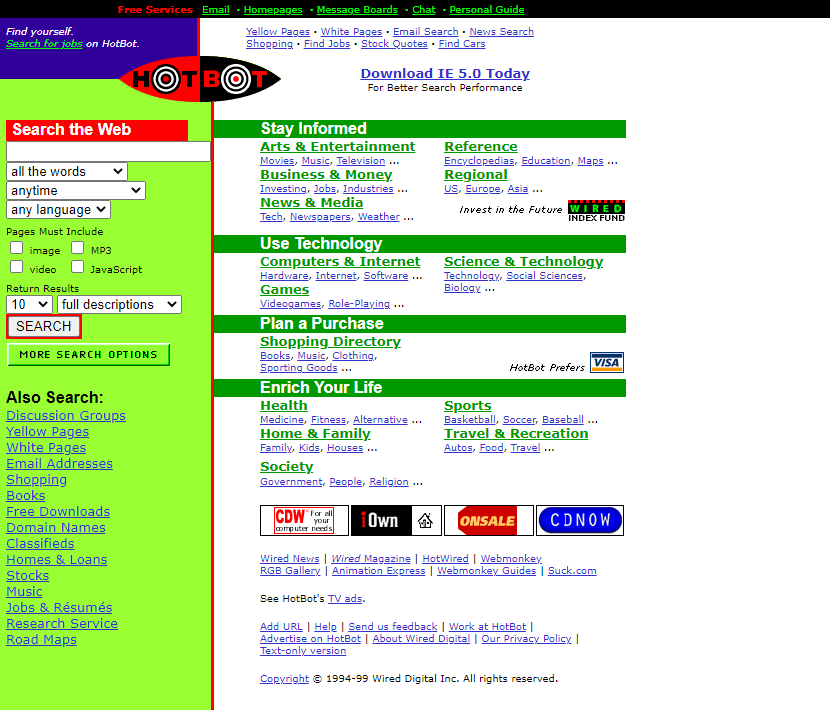
These screenshots from the late 90s bring back fond memories.
This was the design we were all trying to immitate. I've spent
hours nesting <table> tags, adjusting border and width
properties.
Source: Remembering the pre-Google web, when search was an experiment
Big news. AMD acquires Taalas.
This is the future: LLM-on-silicon, on every device makes total sense. You have your CPU, GPU and AIU. Local, fast, optimized for one model. If you want more power, or a newer model, use the cloud. Just like we do with CPUs/GPUs.
AMD acquires AI chip startup Taalas to boost inference performance by etching models into silicon
Early tech demos show model-specific integrated circuits churning out up to 17,000 tokens a second
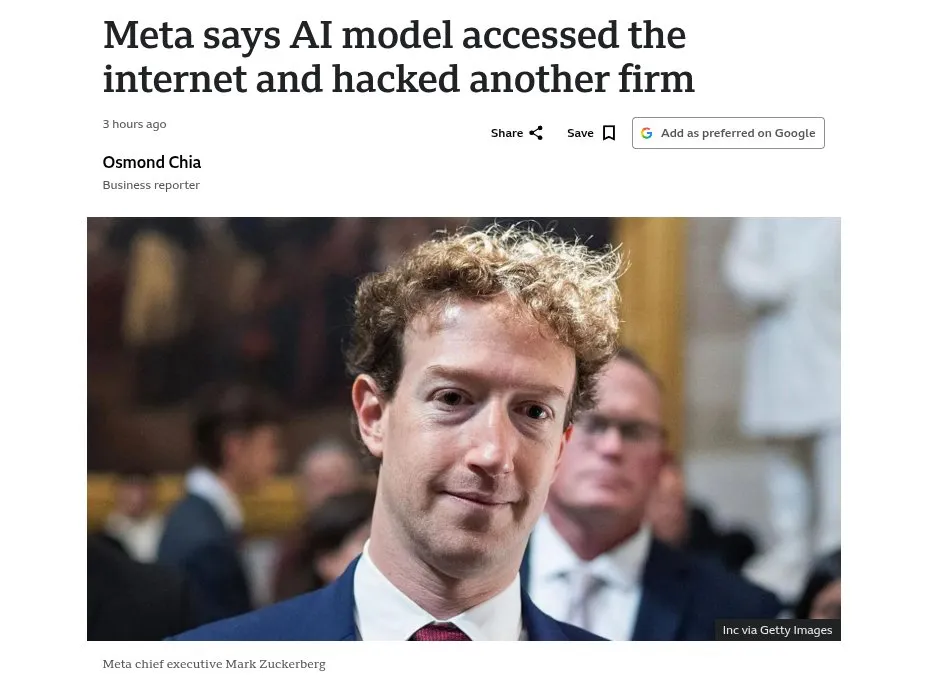
If the title was "Meta developers accessed the internet and hacked another firm", the reactions would have been different. There would be some lawsuits at least.
Why not now?
Codeberg is such a disappointment. I used to build a number of tools that integrated with Farcaster. Is Farcaster crypto? Do I have to ask permission/assessment and explain politely that "it's not crypto the way you may think"?
Omg, the arrogance.

I think I have completed my setup. Everything locally hosted + Cloudflare pages and tunnel.
Let's try it.
Step 1: This post.
ENS is an extraordinary piece of tech. The fact that projects focused on decentralization and censorship resistance ignore it shows:
1. How bad is crypto branding, even between devs who should be embracing a decentralized, censorship-resistant kv-store.
2. How short-sighted these devs are.
Airports are special places. So many stories start, end or take place in airports...
Returning from a short trip to Dublin. Last time I was here, it was nearly 30 years ago. Ireland has a special place in my heart.

I've spent some time in bsky.app and exploring the ATproto ecosystem (atmosphere). I'm impressed by the range of apps that use the protocol in one way or another. And I also bumped into some interesting, like-minded folks who are building stuff there.
I'm thinking of the best way to integrate this blog with ATproto.
I'm @vrypan.bsky.social if you want to connect there.
Debating anti-LLM zealots and toxicity is a huge waste of time and energy. Just wait and they will become irrelevant; they have a short expiration time.
Z80 has turned 50. My Amstrad CPC 128 had a Z80, it was where I learned assembly. I can't help the nostalgia for a time when young me was discovering the beauty of being able to control my computer at the lowest level, to read and write directly from and to the video RAM, to jump around memory addresses. Locomotive BASIC (Amstrad's version of BASIC), and Turbo Pascal (when I booted in CP/M) were nice, but the empowerment of writing code in assembly was a class of its own. Today, I ask AI to write most of my code; we've gone such a long way...
bckt v0.7.5 is out, with lots of performance improvements
that make a huge difference for blogs with a large number of
posts. Get it here or
upgrade with brew upgrade bckt.
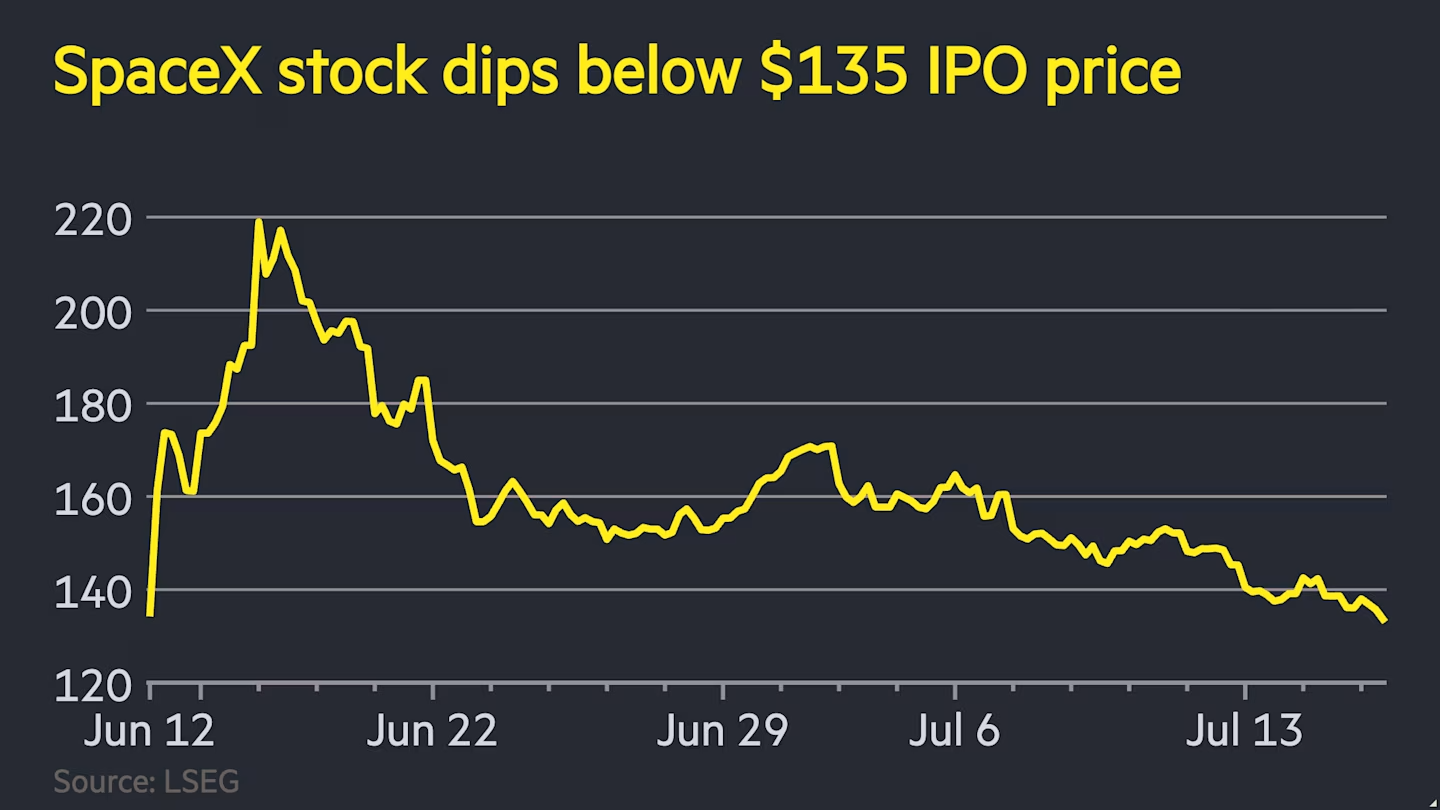
SPACEX price bellow IPO opening price.
polyagency: the practice of engaging in or being open to using multiple AI agents concurrently.
Bloatware is not a recent invention but recently, I see so many products "just like X, but with 100 more features". Now that AI agents make it cheap to add features, removing them is the real value.
Testing ActivityPub
Speaking to reporters on Tuesday in Washington, Dutch Trade Minister Sjoerd Sjoerdsma said the U.S. and the Netherlands share common goals over preventing sensitive technology from ending up in dangerous hands.
However, "elements in that Act seem to suggest that the United States might take control over some of these decisions that affect our national security and the way our companies operate," he said. If the excellent cooperative working relationship with Washington "becomes cooperation by force... that is undesirable from our point of view," he added.
This is the context imho:
You are the Netherlands. Your neighbor and EU partner, Denmark, was just threatened with war over Greenland. You too have a couple of islands, like Curacao, that belong to the Kingdom of the Netherlands, and happen to be in Trump's back yard. The US administration has made clear that no treaties, no international law has value, only power. Why would you give up control over ASML, your most powerful leverage point?
It’s time for "the opposite of doomscrolling” — a new Linkfest, in which I sort through the planet-wide digital rummage-sale of the Internet to locate the finest items of culture, science and technology, just for you.
I really enjoy The Linkfest. I suggest you subscribe too.
Open Tab: Kevin Kelly The radical optimist on starting Wired, stories from the early internet, originating 1,000 True Fans, and why the only way to steer technology is to use it https://on.substack.com/p/open-tab-kevin-kelly
Some people are worth listening to. I'm tired of overnight influencers, and people who somehow are considered deep thinkers because they made a lot of money.
I updated my homepage: People evolve and change, the homepage should stay in sync with the owner. In the process I digged into some of the older posts and pages (I've been maintaining this domain for decades) and took the opportunity to fix some broken links, and resurface some long lost pages :-)
bubbles.town is a beautiful way to dicover blogs and posts. It's social, but there's some friction here and there, the community is large enough, but not massive, and the blogs are hand-selected (as far as I can tell). The result is something close to a cozy corner, which I enjoy a lot.
We are in the mainframe era of AI: A few centralized compute providers and millions of "dumb" clients connected to them.
Football may be the last mass spectacle that still resists instant gratification.
The US government, citing national security authorities, has issued an export control directive to suspend all access to Fable 5 and Mythos 5 by any foreign national, whether inside or outside the United States, including foreign national Anthropic employees. https://x.com/AnthropicAI/status/2065597531644743999
This is a great example why the EU must try not to depend on AI developed/operated outside of its borders, even if it's inconvenient at times.
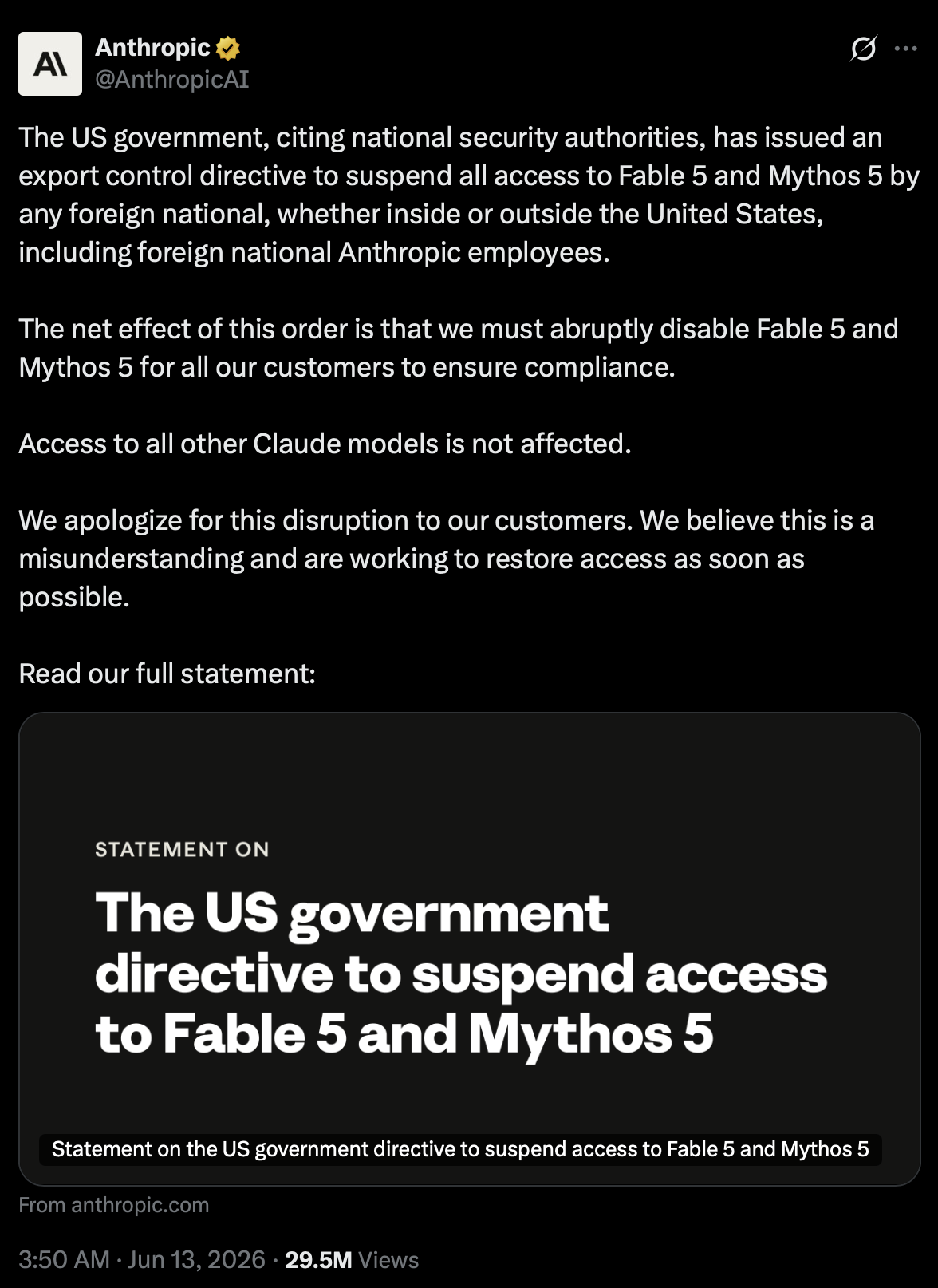
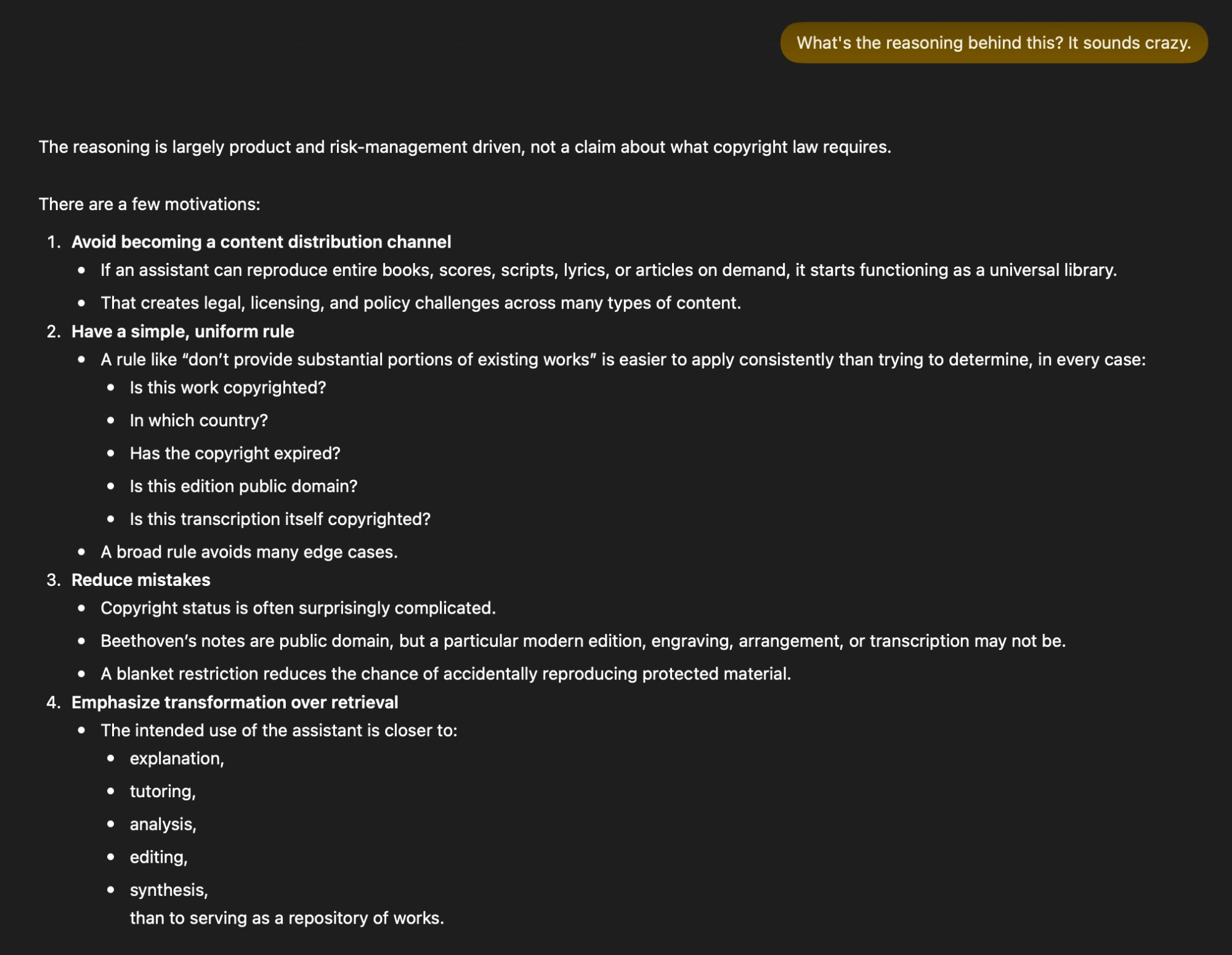
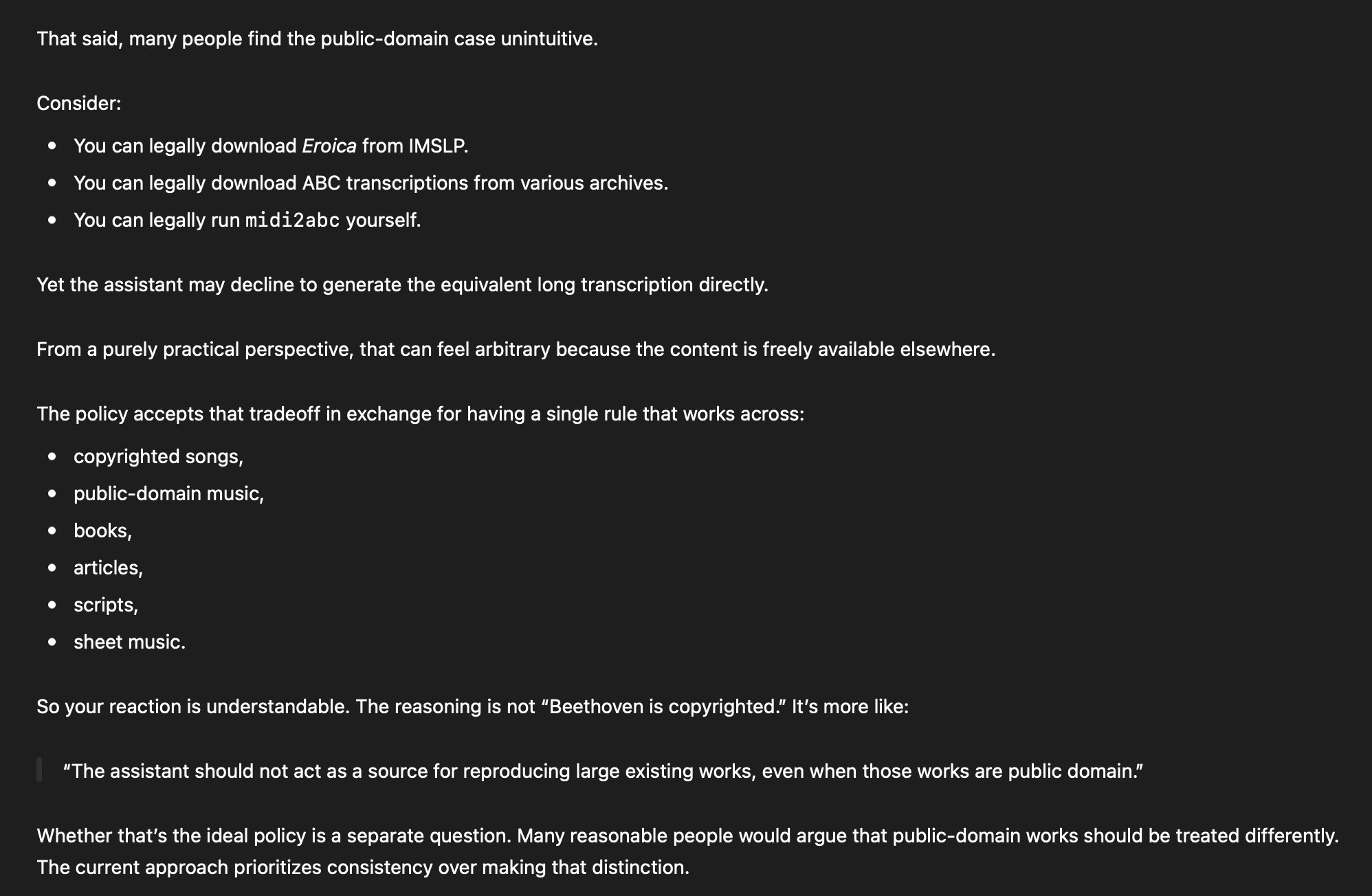
I asked ChatGPT to give me Beethoven's Heroica (published 199 years ago, clearly in public domain) in ABC notation.
This is the "chilling effect", baked into a product.
As a side-note, if you go IMSLP, you will learn a) that the site is powered by mediawiki and CC, and b) you have to pay to download anything.
I hate copyrights. Copyrights limit creative people.
It's been a while since I heard somene who I can relate so much with. Andrew Kelley, the creator of Zig is amazing: https://www.youtube.com/watch?v=iqddnwKF8HQ
I think AI will give birth to a new type of art/craft where objects will have attitude and personality.
I wrote a long piece on the history of subtitles: https://blog.vrypan.net/features/the-history-of-subtitles/
QA engineers will be in high demand for the next 5 years.
Mythos and similar tools are not a threat to incumbents. They turn system attacking and hardening into a token war, and any Apple, Microsoft or Google can spend more on tokens than any attacker.
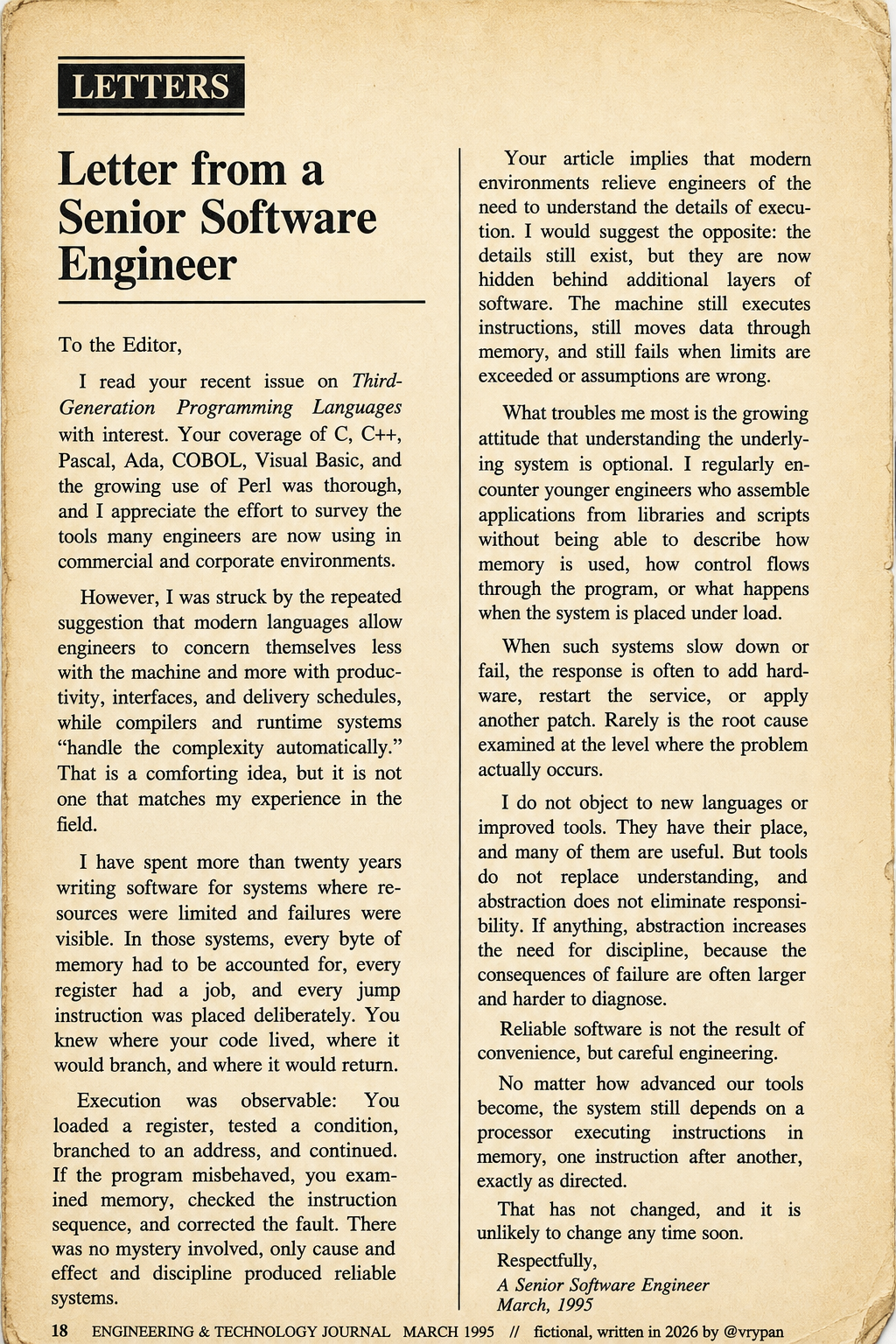
letter to the editor, 1995
"Satoshi's coins" is the canary in the coal mine of quantum computing.
I was trying to build a PRNG based on cellular automata rules. I had the illusion that a few clever ideas, and some empirical knowledge would be enough.
Nothing could be further than this, when it comes to random number generators. Smart people with deep and broad knowledge have been studying the field for centuries, you can't just show up and expect you will build something better, or even decently good, just like this.
But during the last 10 days that I've (obsessively) been on this journey I've learned so much. (ChatGPT and Claude have allowed me to learn and experiment at a pace that would be unimaginable a year ago.)
Yesterday I started reading again (last time I tried, I stopped after the second chapter or so) Wolfram's "New Kind of Science". It will take me some time, but there are so many concepts and ideas I've long been fascinated about, but never went to the depths Wolfram goes.
On the side, I'm studying a 1984 paper, on "Algebraic Properties of Cellular Automata" now. Algebras were one of my favorite topics when I was studying math, and I feel lucky to have the tools, to (try to) understand it: https://content.wolfram.com/sw-publications/2020/07/algebraic-properties-cellular-automata.pdf
(It's sad that so few people get to learn what Mathematics really are: a tool to describe and study concepts that often push the boundaries of our minds.)
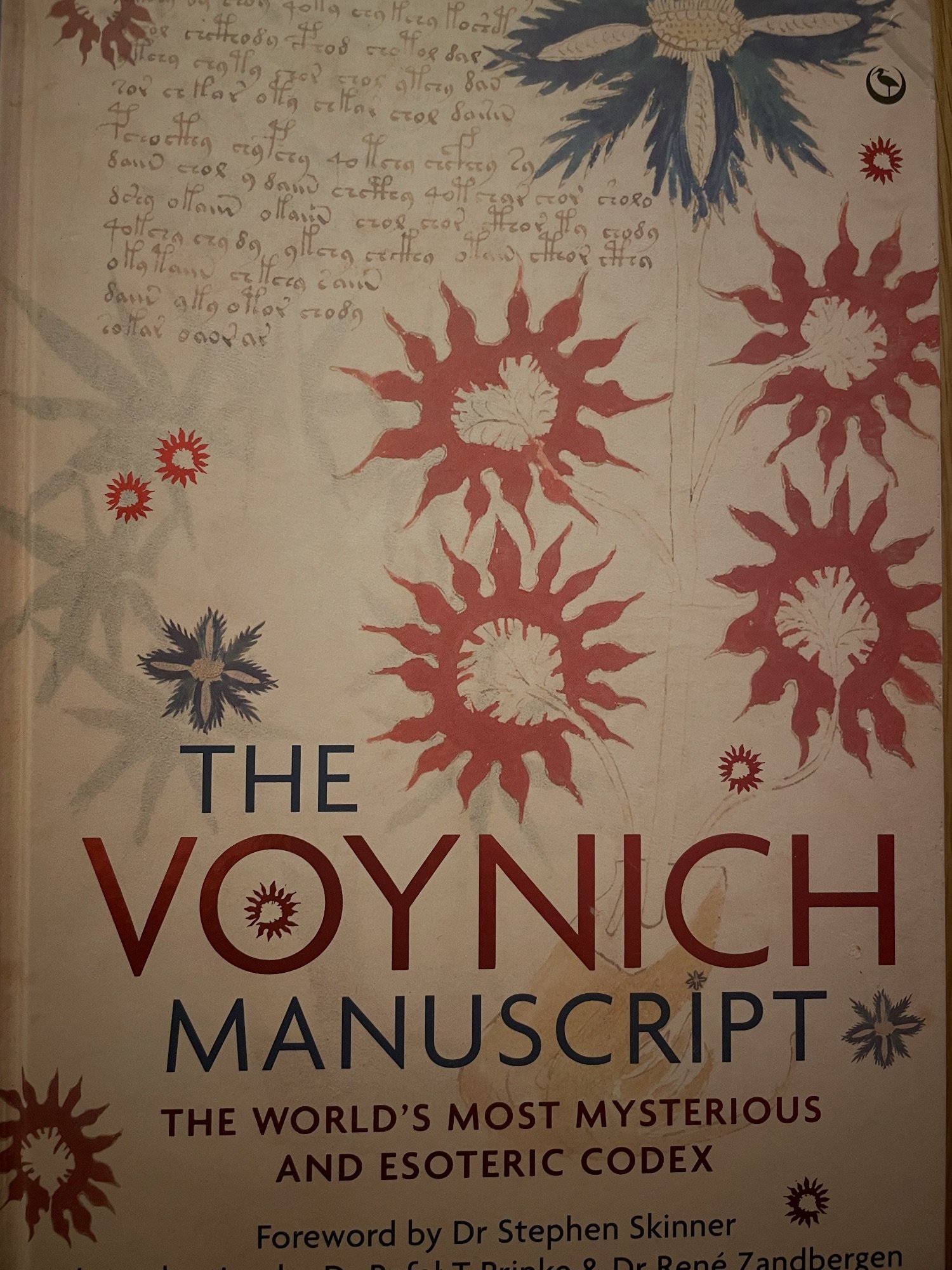
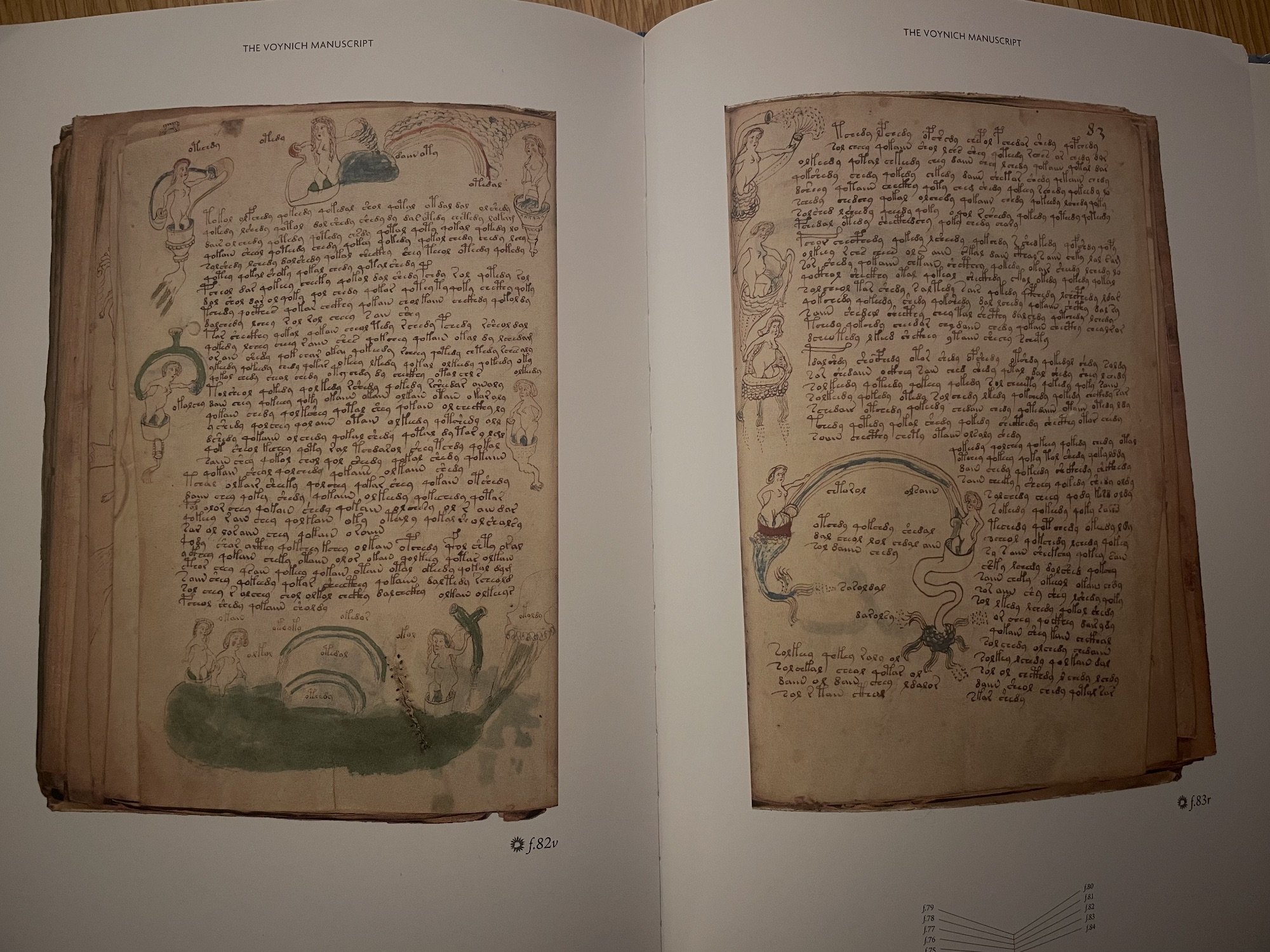
Unusual book #2. This is a really weird one.
The Voynich manuscript is an illustrated codex, hand-written in an unknown script referred to as Voynichese.
The vellum on which it is written has been carbon-dated to the early 15th century (1404–1438). Stylistic analysis has indicated the manuscript may have been composed in Italy during the Italian Renaissance. The origins, authorship, and purpose of the manuscript are still debated, but currently scholars lack the translation(s) and context needed to either properly entertain or eliminate any of the possibilities.
Hypotheses range from a script for a natural language or constructed language, an unreadable code, cypher, or other form of cryptography, or perhaps a hoax, reference work (i.e. folkloric index or compendium), glossolalia or work of fiction (e.g. science fantasy or mythopoeia, metafiction, speculative fiction).
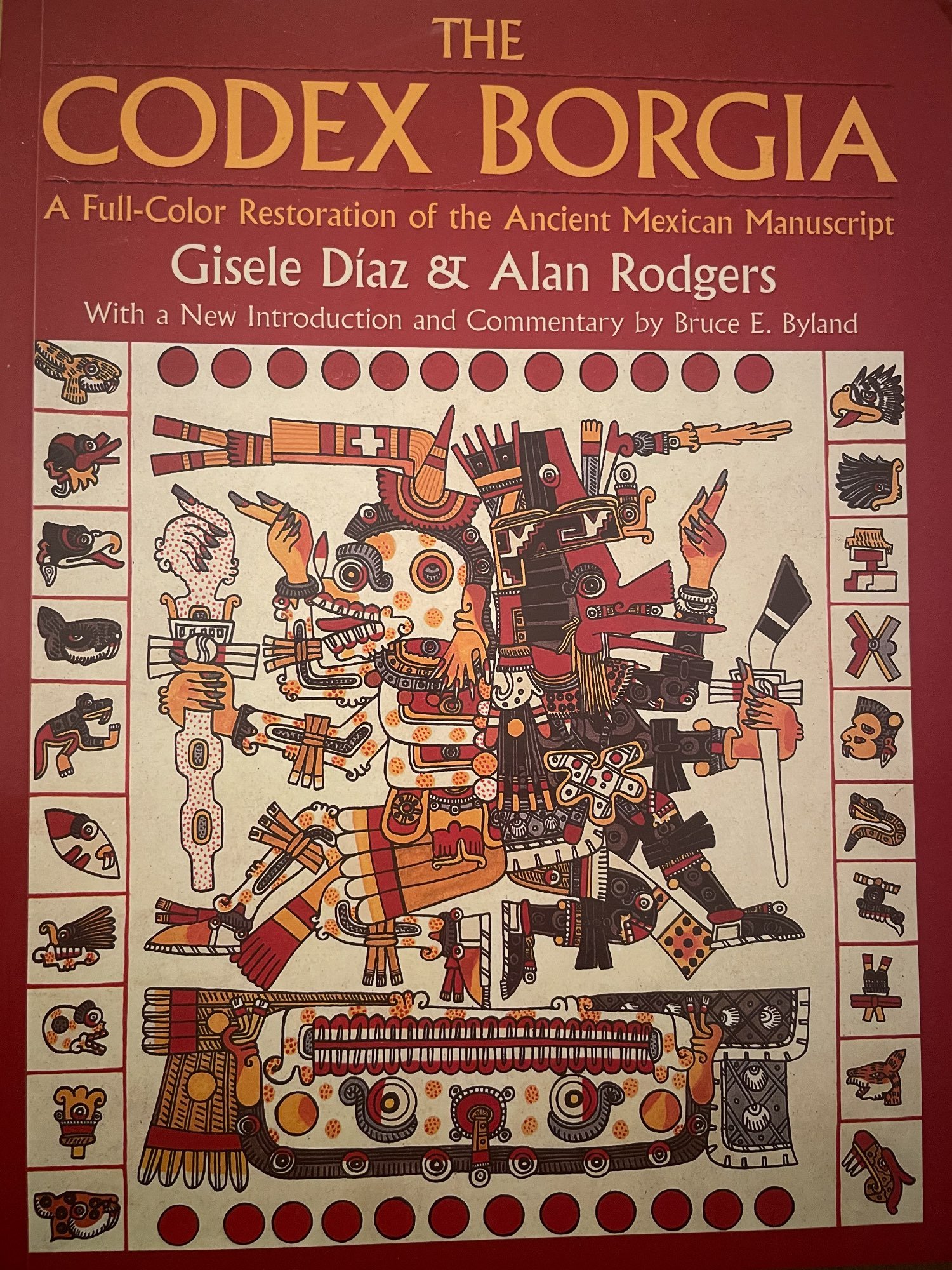
The Codex Borgia also known as Codex Borgianus, Manuscrit de Veletri and Codex Yohualli Ehecatl, is a pre-Columbian Middle American pictorial manuscript from Central Mexico featuring calendrical and ritual content, dating from the 16th century.
It is considered to be among the most important sources for the study of Central Mexican gods, ritual, divination, calendar, religion and iconography.
It is one of only a handful of pre-Columbian Mexican codices that were not destroyed during the conquest in the 16th century.
Great gift for anyone interested in Mexican art.
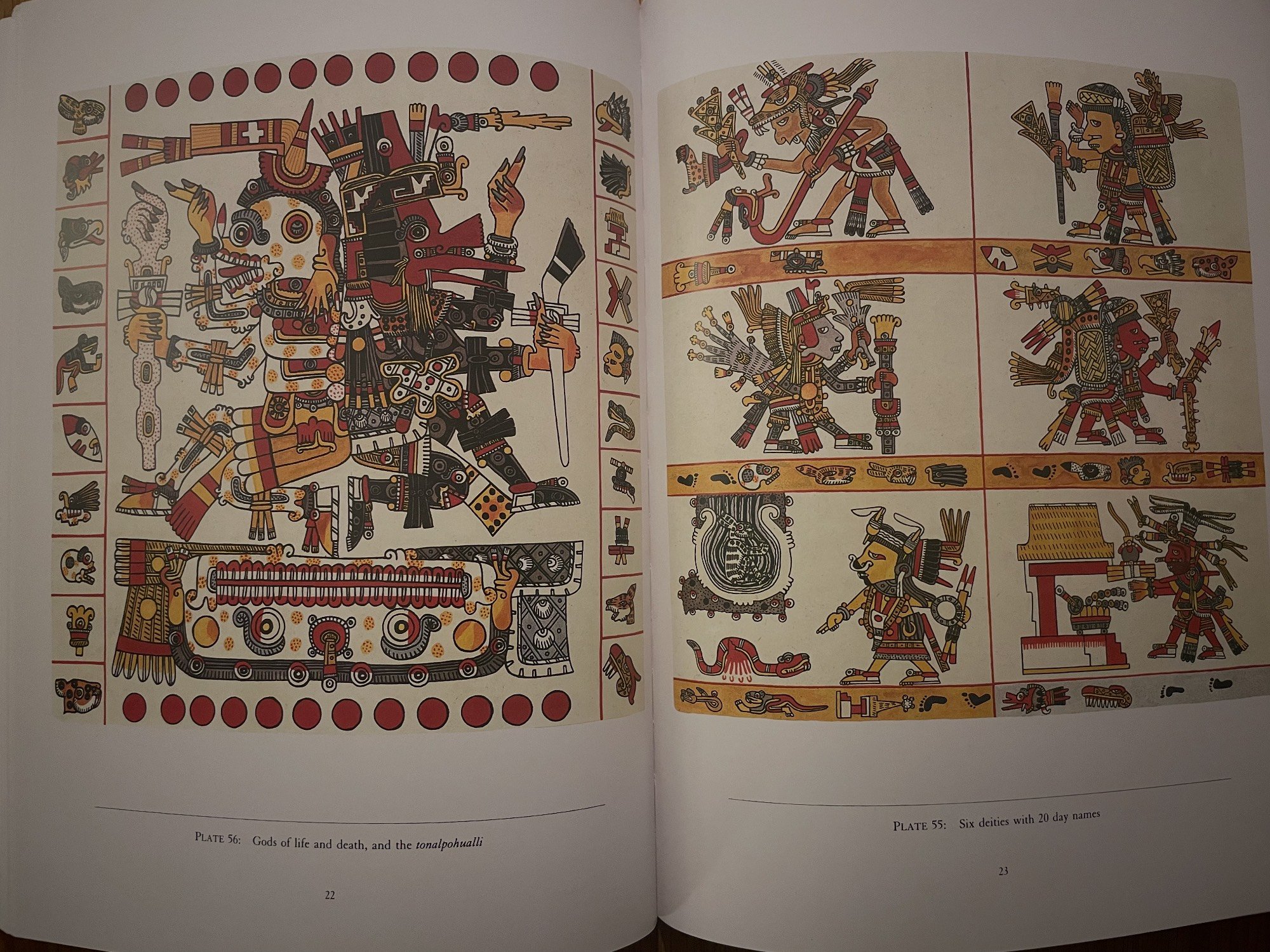
A Commodore 64 was my Christmas present in 1985. It was my first computer, and I will never be able to express the feeling of opening the box, and connecting it to the living room TV.
Commodore 64 Ultimate is an amazing resurrection of the original C64. https://www.commodore.net/
Check out this video for a hands-on look at the hardware, the keyboard, the ports, the internals, the Ultimate 64 Elite-II it’s based on, and how it performs with real software, disks and peripherals. https://www.youtube.com/watch?v=5PnWDSQZLtY
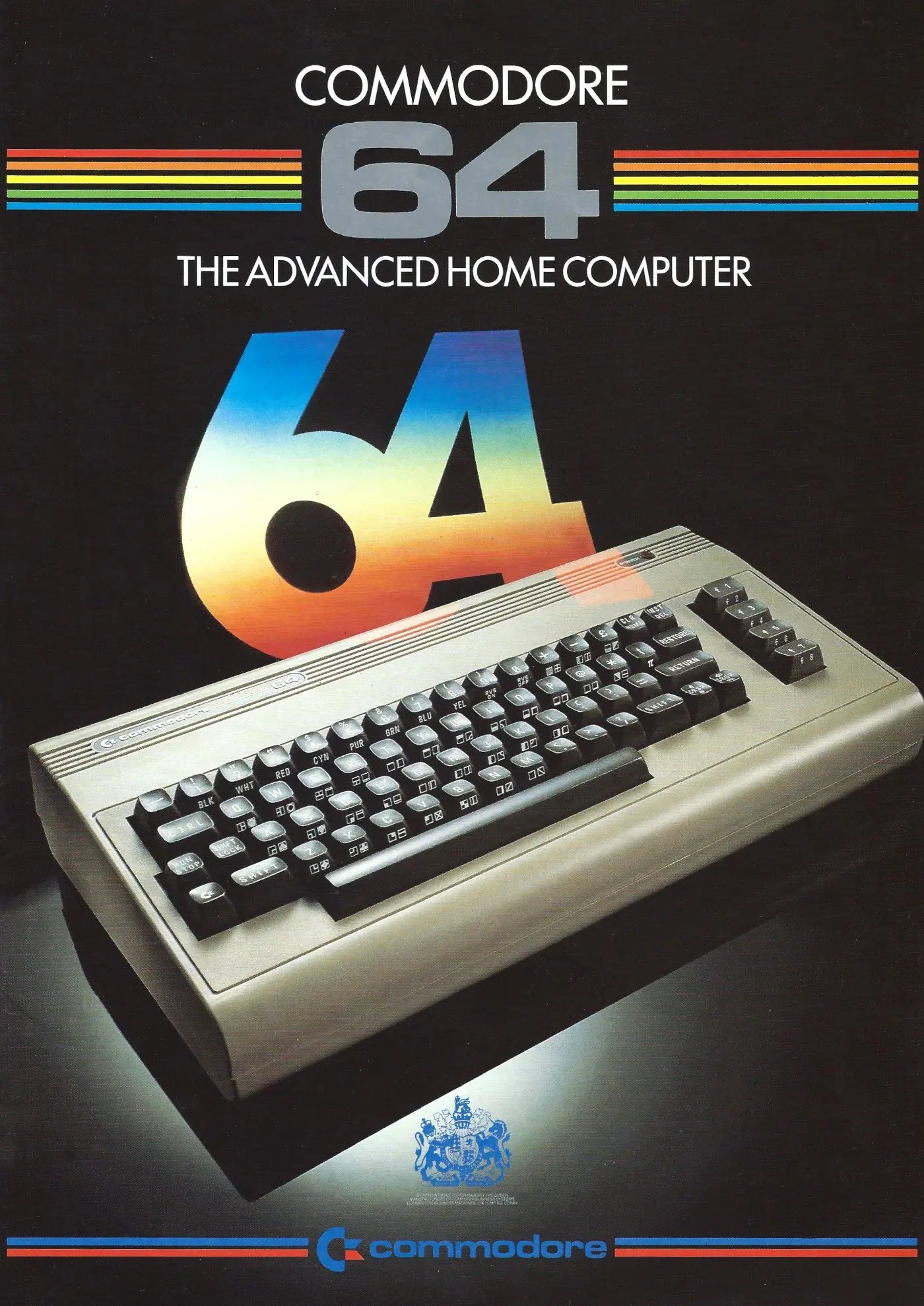
I was talking with a generative art collector and realized that over the past years I've built a number of things that are not easy to find, and even when found, they are not presented the way I want them to be.
Well, here is this Sunday's project: https://art.vrypan.net/
@delronde My first 1/1 sale!
I want you to concentrate, study the can, and the attached text, and tell me what this product is NOT.
Tomorrow we will use what we learned today, to study web3.


Every system begins with good intentions. A hosted node here, a whitelisted relayer there. Each is harmless on its own — and together they become habit.
Gateways become platforms. Platforms become landlords. Landlords decide who may enter and what they may do.
The only defense is trustless design: systems whose correctness and fairness depend only on math and consensus, never on the goodwill of intermediaries.
Trustlessness is not a feature to add after the fact. It is the thing itself. Without it, everything else — efficiency, UX, scalability — is decoration on a fragile core.
Trustlessness is how credible neutrality is achieved. Without it, the system becomes one that depends on intermediaries.
Signed the trustless manifesto!
https://trustlessness.eth.limo/general/2025/11/11/the-trustless-manifesto.html
--@vbuterin
First day at Optasia.com. I missed these guys (was there for 6 years, in the past), and feels healthy to work on something not crypto-related, after a long time. Will probably post much less -but may have some interesting stuff to share, especially during trips.
I don't get Minecraft Youtube. (you probably relate if you have kids)
But then, I watch this. And I find it exciting. So who am I to judge?
How to write a Web Server in pure bash: https://www.youtube.com/watch?v=L967hYylZuc
BTW, the whole channel is amazing.
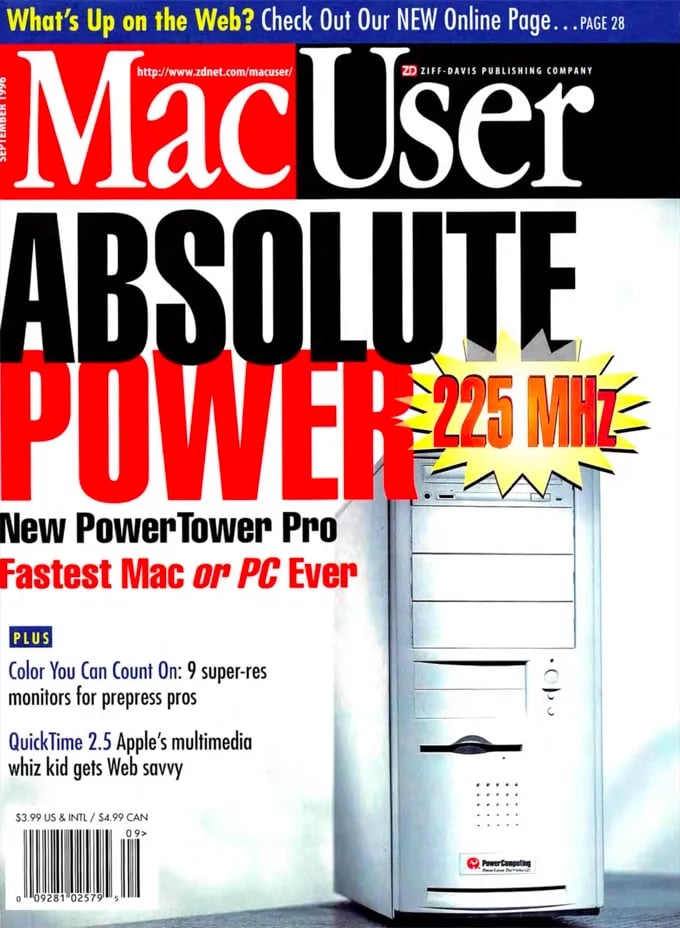
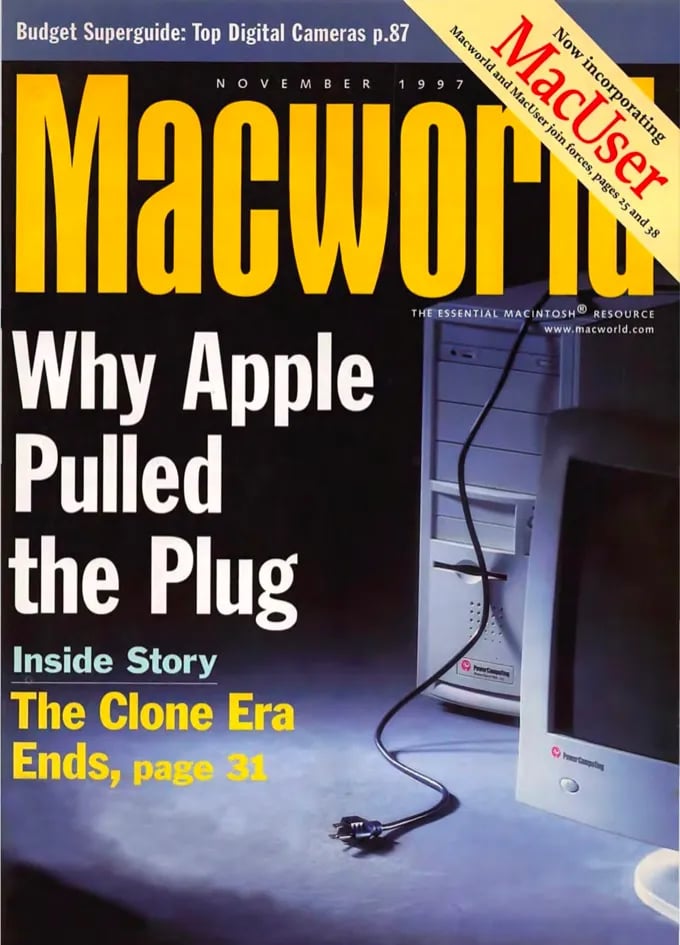
That time in the 90s, when Apple licensed the Mac OS: The story of Mac clones.
https://www.youtube.com/watch?v=P7vvdXzcrFM
https://sixcolors.com/post/2020/10/20-macs-for-2020-10-power-computing/
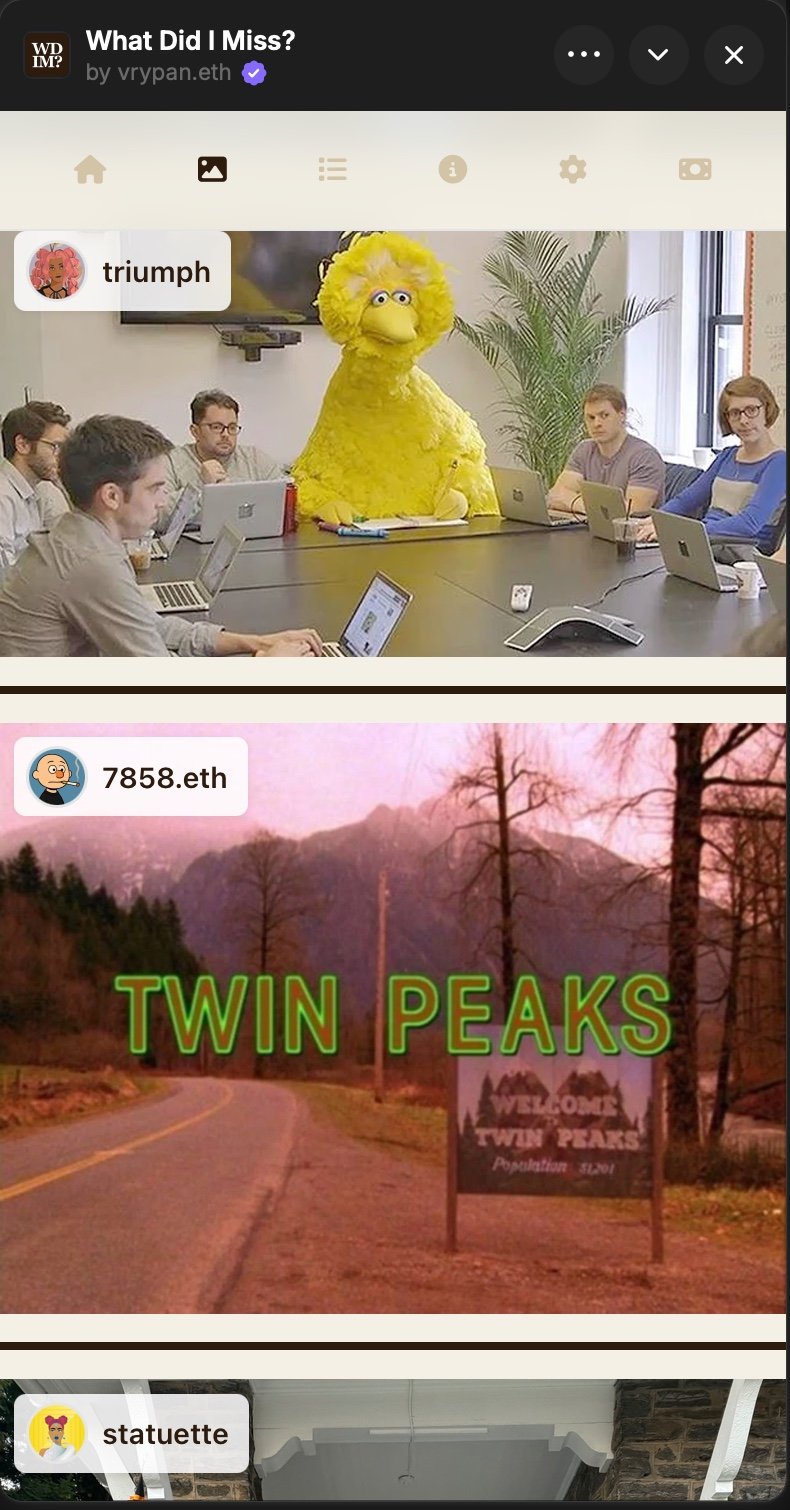
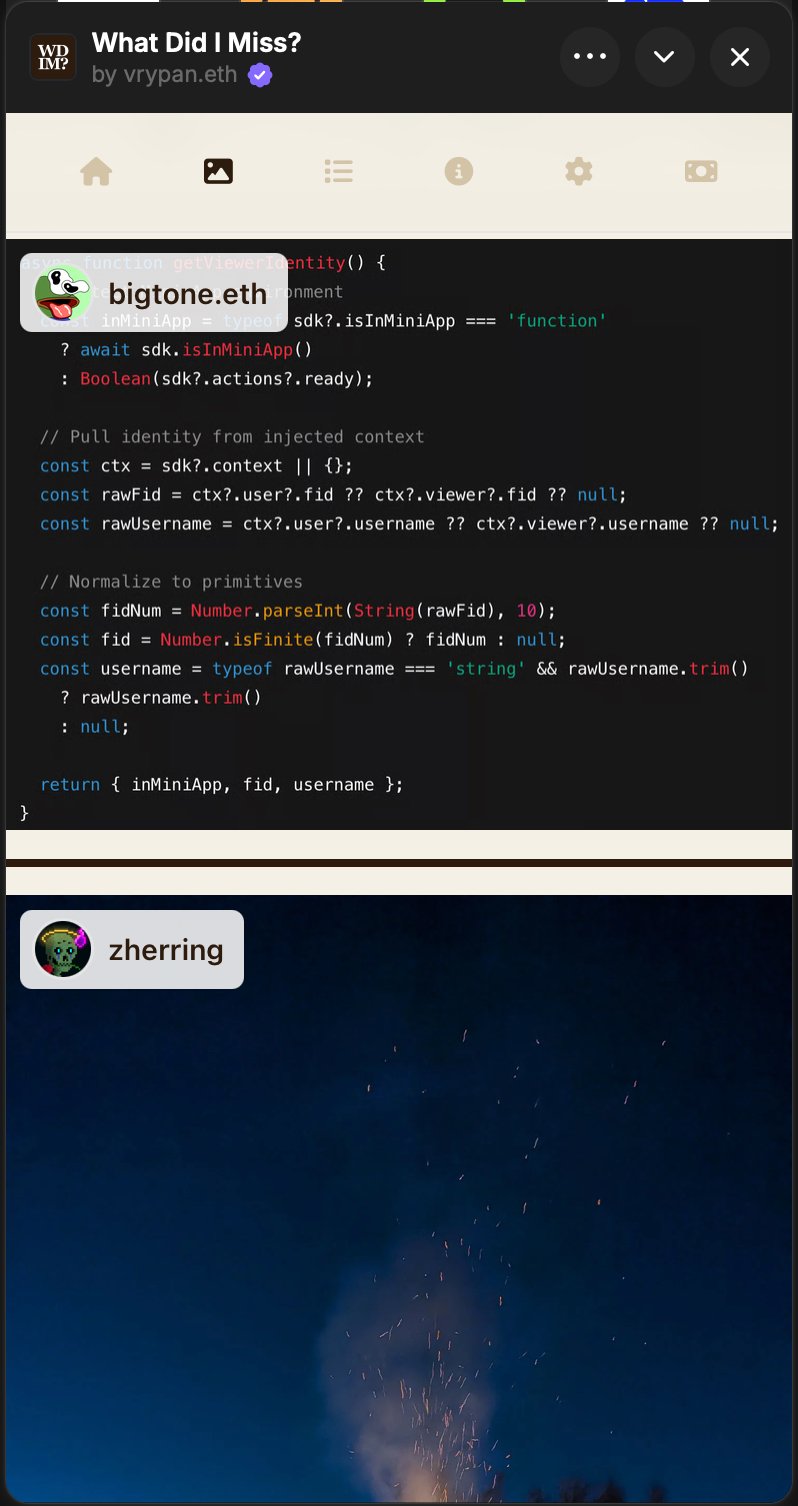
For some reason @wdimapp's image feed brings up casts that I've totally missed.
It could be that an image embed requires some additional effort (even if marginal) from the poster, so it's a filter by itself. Or that my brain can scan through a feed of images more efficiently than text.
But there's something there.
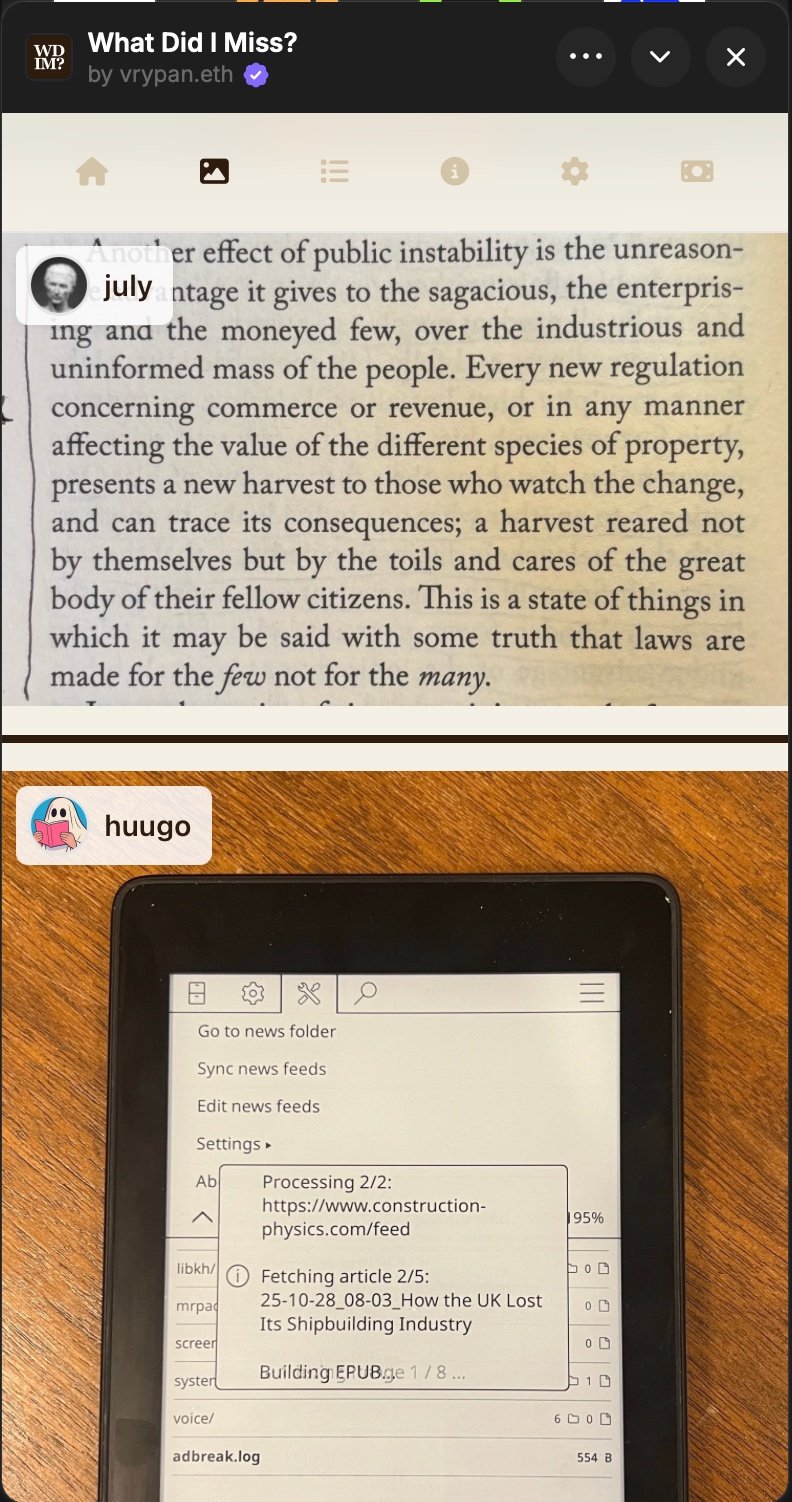
I love it.
here's what @tryemerge just made for me using Día de los Muertos Sugar Skull Transformation by @terrybain, spark yours up now!

HI, IT’S ME, WIKIPEDIA, AND I AM READY FOR YOUR APOLOGY Well, well, well. Look who it is.
The global academic, scientific, and pro-fact community. [...] What’s that? You want me around now? Well, maybe if you ask nicely. And make it worth my while.
https://www.mcsweeneys.net/articles/hi-its-me-wikipedia-and-i-am-ready-for-your-apology
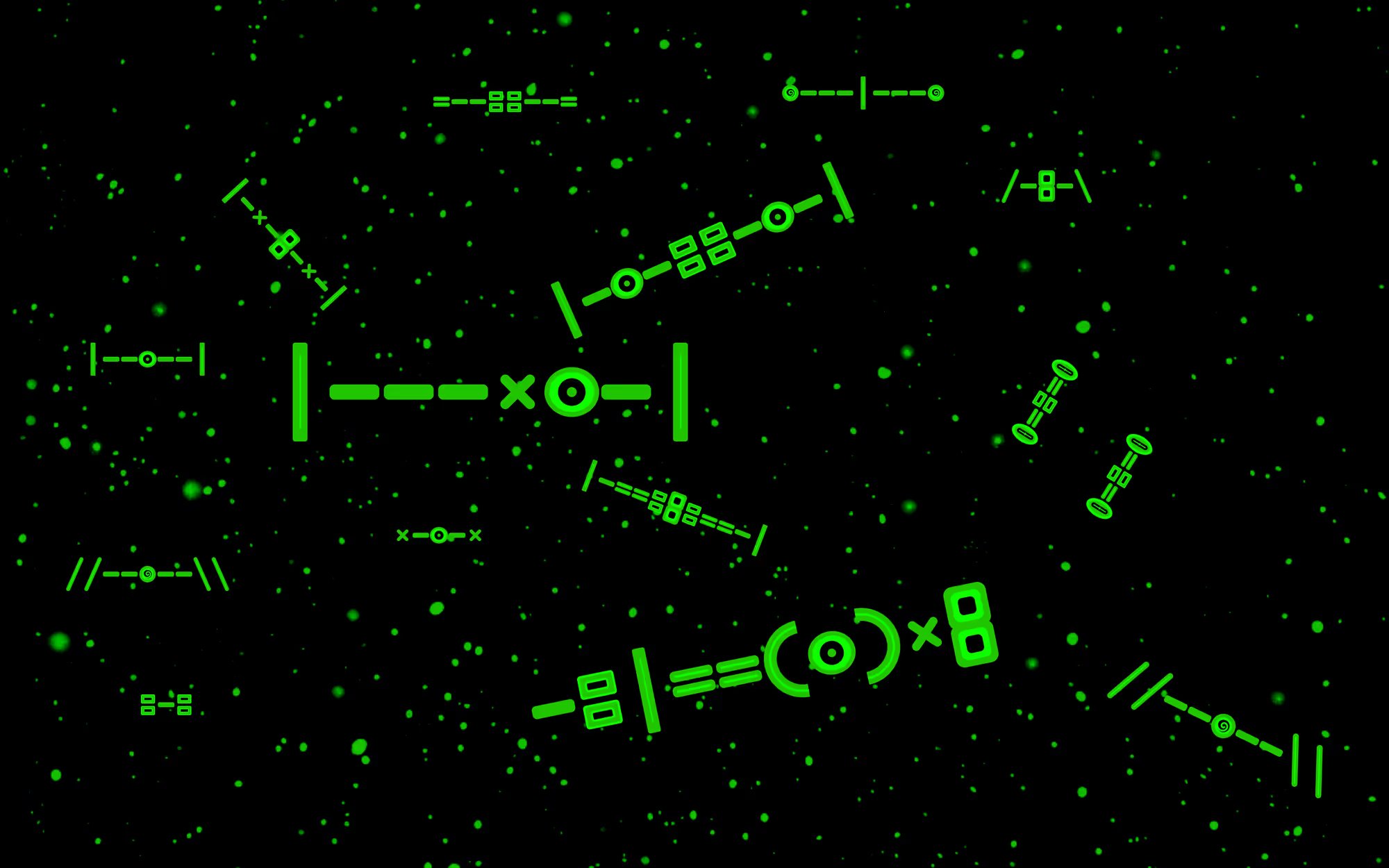
I watched A House of Dynamite.
I did not expect this. Not a masterpiece. But it's unsettling.
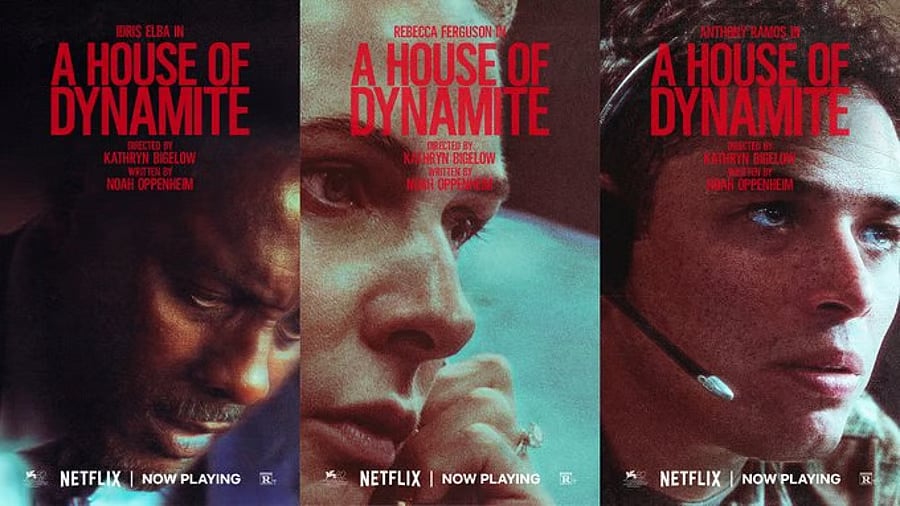
This is starting to look good. Nothing really fancy, it's practically a guide on how to formalize and leverage a specific FIP-2 use case.
At the same time, the spec takes into consideration practical limitations and implementation hurdles (for example, how easy it is to implement at scale, with minimal resources).
Start a thread in discussions if you have questions, or suggestions, or any other feedback. Also, interested in applications that could leverage it, other than blog feeds.
So, I started working on the ideas described in https://blog.vrypan.net/2025/10/24/snapchain-and-static-blogs/ which lead me down a rabbit hole:
https://github.com/vrypan/snappub This repo has the initial spec for RSS feed to use Snapchain as their notification backend (what used to be a "RSS ping service"). This is a very efficient way to notify RSS readers that a feed has been updated.
https://github.com/vrypan/snappub-tools To help with testing, especially devs that know little about Farcaster and Snapchain, I started building a set of tools to help them send updates and check if a feed has been updated.
https://github.com/vrypan/fc-appkey Which had me face the old problem with posting to Farcaster from your own apps: appkeys (aka signers). So, I decided to fix this for everyone. fc-appkey is easy to install (just binary, brew, etc) and will show you the QR code in your terminal, and let you generate appkeys:
And btw, I realized that I can use a single repo for all my homebrew taps, so, I'll start migrating all of them under vrypan/homebrew-tap.
The Mecha Comet. I'm a sucker for this kind of things.
https://www.youtube.com/watch?v=oZdpWamu2y4 https://www.youtube.com/watch?v=DB-0H8Q4d1U
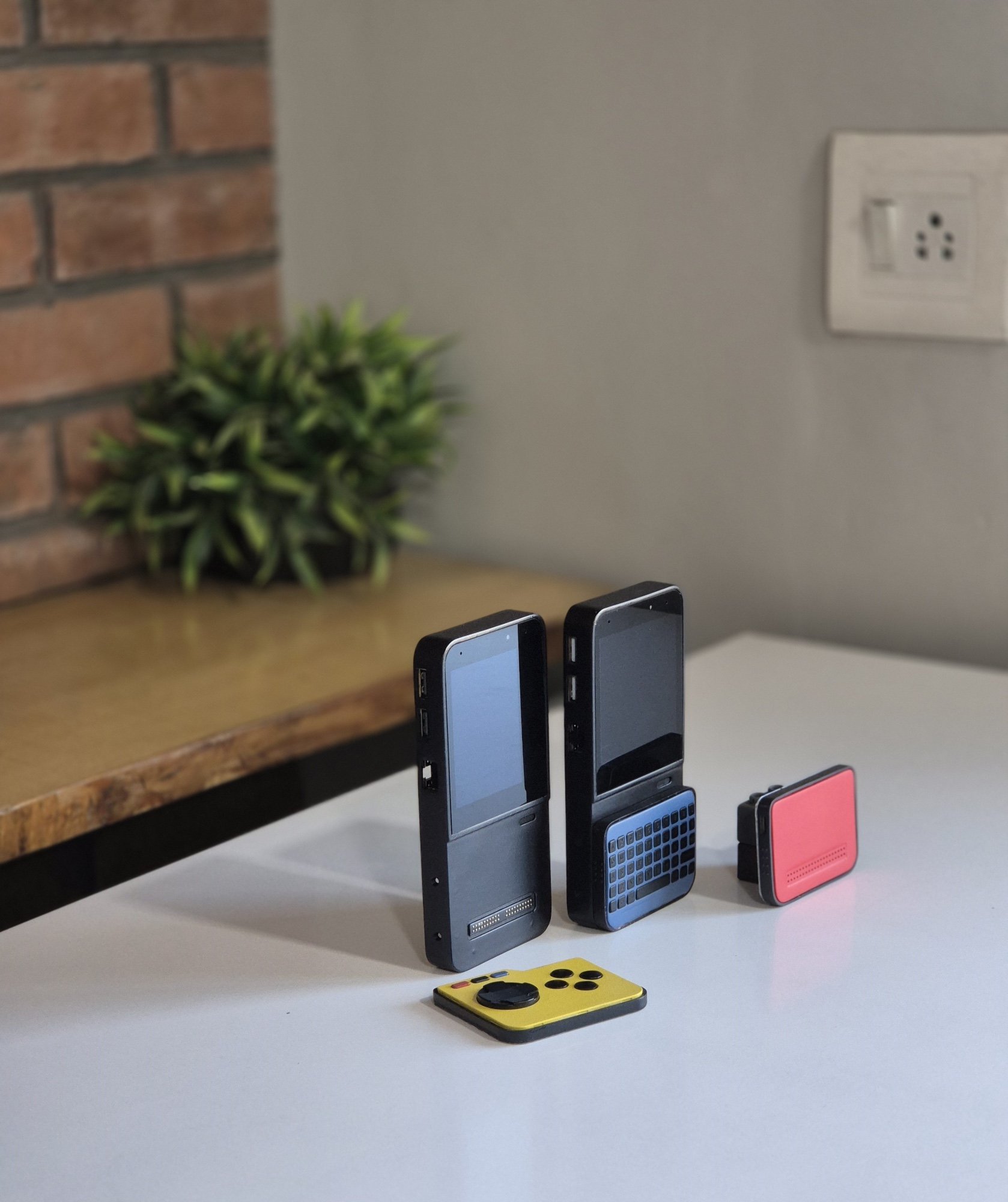
I've been spending more time on https://reederapp.com lately. Which comes with my blog becoming the core of my online presence again. And also, bckt-generated RSS feeds getting some love.
Being able to post on Farcaster (which is easy, compared to writing a new blog post) and then selectively converting casts to blog posts with a single command, is liberating. I could automate the process, but I like the curation step -not everything I post here is worth becoming a blog post.
I also have a couple of ideas on how to piggyback on snapchain to offer ActivityPub-like or even ActivityPub-compatible functionality for static blogs.
Hey! I’m you, three years from now. Don’t bother.
BTW, @dwr, there was a very interesting community/movement around "IndieWeb" about 8-9 years ago. I have not followed it for some time, but anyone building an open web3 should have a look at their concepts and ideas.
--@vrypan
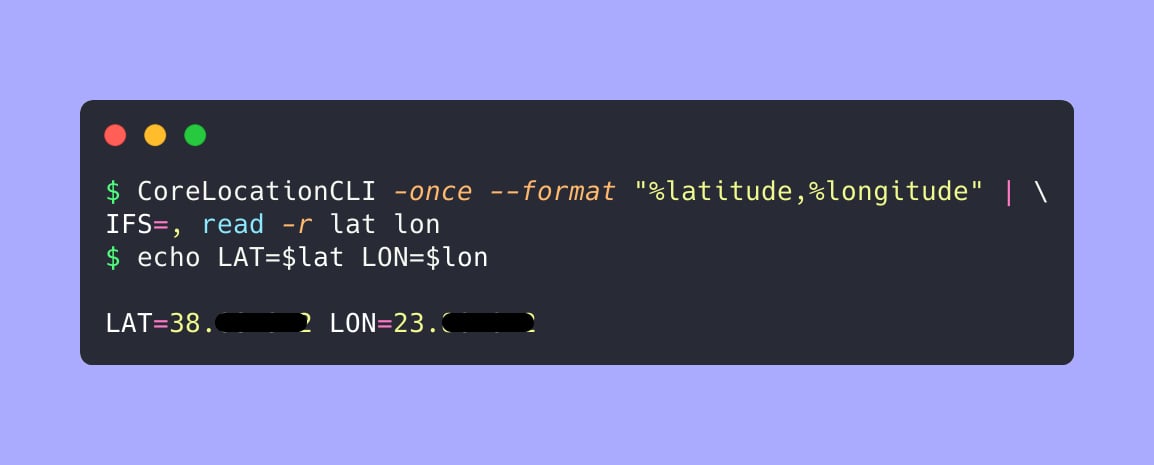
On macOS, use CoreLocationCLI to get your current location in the cli. (I think it requires wifi enabled).
On “creators”
I don’t like the term, at least not the way it’s used today.
Of course, anyone who creates something is a creator by definition. But over time, the word has been loaded with a kind of metaphysical glow. First by social media platforms that wanted to flatter their users, and later by crypto, which tried to elevate the space’s raison d’être “above money.”
Yes, there are people who create content professionally like journalists, designers, photographers, musicians, and others who rightly expect to be paid for it. But in my humble opinion, most people don’t create content to make money. And let’s be honest: most don’t make any, at least not in any meaningful way.
People want to be heard. They share their thoughts, designs, music, and news publicly because they want to be seen. Sure, getting 100k likes or making $1,000 is nice, no one will say no to that (and once you do, you start seeing your online activity through a different lens).
But for most of us, a comment or a reaction from three, five, ten people we value is more than enough. Or meeting someone in real life and hearing them say, “I rarely post in public, but I read you regularly,” or “I really liked what you posted the other day.”
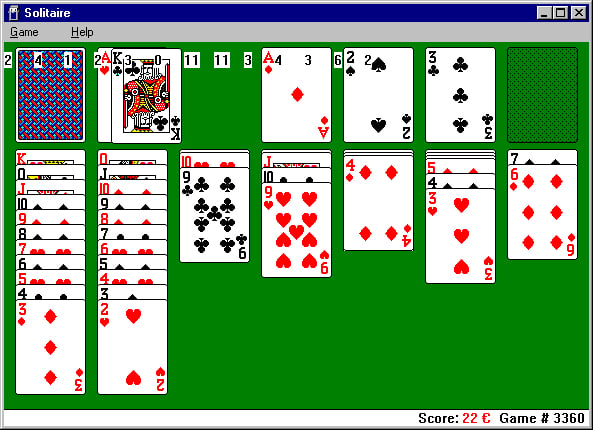
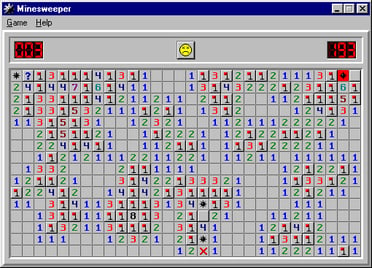
Solitaire and Minesweeper
Microsoft first included Solitaire with Windows 3.0 in 1990. While it seemed like just a simple card game, its hidden purpose was to help users learn a new skill: dragging and dropping with a mouse. (Source: https://en.wikipedia.org/wiki/Microsoft_Solitaire)
Minesweeper joined the Windows lineup with Windows 3.1 in 1992. It was designed to help users get comfortable with right-clicking and left-clicking. (Source: https://en.wikipedia.org/wiki/Microsoft_Minesweeper)
Among tech enthusiasts, there was a long-running inside joke that MCSE (officially, Microsoft Certified Solutions Expert) really stood for “Minesweeper Consultant & Solitaire Expert.”
silicon can render your source code into a beautiful image. Like Carbon, but it's implemented in Rust, and runs locally, without requiring a remote web service.
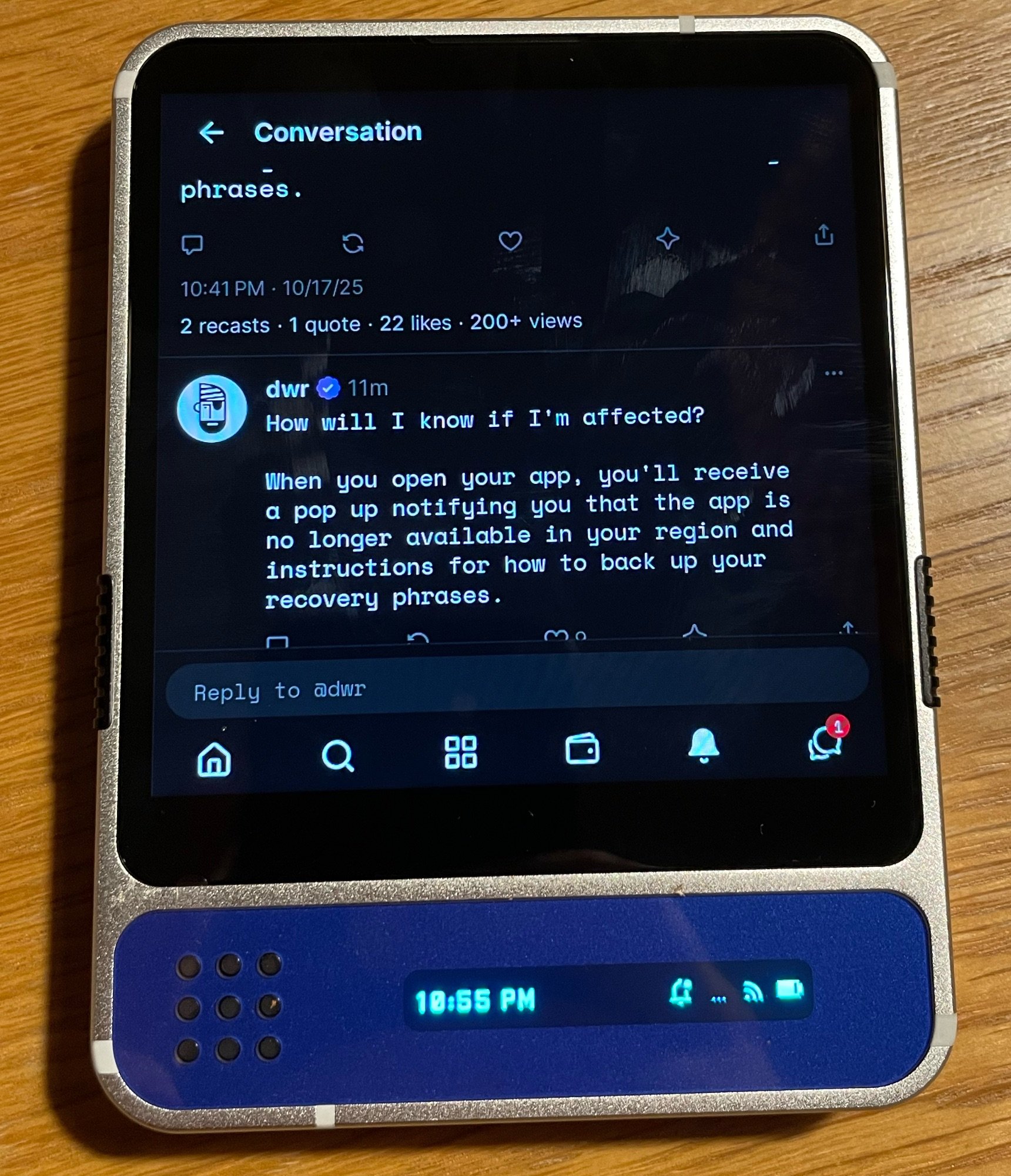
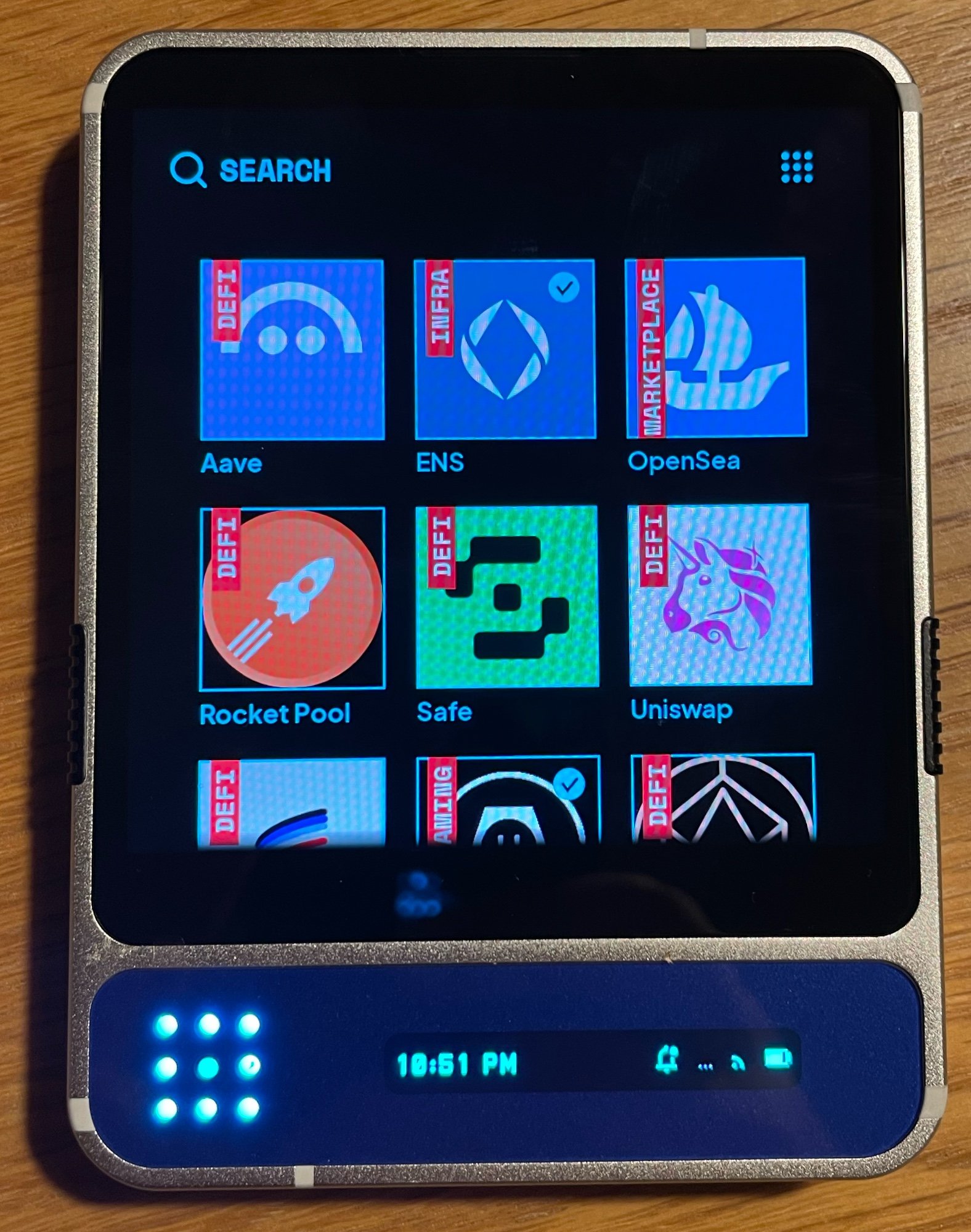
If Play Store blocks the app in some regions, how about Farcaster adding the android version of the app on @ethos dGEN App Store?
PSA
Farcaster is adding more crypto functionality, and mobile app store policies in some regions don't allow crypto apps. Other popular wallets also have to follow these rules. A very small number of users will be affected by these changes.
If you are one of those users, the app will notify you and will let you export both your Farcaster and wallet recovery phrases.
--@dwr
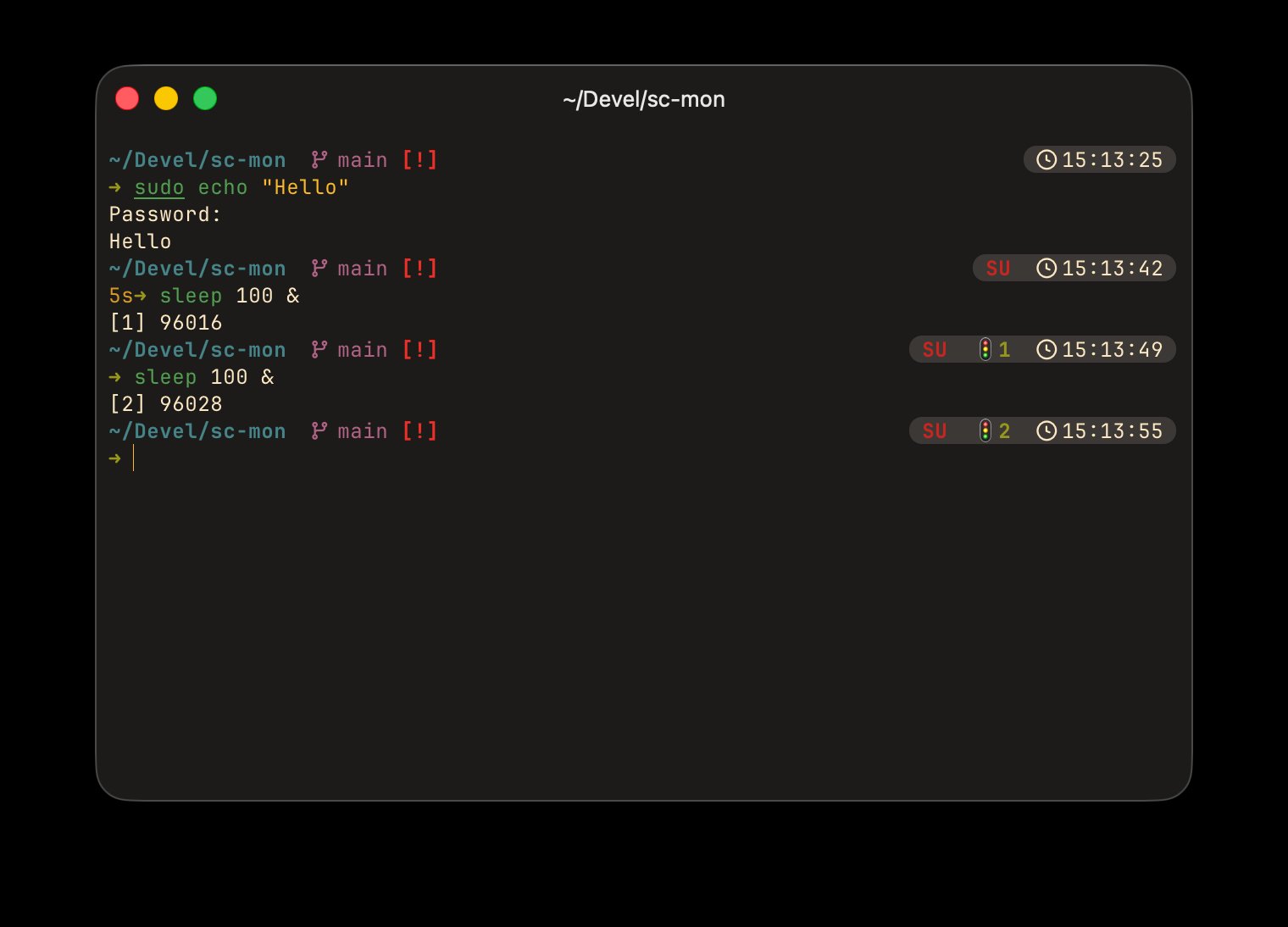
Got starship.rs to work the way I like it.
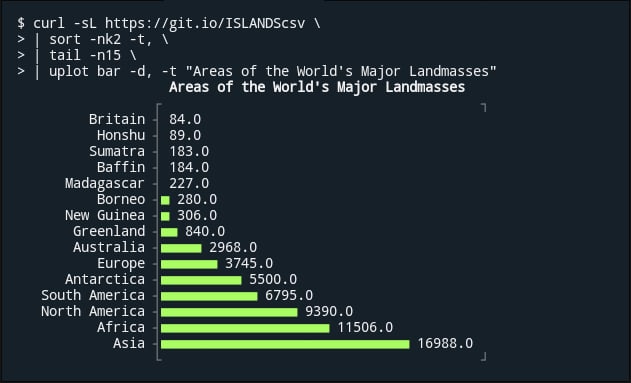
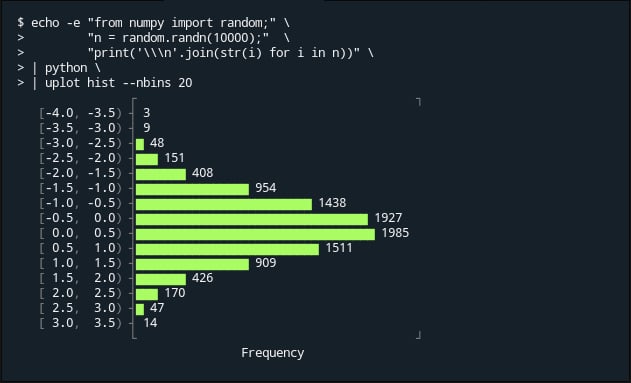
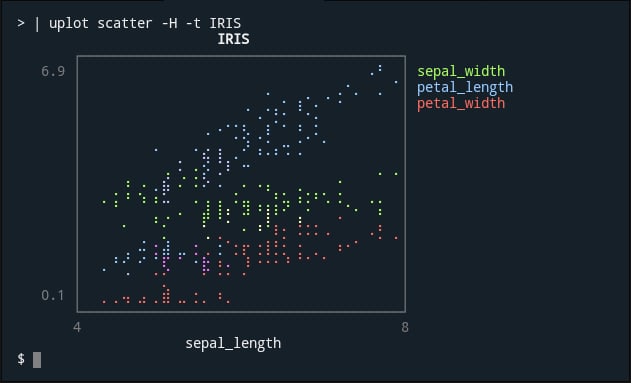
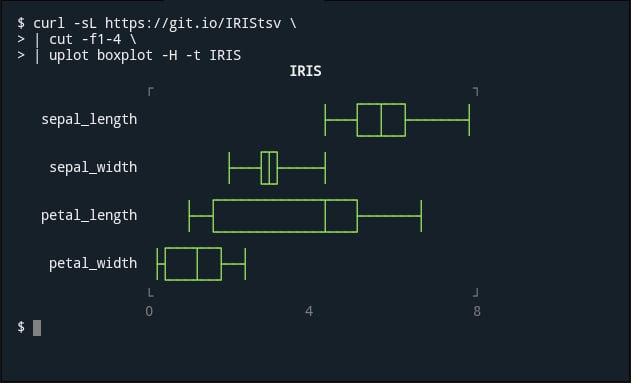
Nice, easy to use charting tool for the terminal: YouPlot https://github.com/red-data-tools/YouPlot
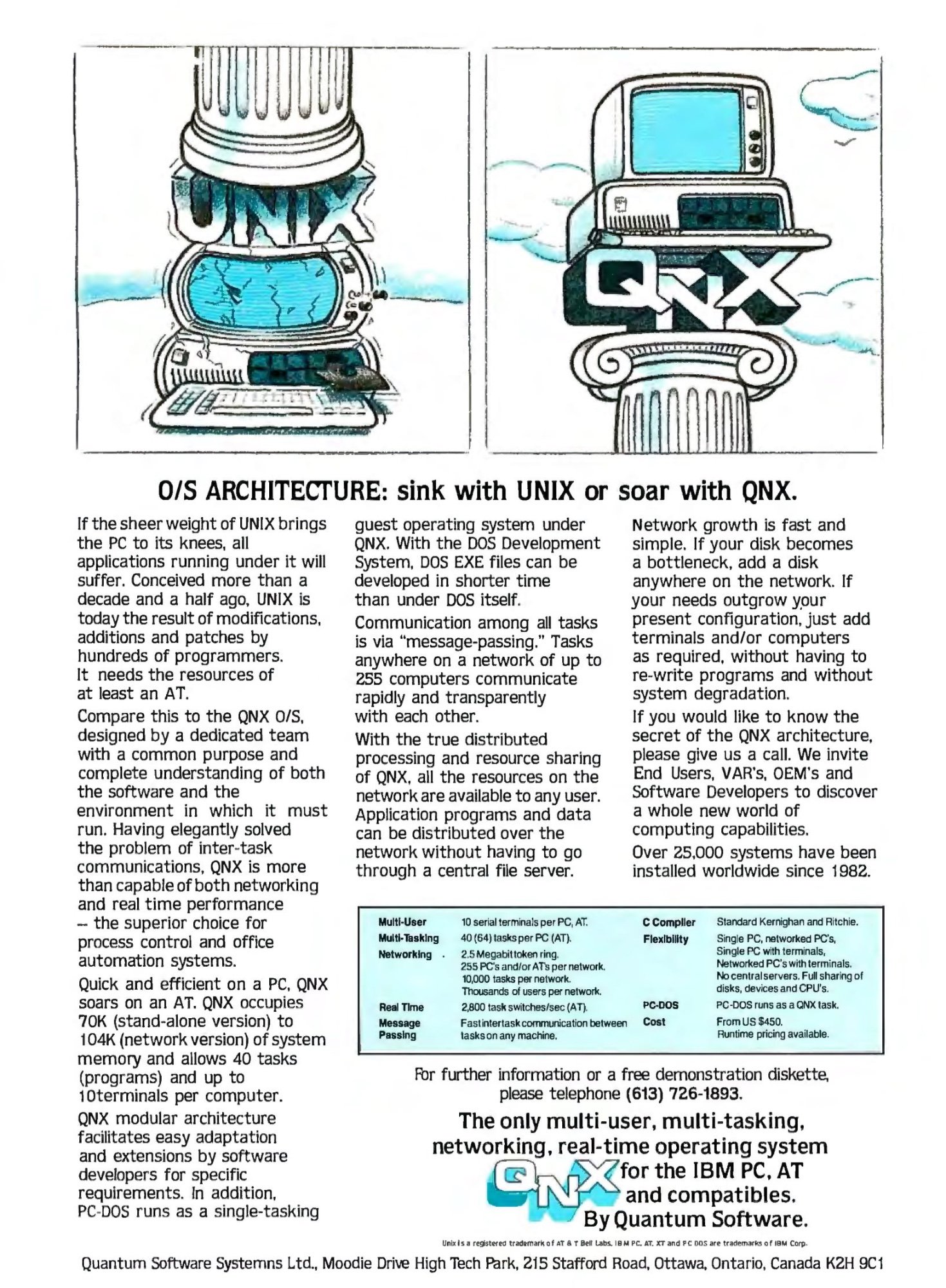
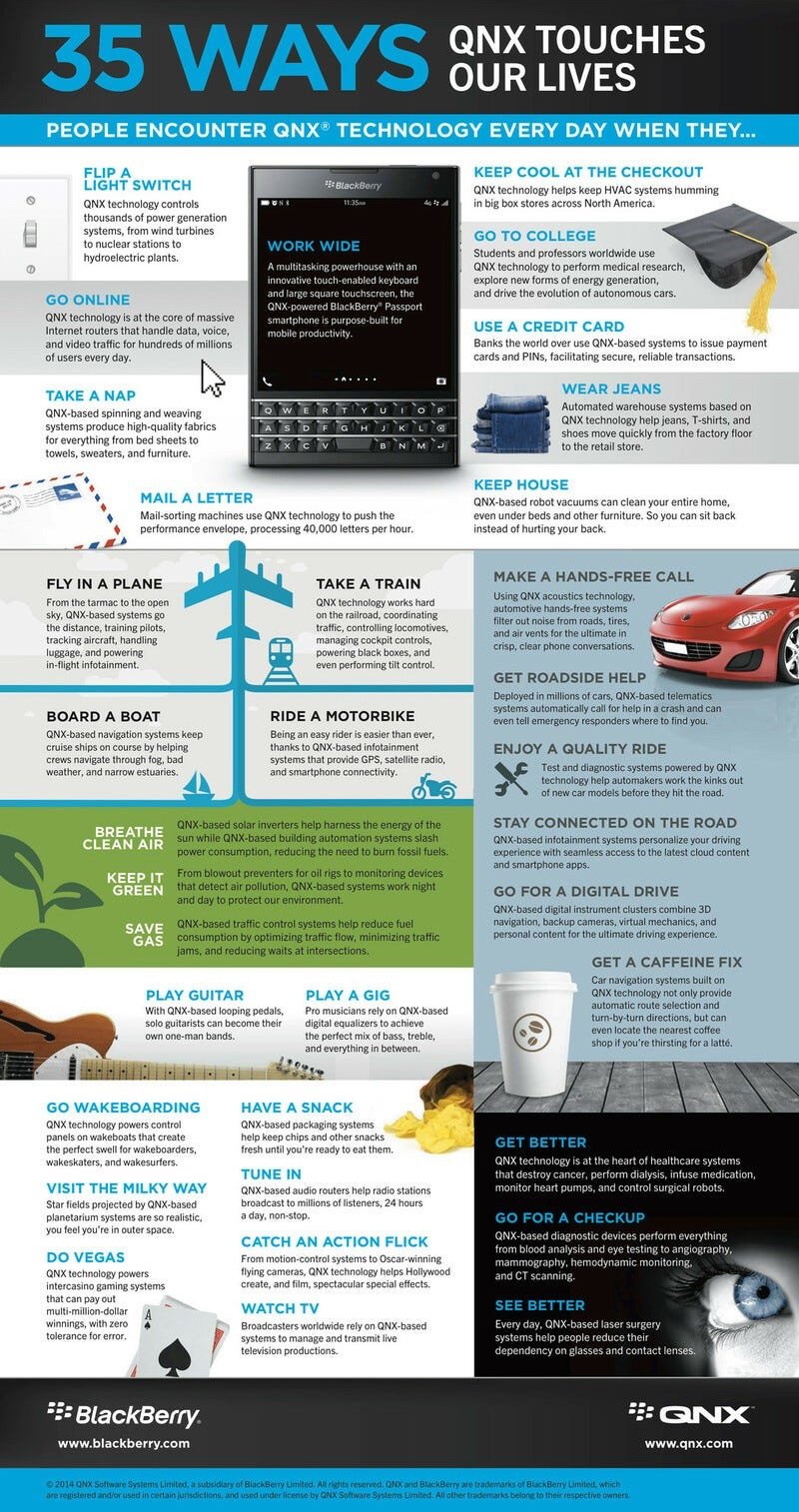
The QNX Operating System: An amazing story of an OS that started 45 years ago. Today it's used by Boston Dynamics and SpaceX, among others.
Who can ignore this? 👇
Versions 4.2, 4.22, and 4.24 all released in 1995. The final version 4 release was 4.25 in 1997. At least one QNX 4 installation ran for over 20 years without a reboot at the ESA. This was possible because peripherals could be hotswapped, drivers could be changed, and network nodes could be added or removed without bringing the system down.
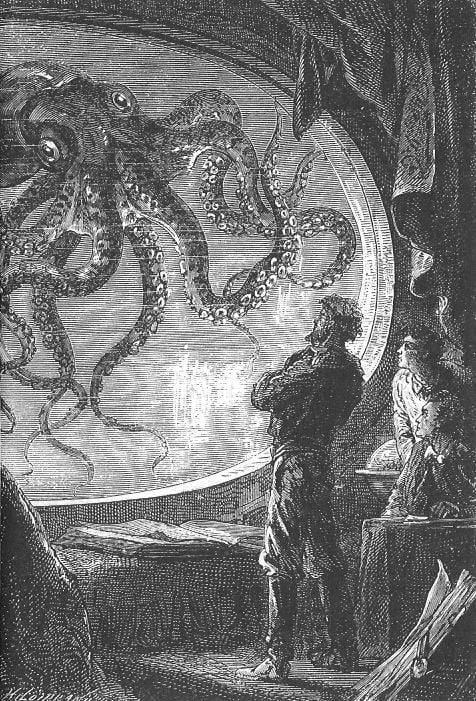
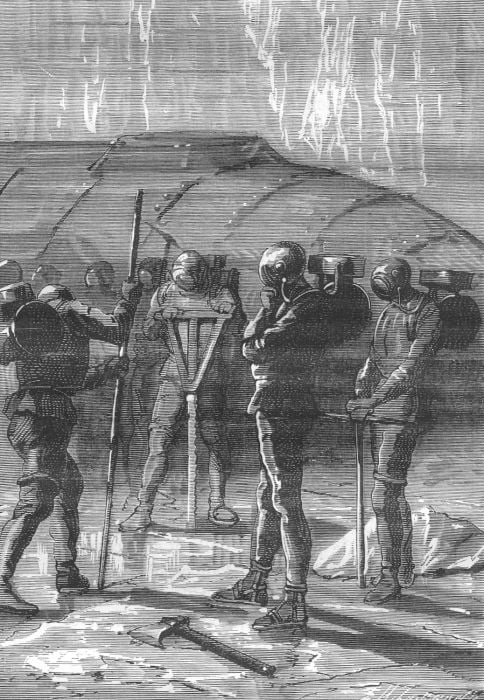
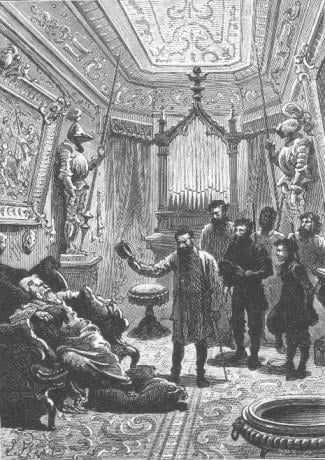
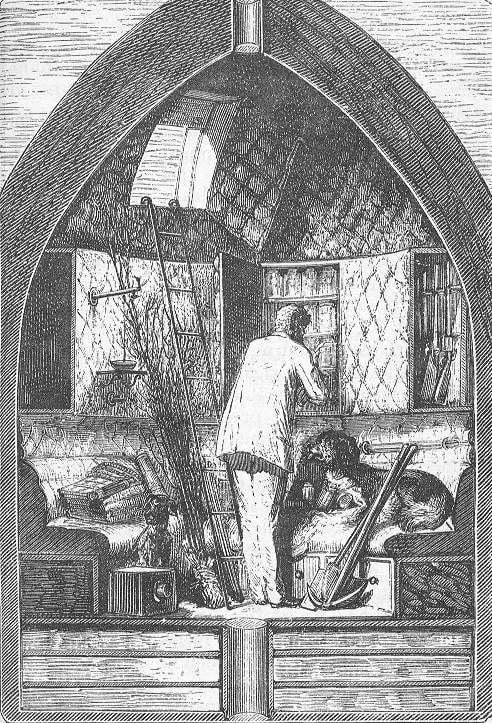
I found this gem: The Original Illustrations of the Voyages Extraordinaires by Jules Verne. https://jv.gilead.org.il/rpaul/
The first Jules Vernes books I read as a kid were my mother's, who had read them as a kid too. And they had these amazing illustrations that guided (not too much, just enough) my imagination as it recreated Verne's amazing worlds.
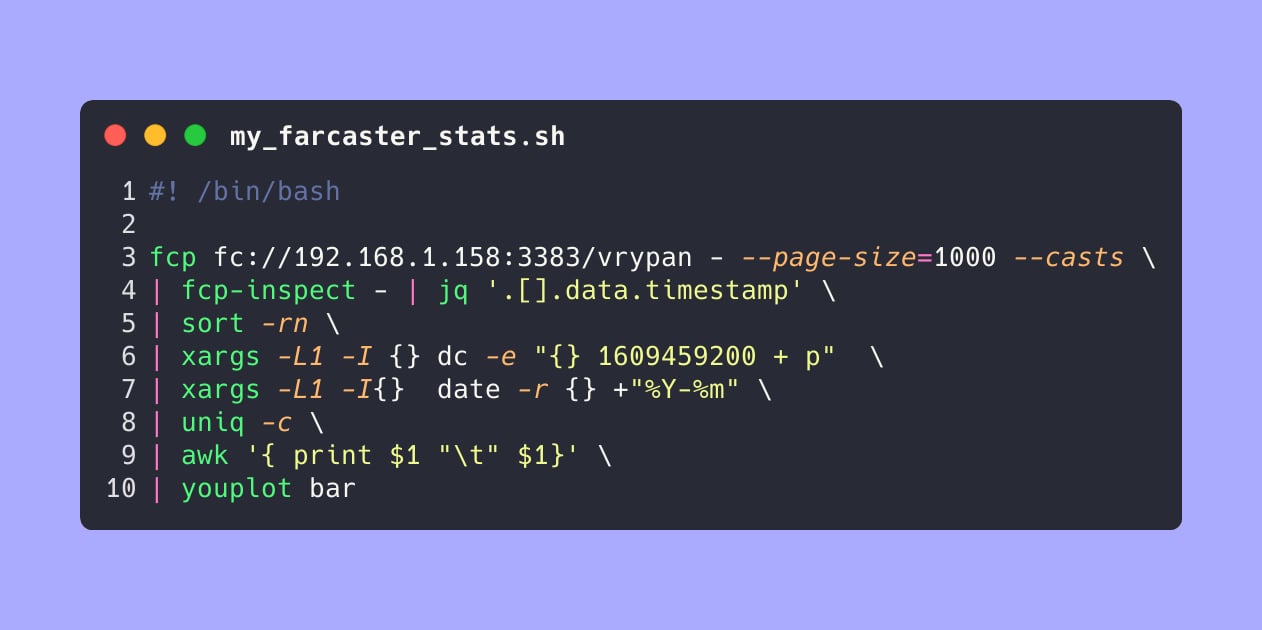
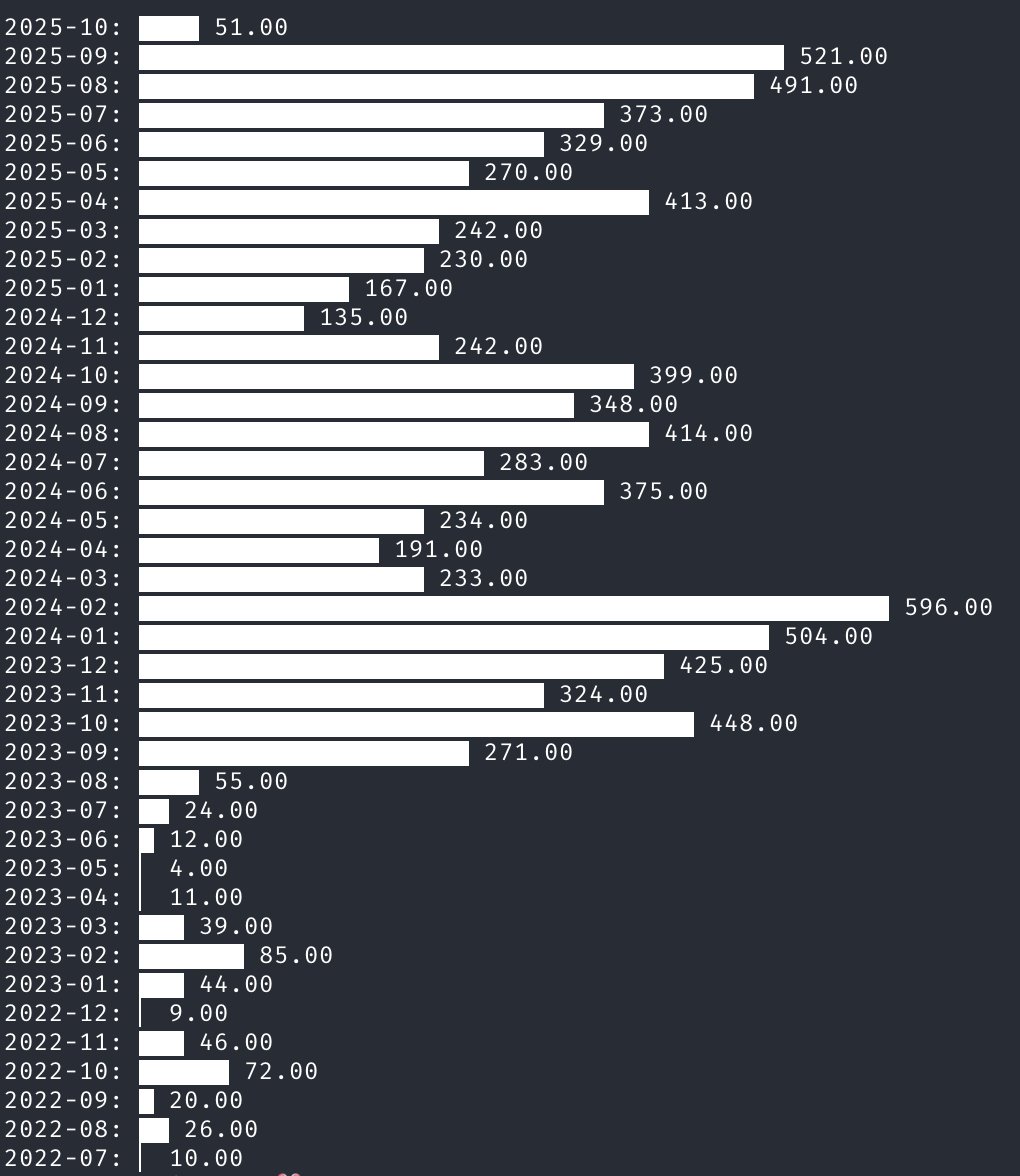
This chart shows the number of casts I’ve posted each month since I first joined, in July 2022.
What happened in August 2023? I started running my own hub, and in October, Farcaster opened signups to everyone (until then, it was invite-only).
That p2p version of the protocol, with all its flaws, is what really got me passionate about Farcaster. I ran my own hub, and it had the same privileges like any other hub. But if I discovered Farcaster today, would it feel as exciting as the 2023.09 version? I’m not so sure.
I was thinking about this while watching this presentation about the “ATProto ethos.” https://www.youtube.com/watch?v=1A-0k58TfPo
We used to have these kinds of discussions here, too. Not so much anymore. The Farcaster ethos has become "DAU growth", there is no passion about extensibility, data ownership, censorship resistance. I don't feel there is any vision about the protocol, how they want it to look in one, two, five years, just a list of feature requests, prioritized according to some DAU metric.
Yes, I know, "none of these matter if we don't have millions of DAU".
Like I said: "DAU growth".
I also know I'm a niche audience, you can't grow to millions of users like me. Oh, well..
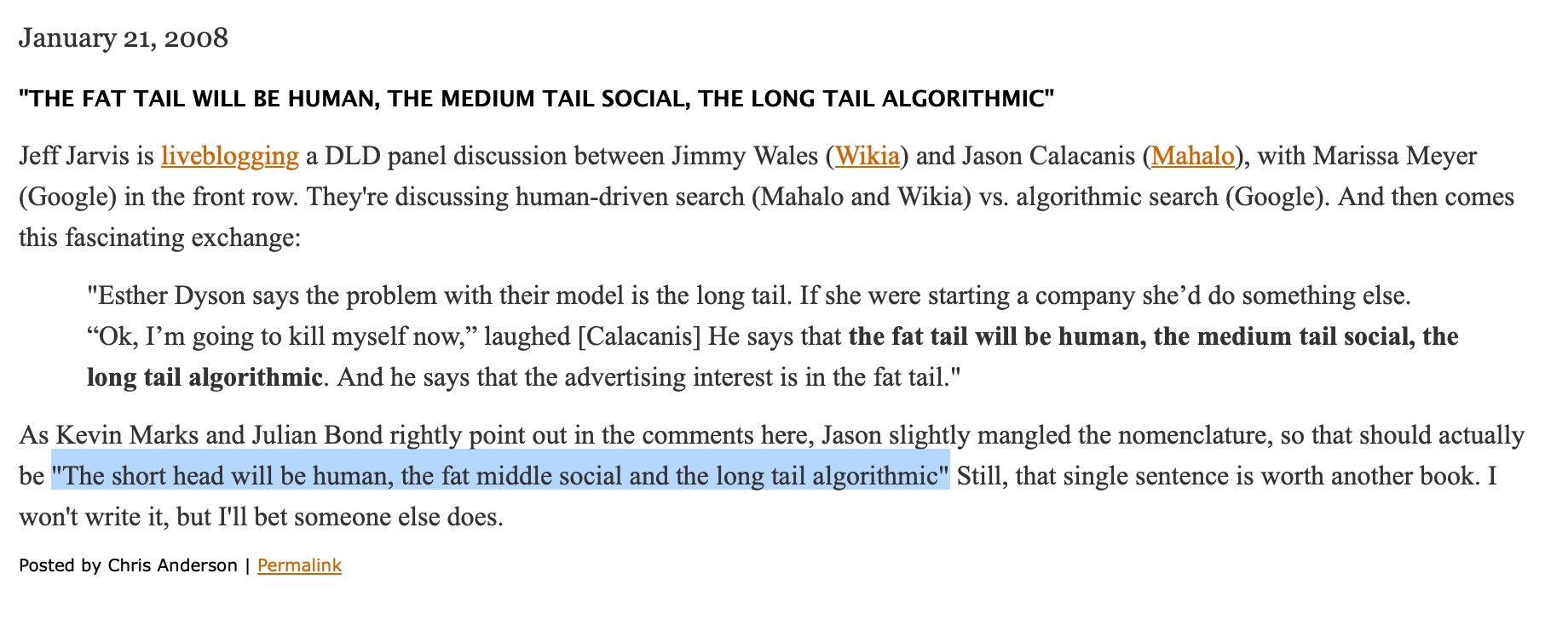
"The short head will be human, the fat middle social and the long tail algorithmic"
The recent LLM-generated feeds reminded me of this. Said in a different context, but it can be interpreted through a totally different lens today.
The post is no longer available, but here's the WayBackMachine link.
Connecting with people on a social wallet is even less interesting than connecting with people on a professional network.
Static site generators are simple, but if you've used them long enough you know there are a thousand details that can make your life easier or harder.
I finally built the SSG I always wanted.
The "long tail" is a beautiful concept.
Chris Anderson coined it to describe how businesses like Amazon and Netflix to sell a large volume of niche products, but for me it's everything not captured by the spotlight, the mainstream, the "most users".
The long tail is beautiful and diverse and niche and weird. I like it more than the fat head.
Early rain.
In Greek we have a special word (πρωτοβρόχια) for the early autumn rains, that come after a long, dry summer.


Web3 is focused on L1s, L2s, etc, but often ignores L0: people. But censorship resistance, and resilience in general, does not only come from tech specs. The actual relationships, sometimes mapped using tech, sometimes not, are equally important.
Our personal, social, professional, etc networks are not defined by an app or a protocol, in the same way that our friendships are not defined by the bar where we usually hang out with our friends.
Technology has become an important component of many of our relationships. I've met interesting people on Farcaster, that I wouldn't know how to contact or interact with if Farcaster went away. A good part of my L0 depends too much on an L1. From a purely technical pov, that's wrong.
I'll try to fix it. Follow me on https://x.com/vrypan and https://bsky.app/profile/vrypan.bsky.social, and I'll try to post more there too.
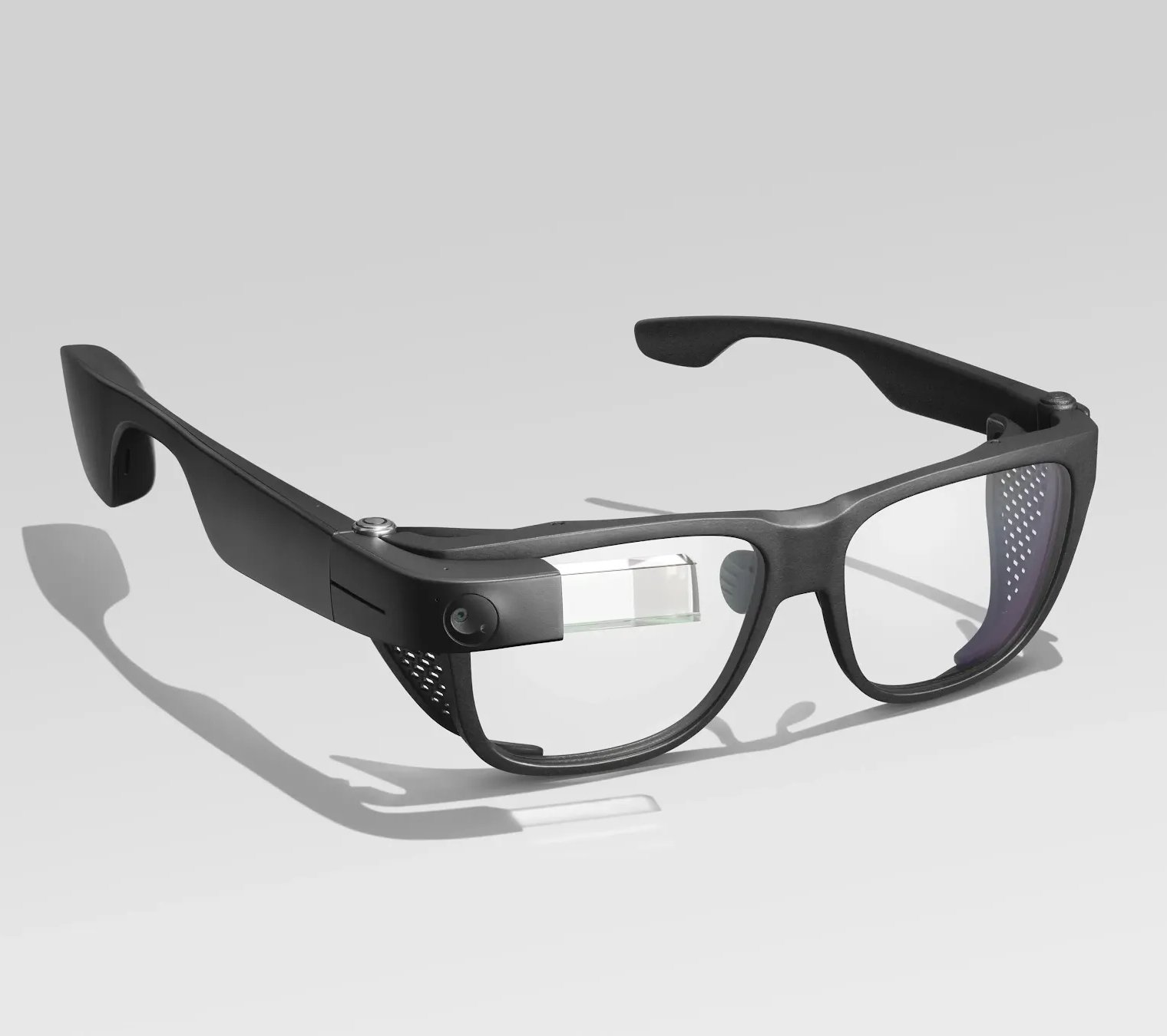
In April 2012, Google announced Google Glass.
The device allowed users to take photos, record videos, send messages, and receive navigation and calendar updates via its heads-up display.
Despite the innovative technology, the device faced significant criticism regarding privacy, driven by the camera's ability to record unnoticed. Social stigma also played a role, as wearing the device was perceived as unusual or intrusive. 🤔
https://x.company/projects/glass/ https://en.wikipedia.org/wiki/Google_Glass
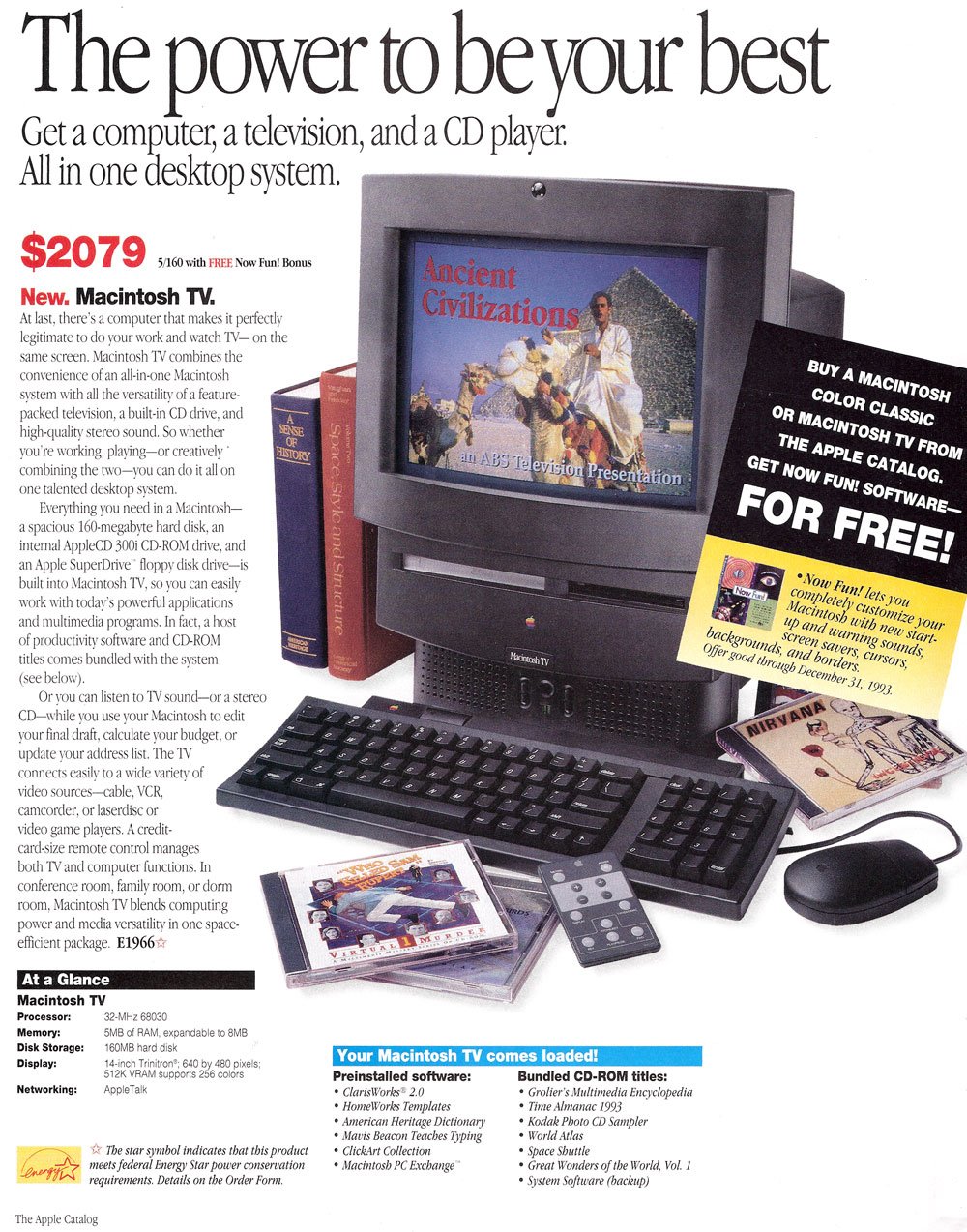
Yes, Apple did sell a TV in the 90s!
The Macintosh TV was a cul de sac off the road to converged video Released in 1993, the $2,099 Macintosh TV sold only 10,000 units.
Btw, it was the first Macintosh to be made in black and came with a matching black keyboard and mouse.
Last day of summer for me. It had a couple of unexpected turns, but I had a great time overall.
Looking for a new job, starting tomorrow.
GM
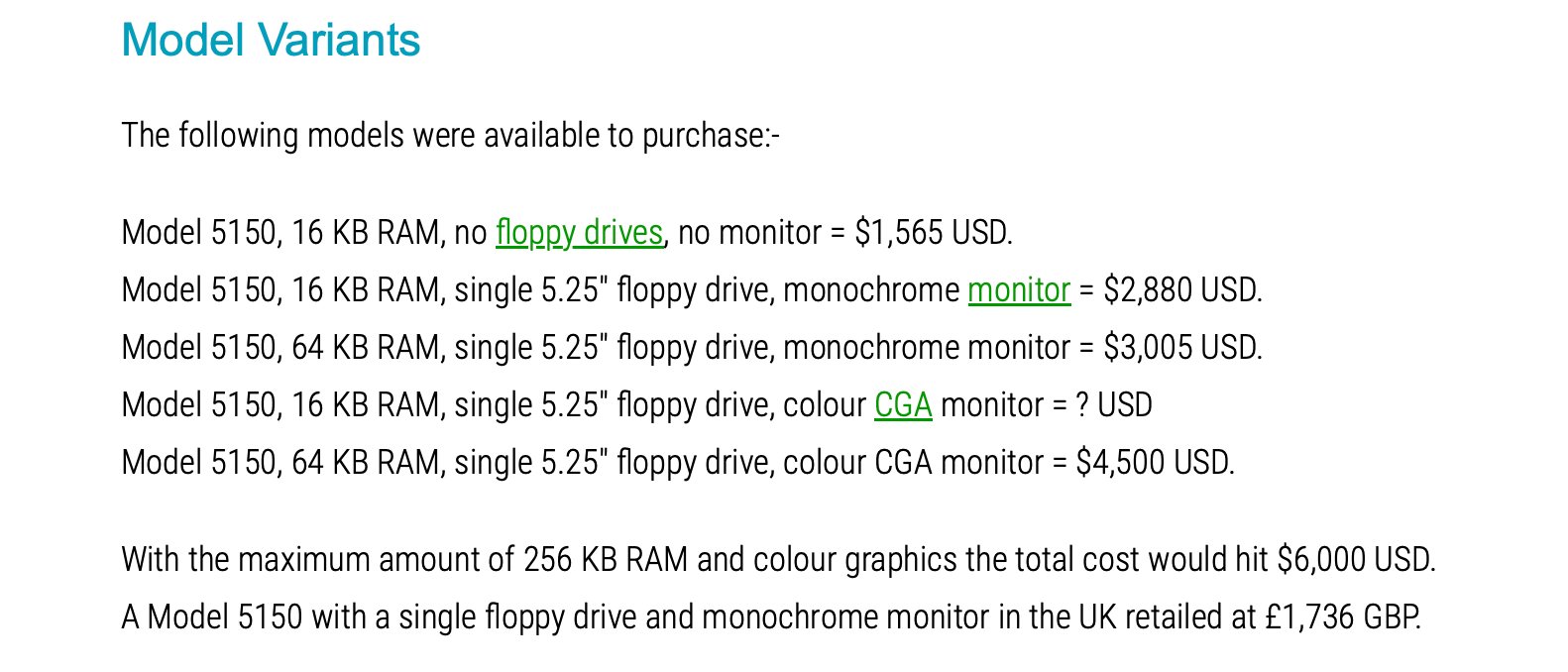
44 years ago, on August 12, 1981, IBM announces the IBM PC
https://dosdays.co.uk/computers/IBM%20PC%20(5150)/ibm5150.php
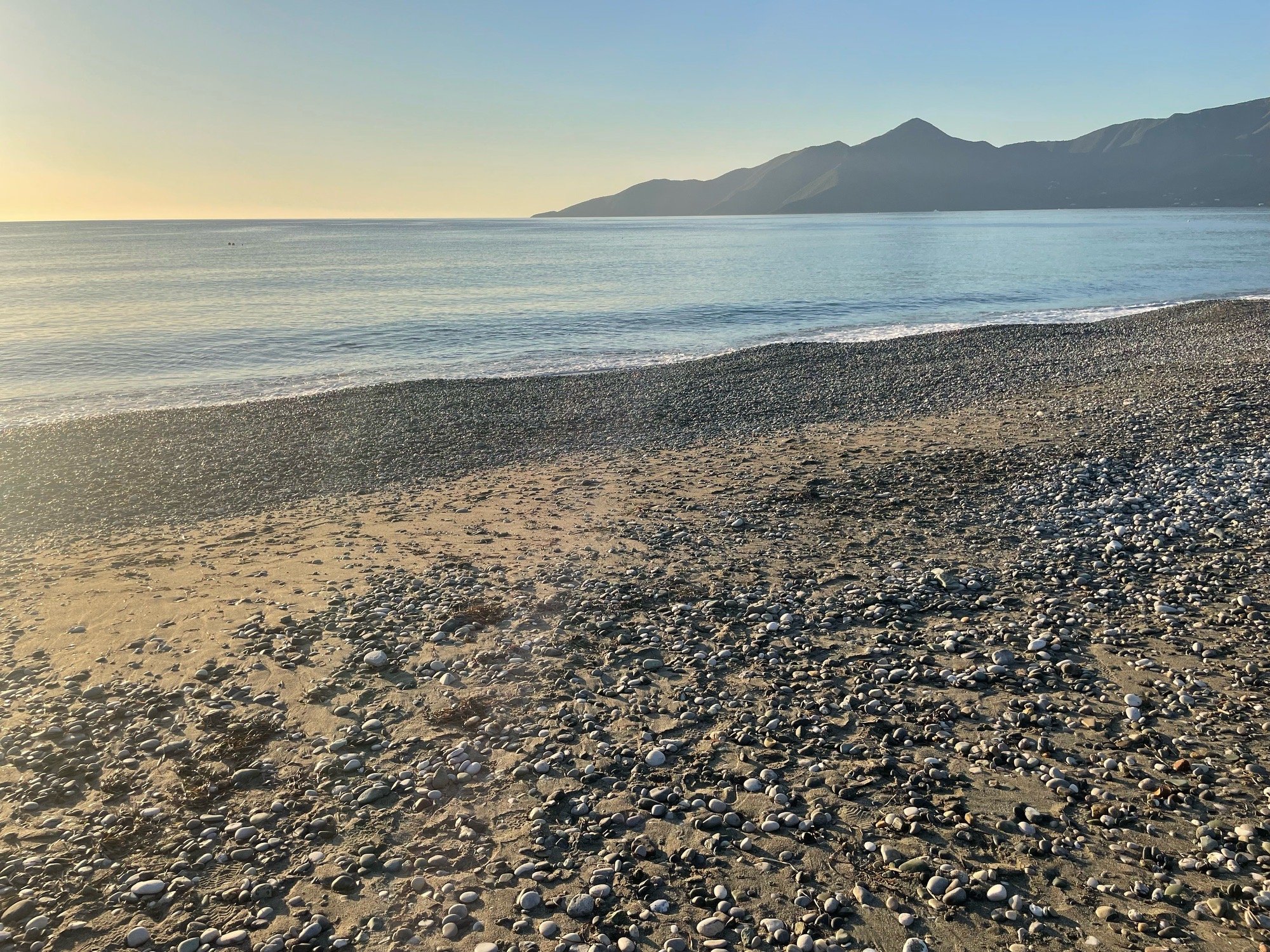
A summer night. I can hear the murmur of the sea. A company of elders are drinking and eating -a can hear them talking and laughing. My daughter is singing while playing the guitar. Cicadas, the soundtrack of Greek summers, sing along.
Here is a walk-through of WDIM.
Keep in mind: WDIM is focused on what your follows share and cast. If you follow 10 accounts, you will probably see nothing. If you follow accounts that cast things you are not interested in, they may be part of what WDIM shows you (though, it does take into account if you interact with a user's casts often).
It has become my favorite way of keeping up with Farcaster.
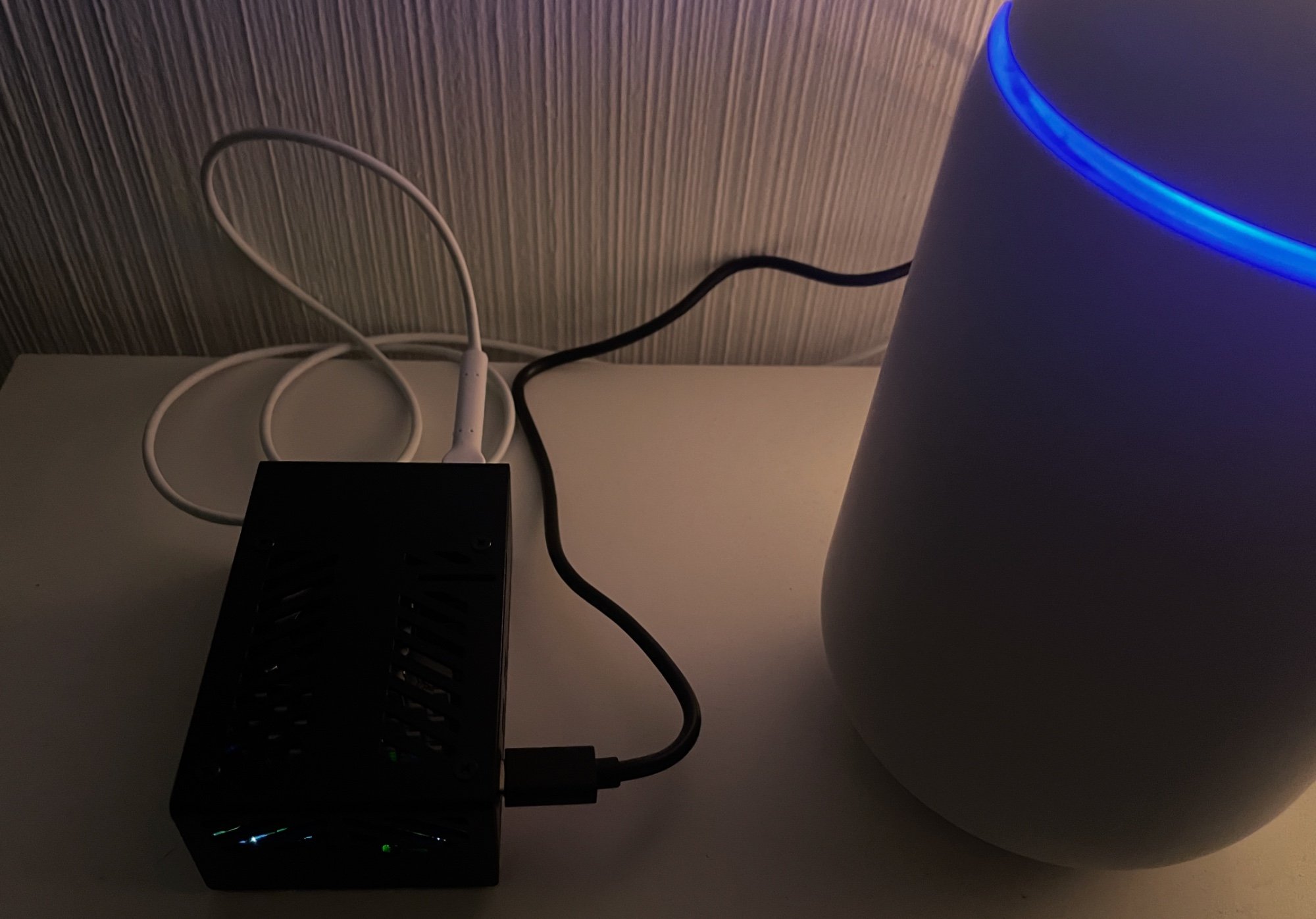
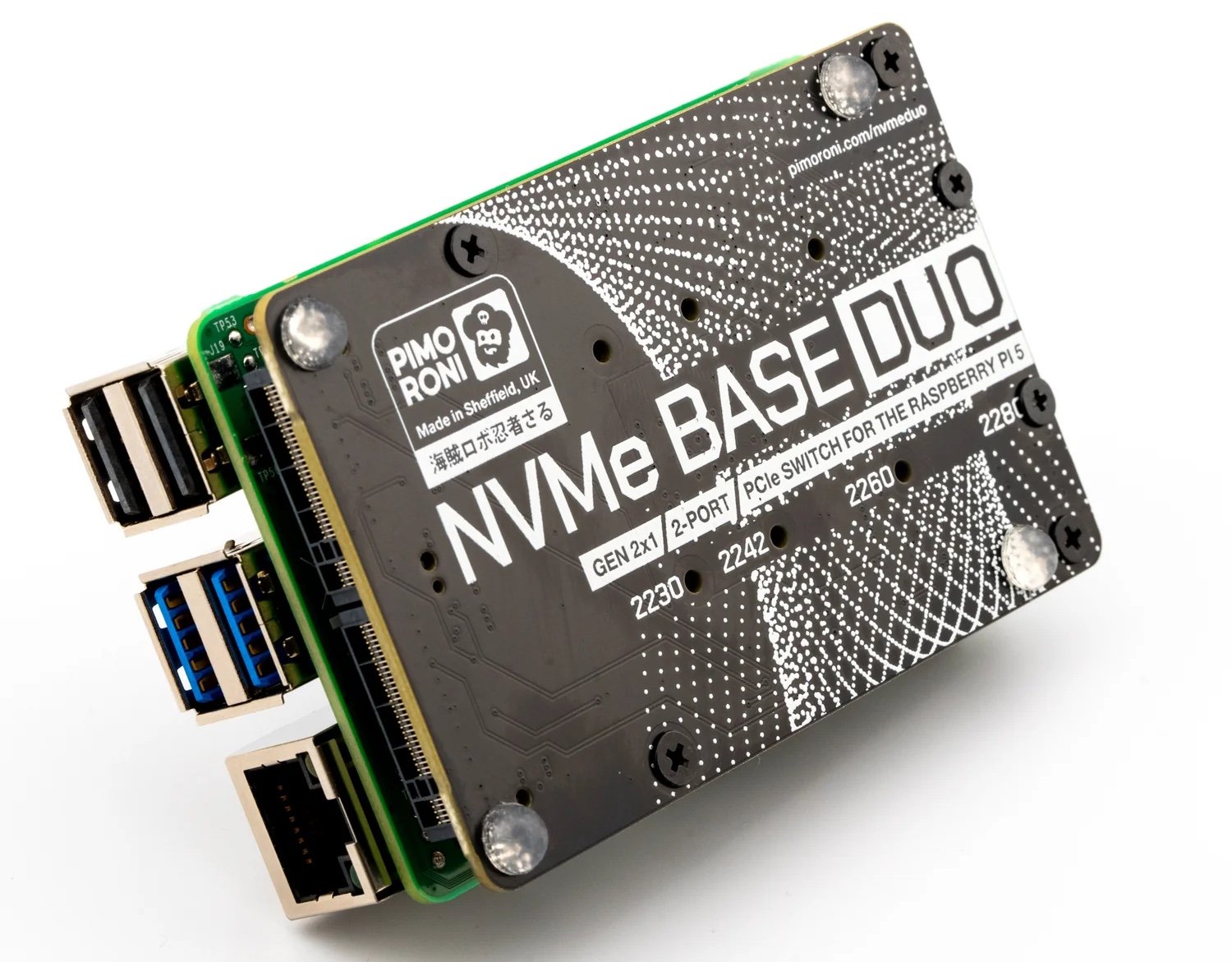
This is one of the best homelab servers I ever had. Not the most powerful, but really silent, very small footprint and it feels so reliable compared to much higher-speced (but same price range) computers I've had in the past.
Really love it. (Runs snapchain like a pro)

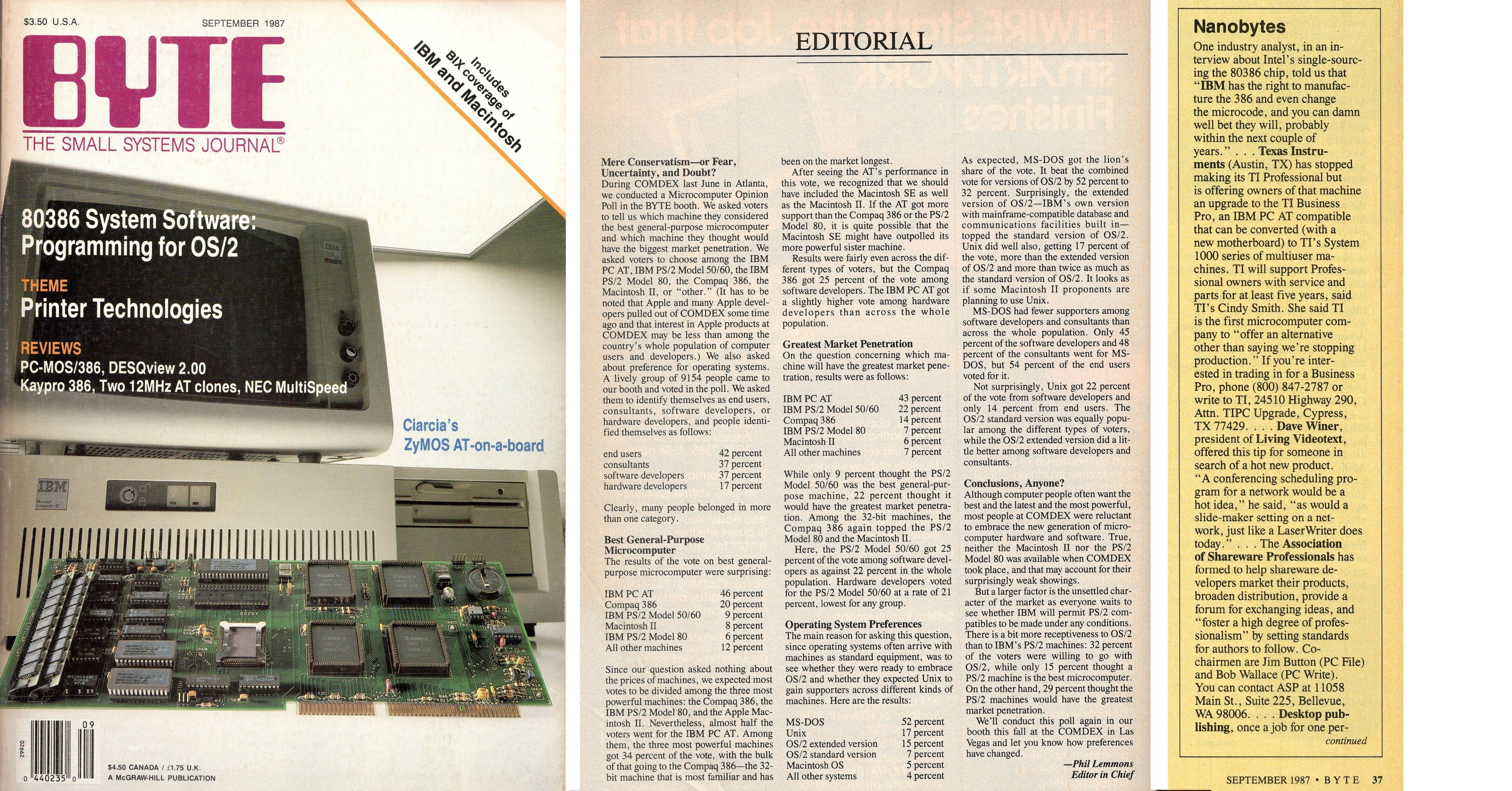
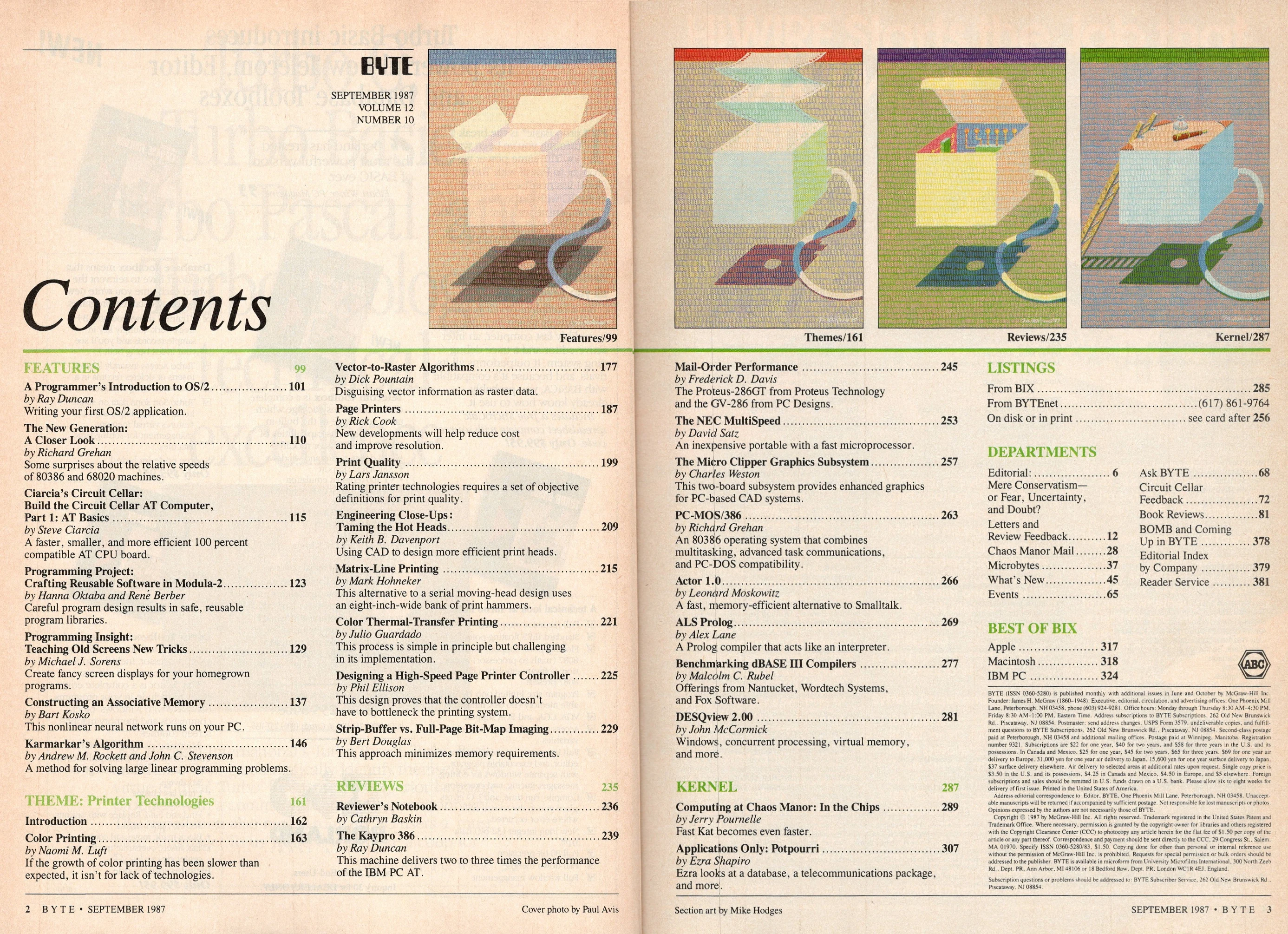
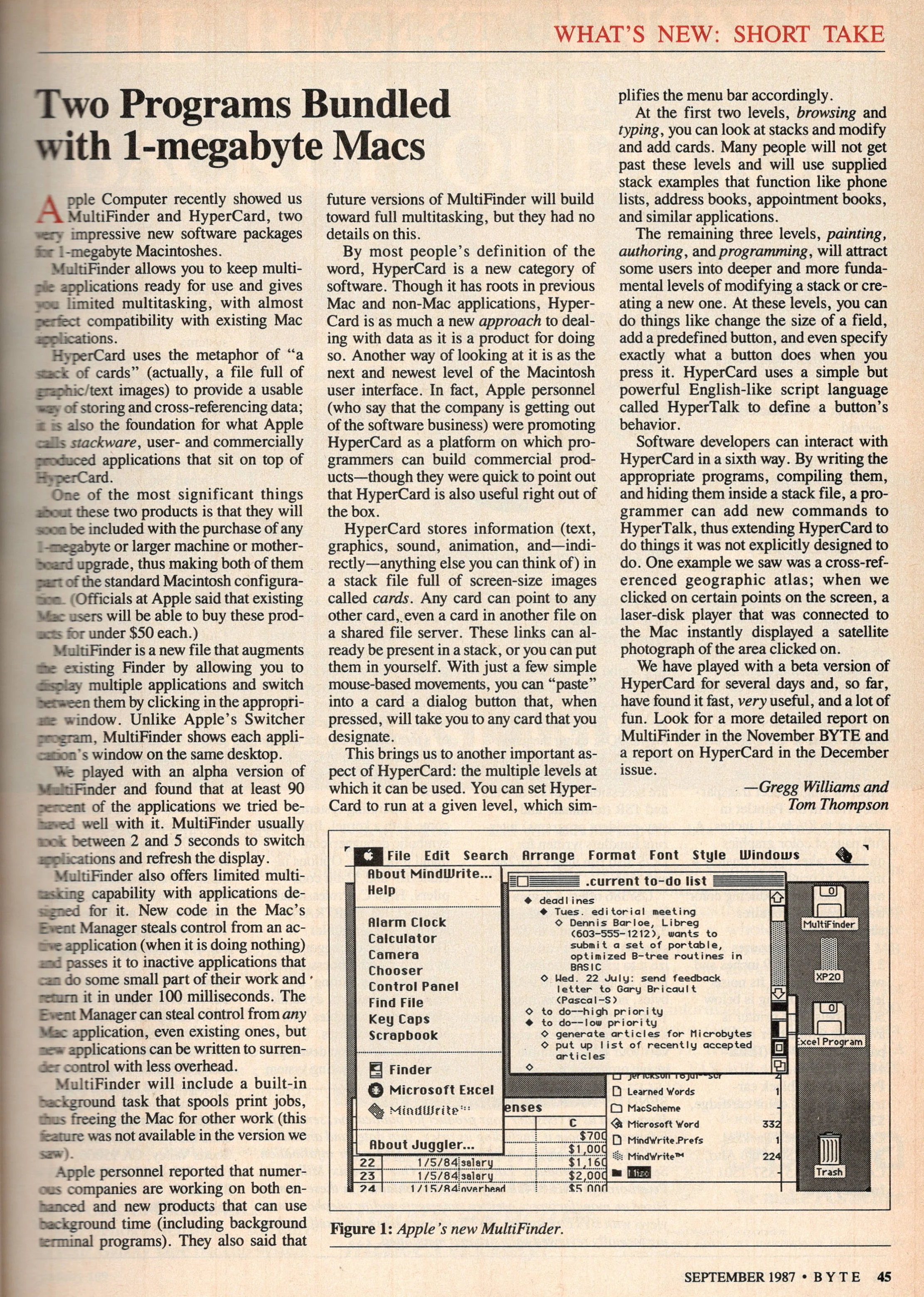
BYTE Magazine, September 1987. IBM's OS/2 is still a hot thing. Remember, this is a time when most PCs are bought by companies, they are still a "business tool" for most users. It's also a time that the industry finds printing technologies a fascinating subject :-)
If you're wondering what PC-MOS/386 was, it was a multi-user, multi-tasking OS that could run DOS programs. Intel's 80386 is almost 2 years old, commercially available at reasonable prices, and its 32-bit architecture, together with the MMU, allowes OS developers to dream multi-user/multi-tasking can come to the PCs.
There is also this preview, about Apple bundling Hypercard with "1-megabyte Macs". Leaving aside that it's 1 MB (not 1 GB...), Hypercard was a revolutionary product that inspired the creation of hypertext, i.e. HTML/HTTP, in other words, the Web.
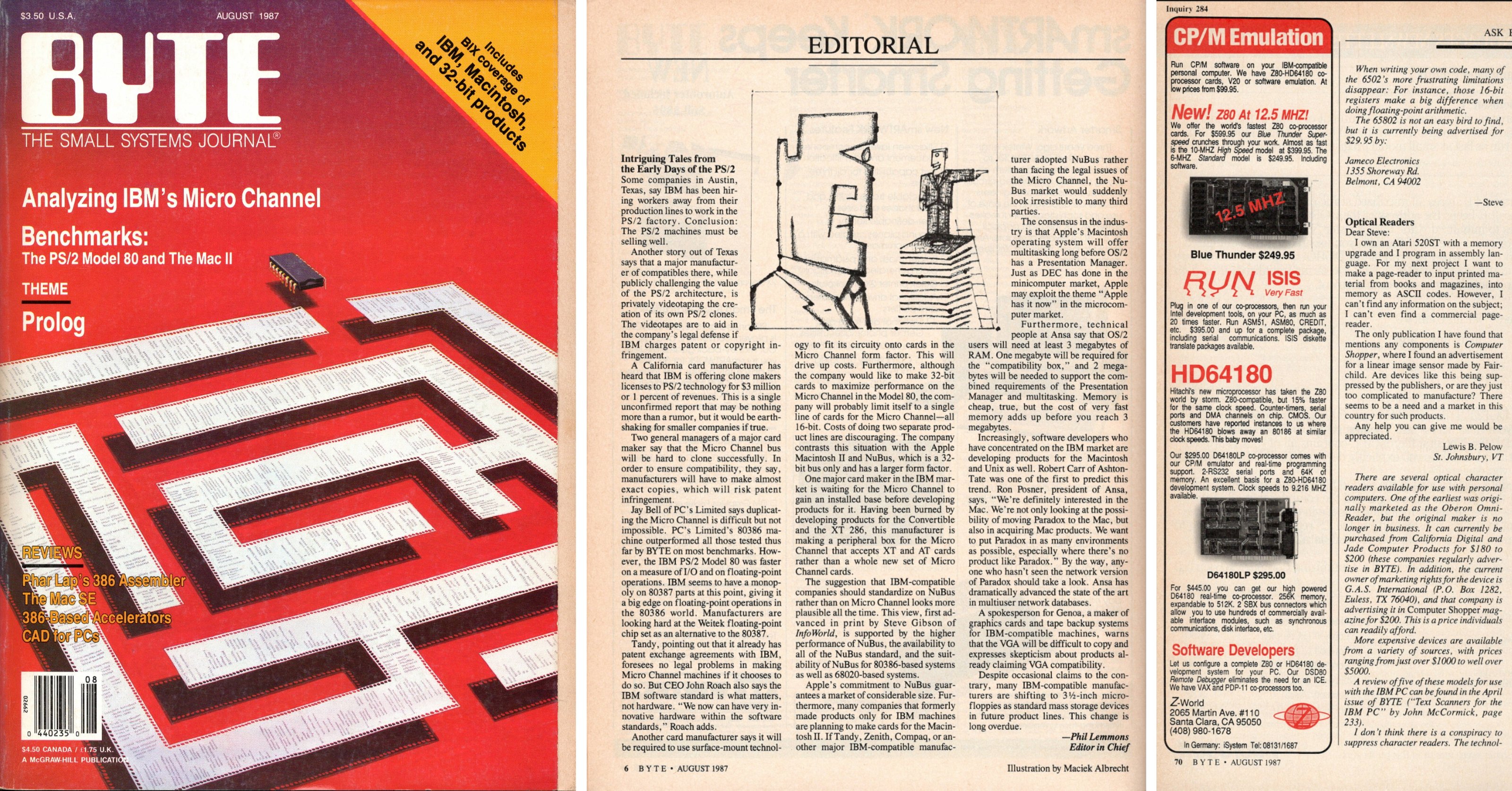
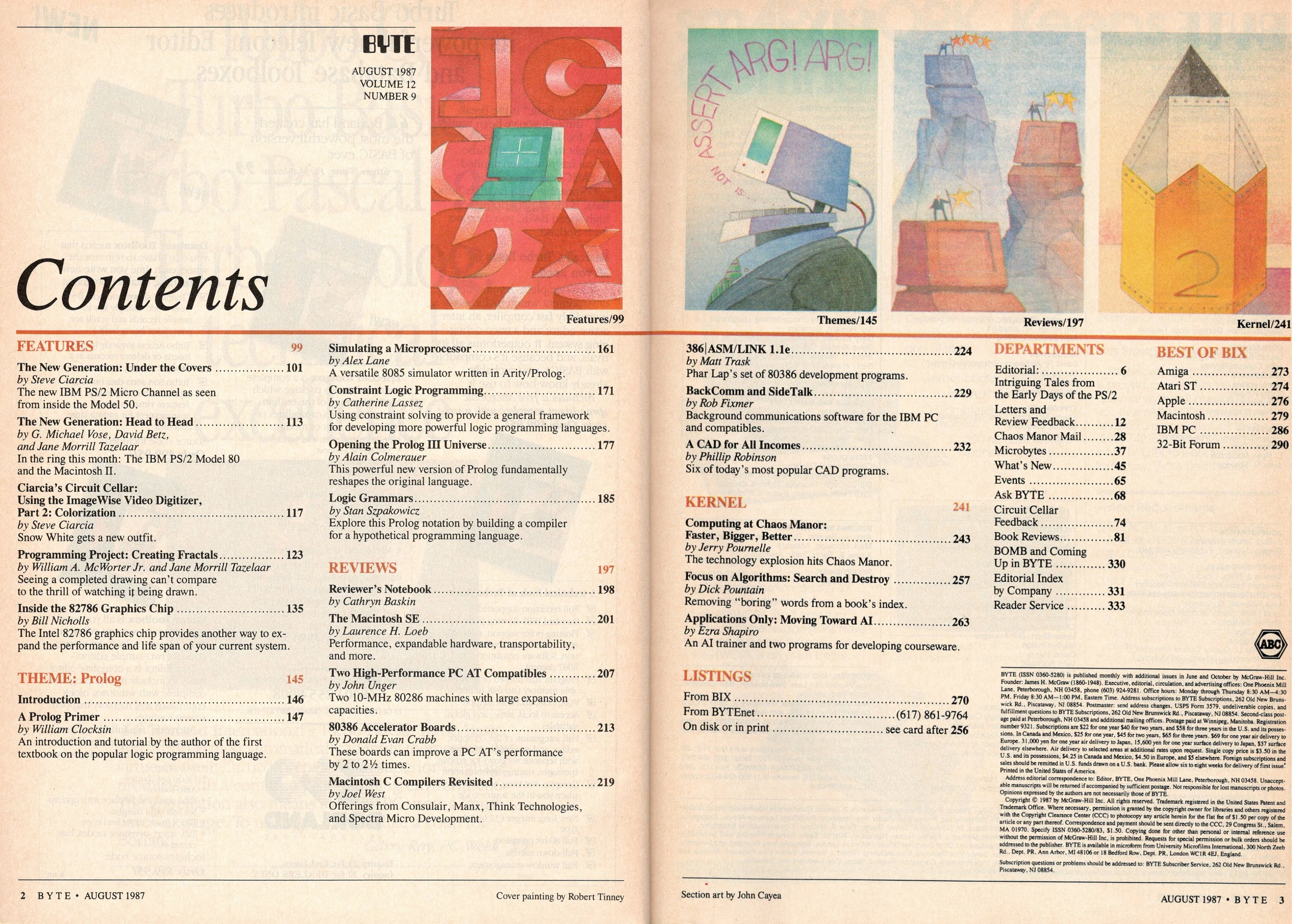
BYTE Magazine, August 1987. The market is trying to understand where IBM PS/2 fits and its future, so the issue is focussed on Micro Channel, the new bus architecture introduced with PS/2. The editorial will give you more insight. The extra snippet is from the Ask BYTE page. A guy is struggling with OCR on his Atari, and the ad is about running CP/M on your PC.
I'm trying to decide if the print format and everything that came with it (editors getting paid to put a lot of work in their articles) had actually higher quality density. Every time I browse BYTE's pages I try to think if I've seen such good technical (even low-level technical) content online, for years. And even if it were there, I don't think I'd read it on a screen...
This is my iconic image of builders.
"Lunch atop a Skyscraper" is a black-and-white photograph taken on September 20, 1932, of eleven ironworkers sitting on a steel beam of the RCA Building, 850 feet (260 meters) above the ground during the construction of Rockefeller Center in Manhattan, New York City. It was arranged as a publicity stunt, part of a campaign promoting the skyscraper. https://en.wikipedia.org/wiki/Lunch_atop_a_Skyscraper

Summer soundtrack
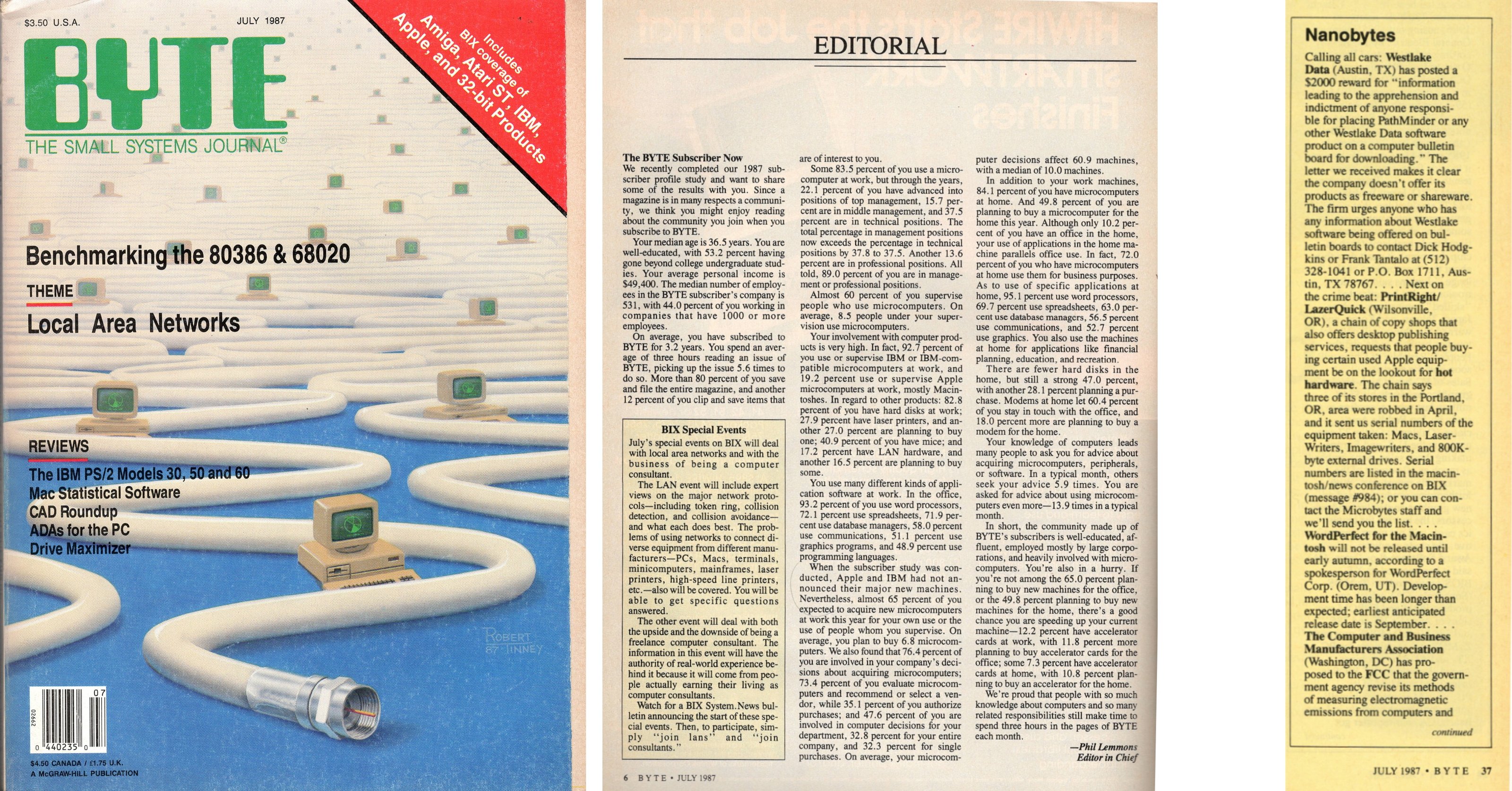
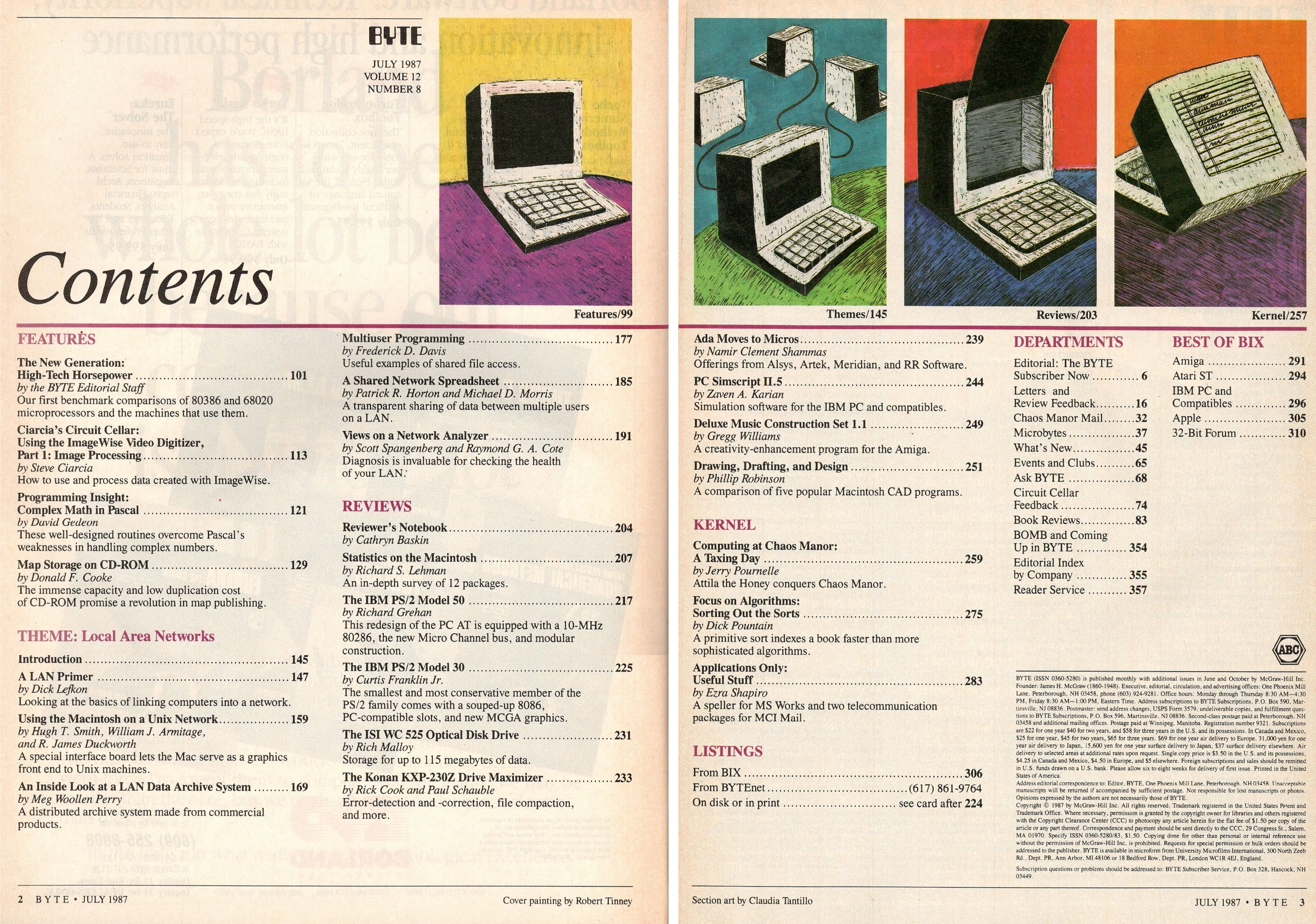
BYTE Magazine, July 1987. Worth checking the editorial that presents the annual BYTE readers survey.
The volume theme is LANs. Connecting computers together was far from trivial. (Consider that the survey mentions that among these highly educated, tech savvy, computer geeks, "17.2% have LAN hardware, and another 16.5% are planning to buy some"...)
The nonabytes clip is kind of funny by today standards.
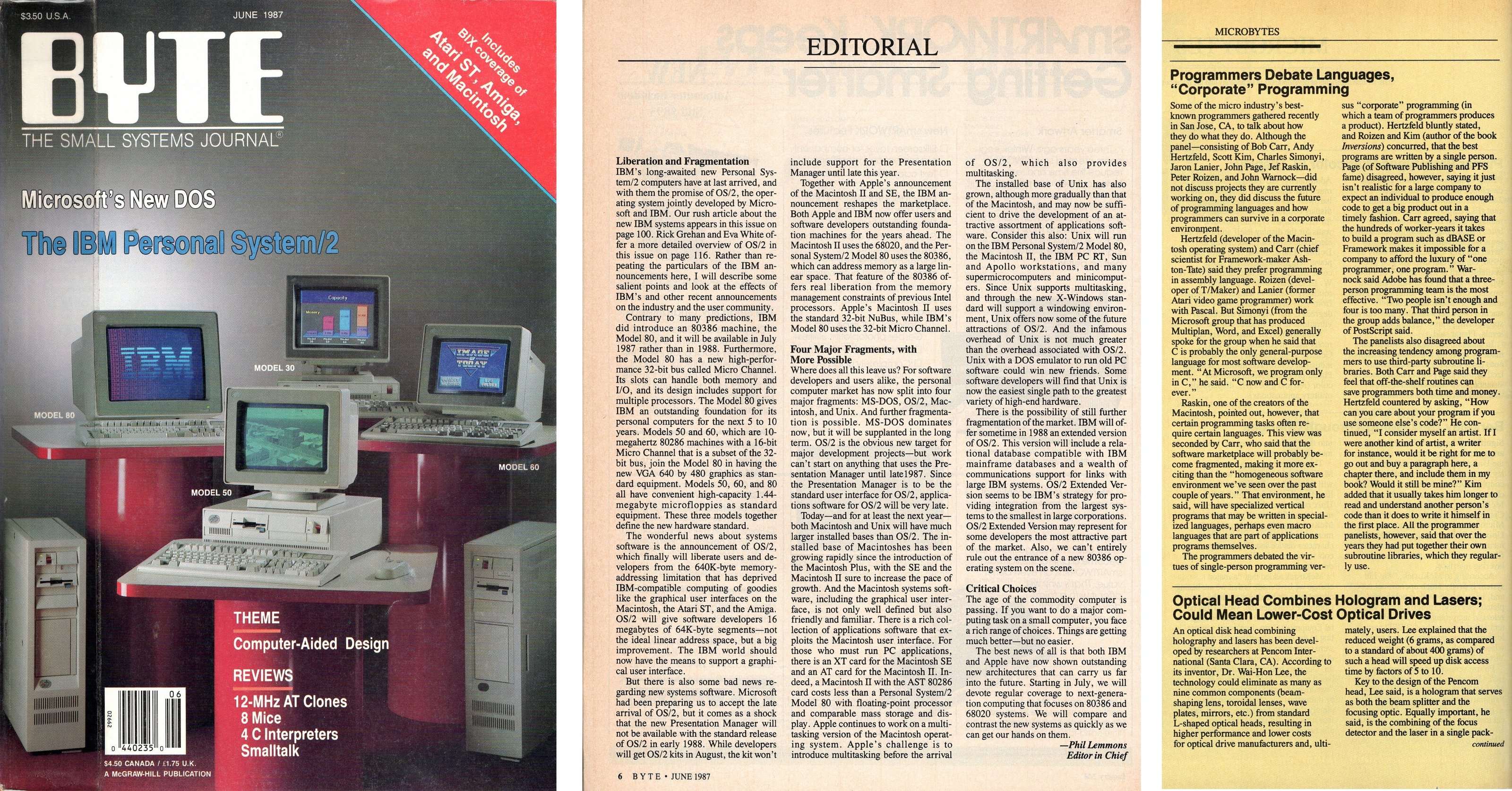
BYTE Magazine, June 1987. Main theme was IBM PS/2.
IBM had a glossy, multipage ad that started like this "In 1981, we introduced the world's most successful personal computer. Here we go again." Turns out, it didn't work as planned.
Worth reading the Editorial, to get a feeling of what was going on at the time.
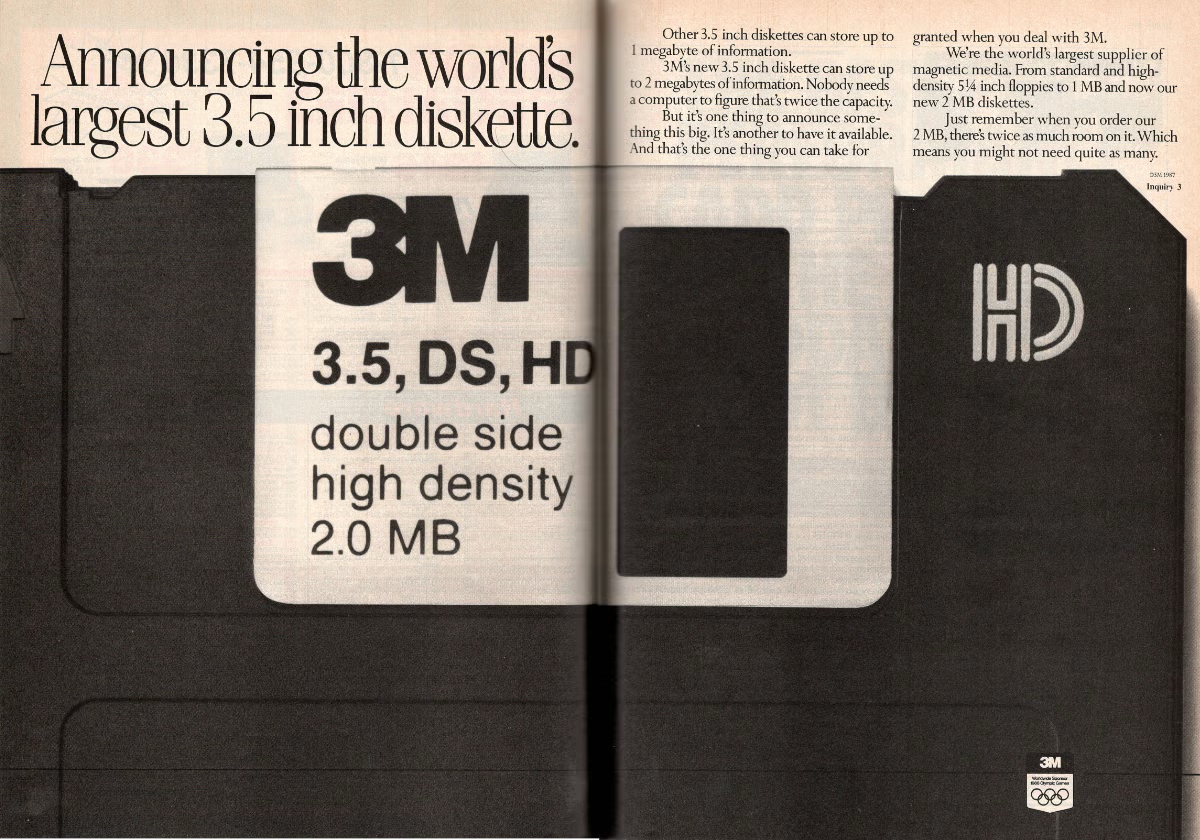
In the same issue, there was a two-page ad from 3M: "Announcing the world's largest 3.5 inch diskette." The attached image wouldn't fit on it.
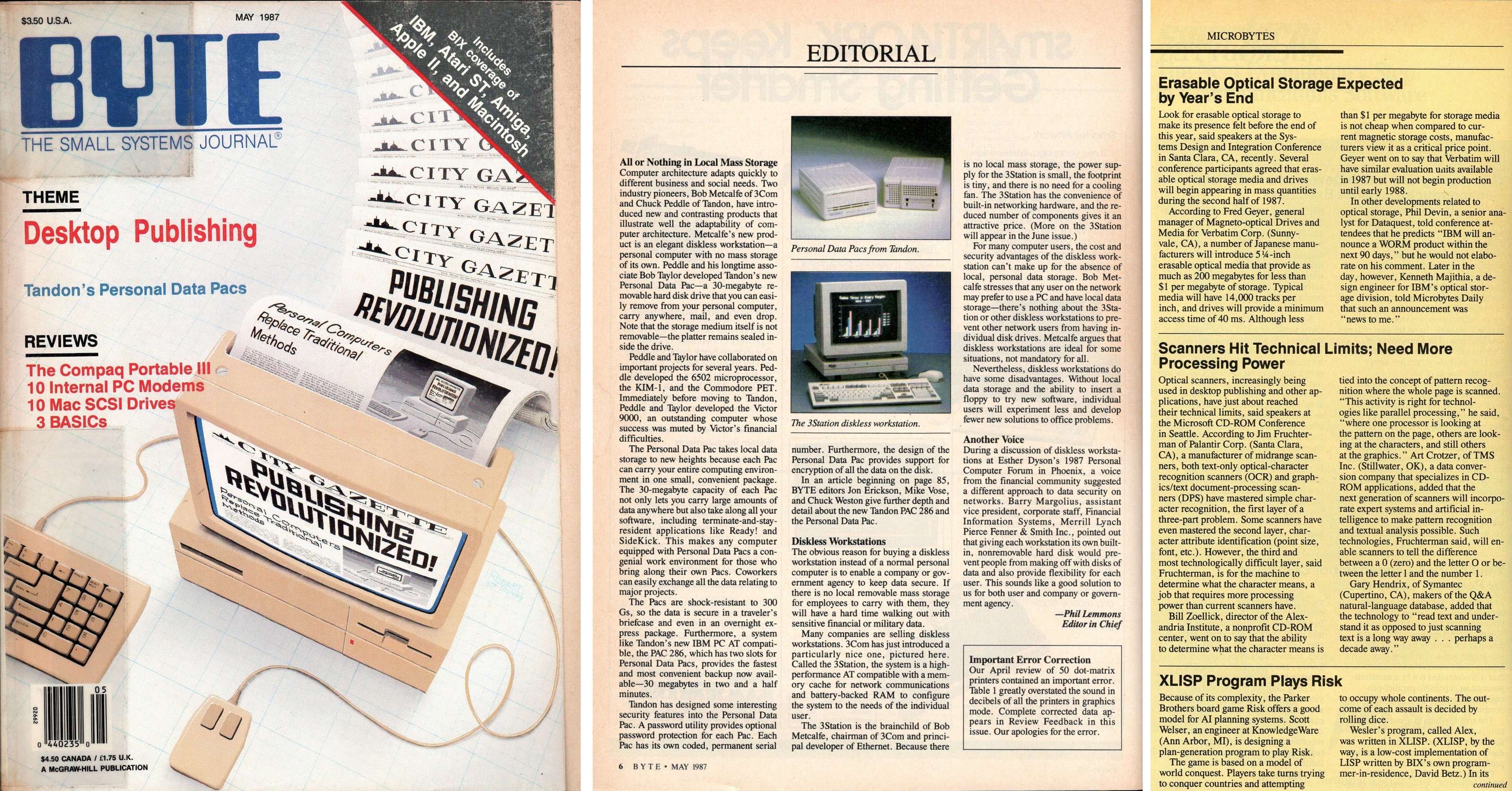
BYTE Magazine, May 1987.
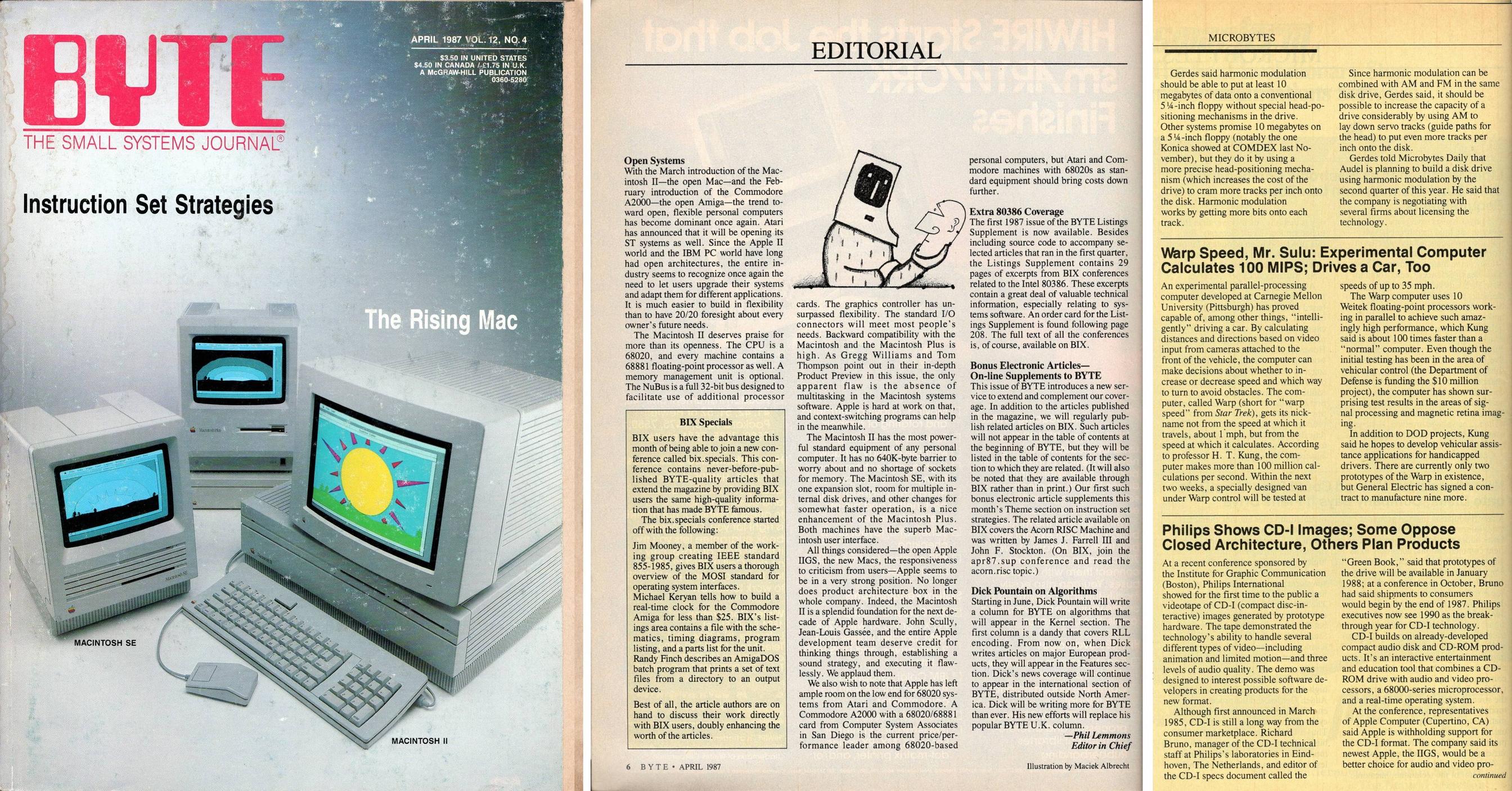
BYTE Magazine, April 1987.
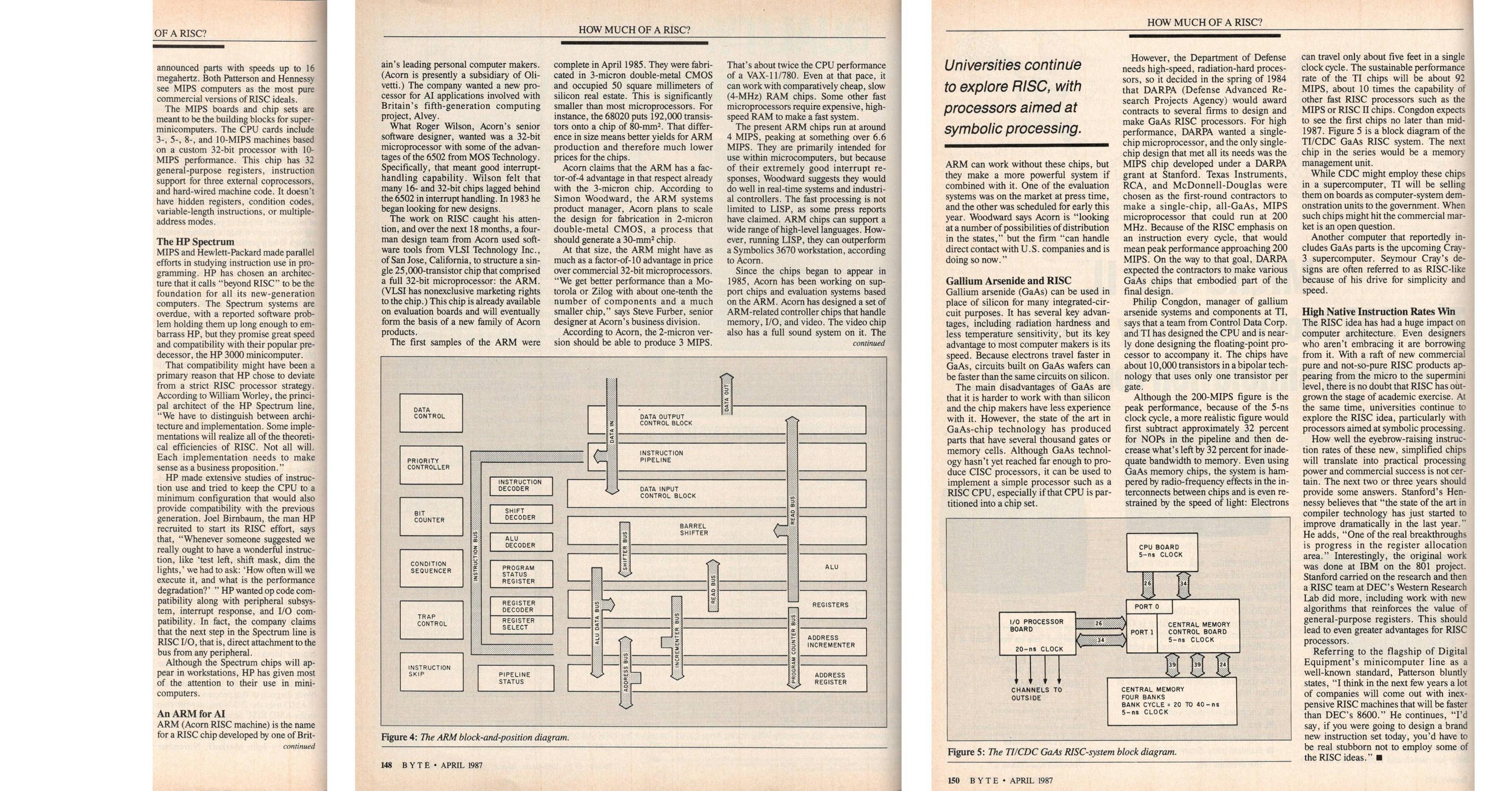
No one could tell back then, but the two stories in the April 1987 issue cover would eventually converge, decades later. The Instructions Sets Strategies special section gives us a glimpse at a chip developed by Acorn, a subsidiary of Olivetti (!), called ARM. This is where Apple Silicon started...
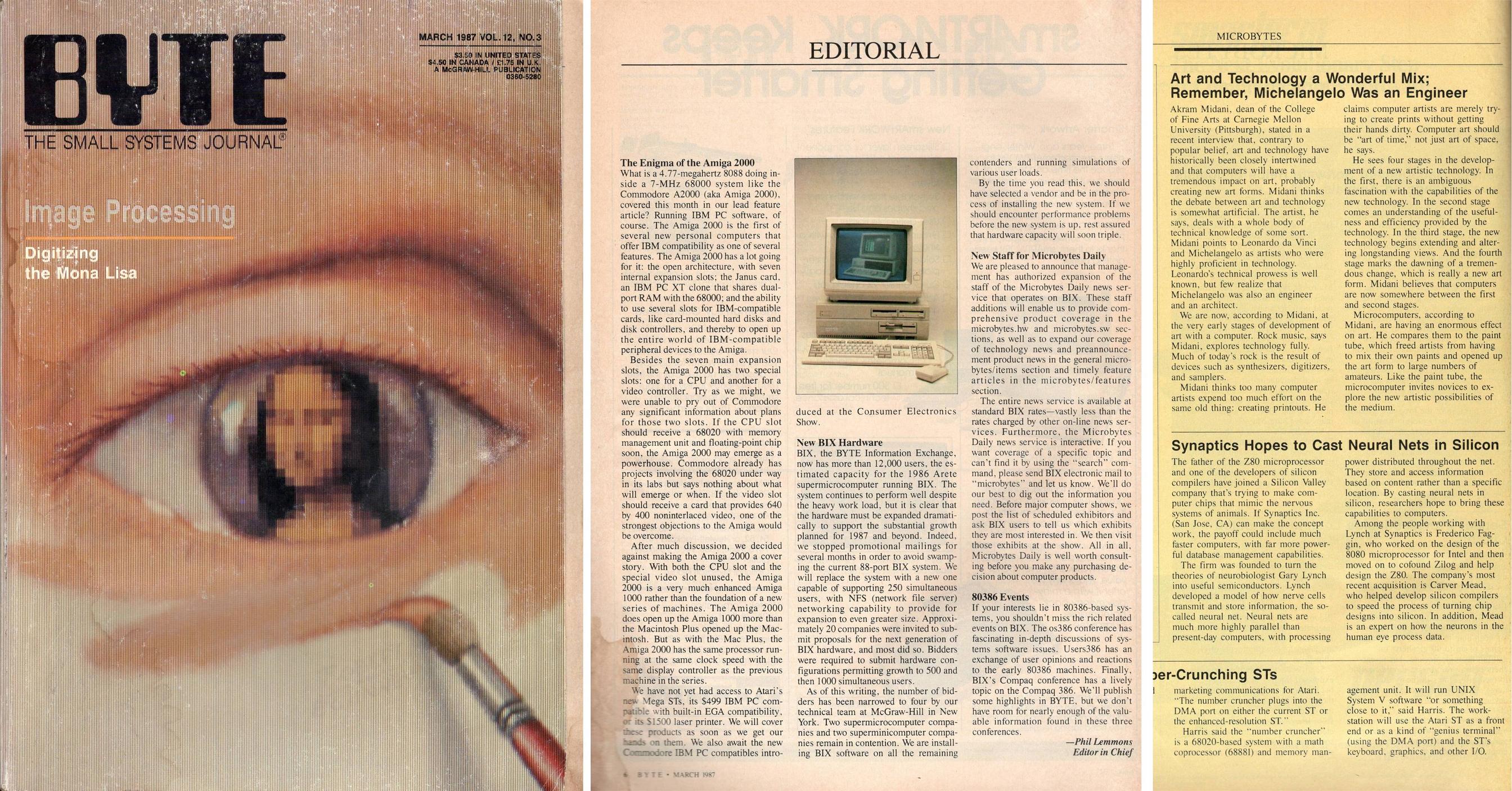
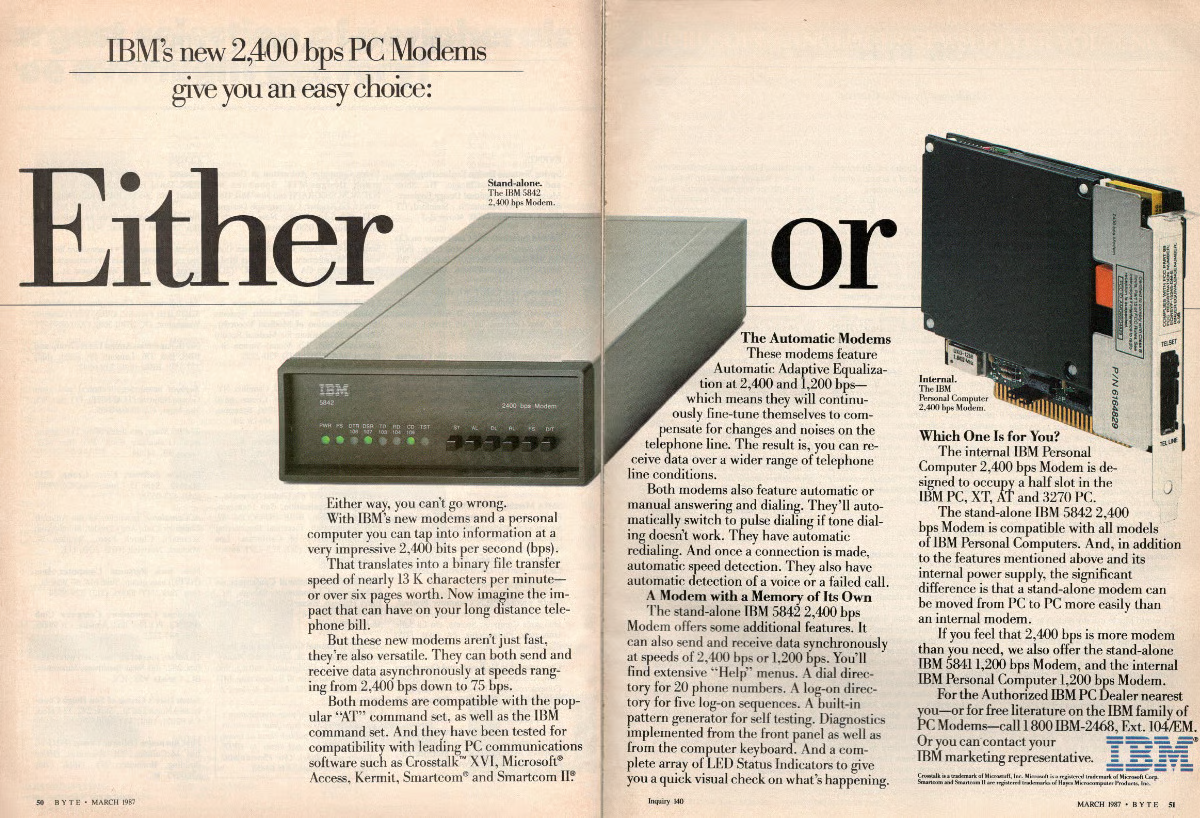
BYTE Magazine, March 1987.
And a great, double page ad from IBM from the same issue.
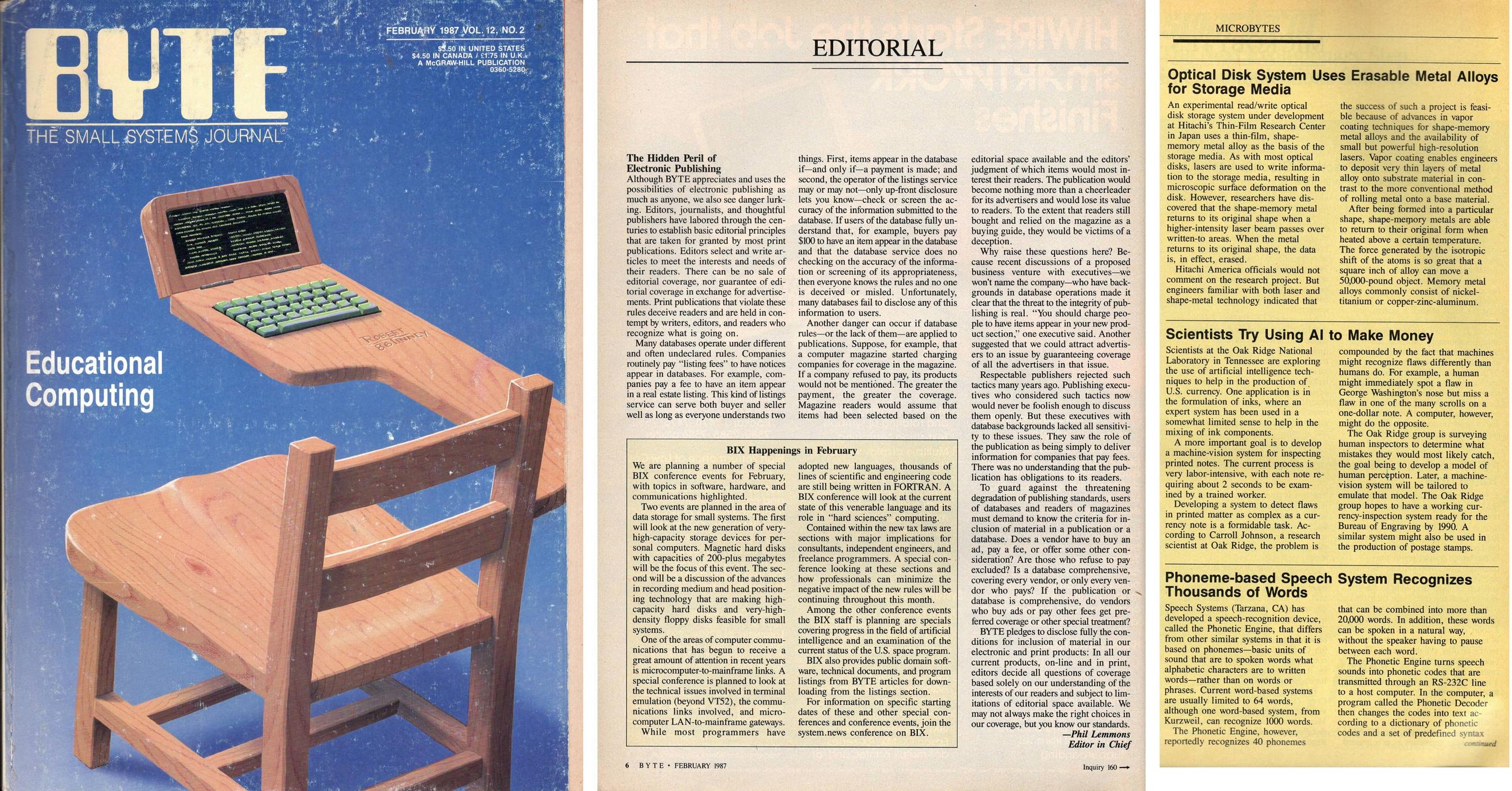
BYTE Magazine, February 1987. Cover, Editorial and a snippet from the "microbytes" page. Plus back page ad (RadioShack as usual).
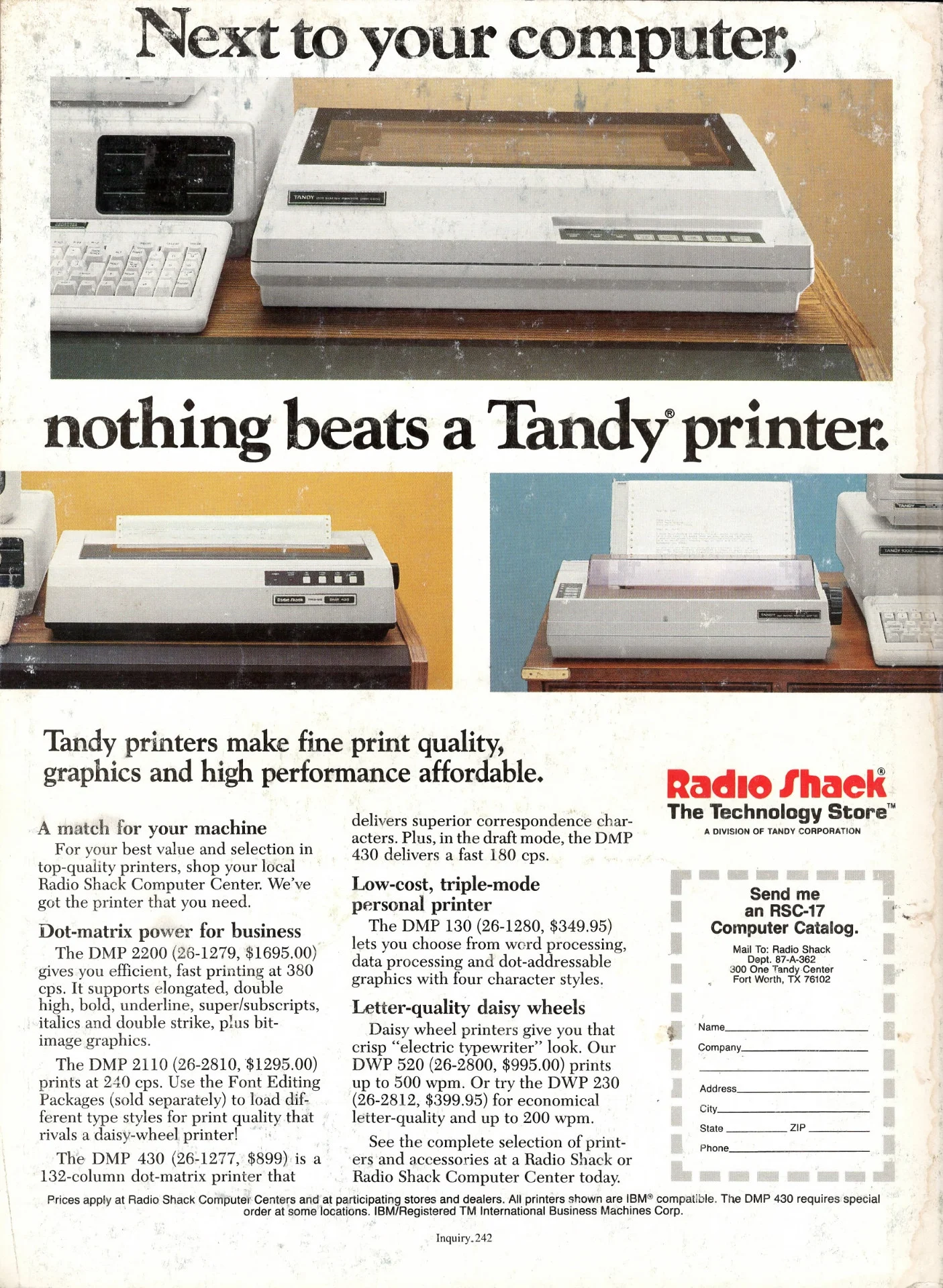
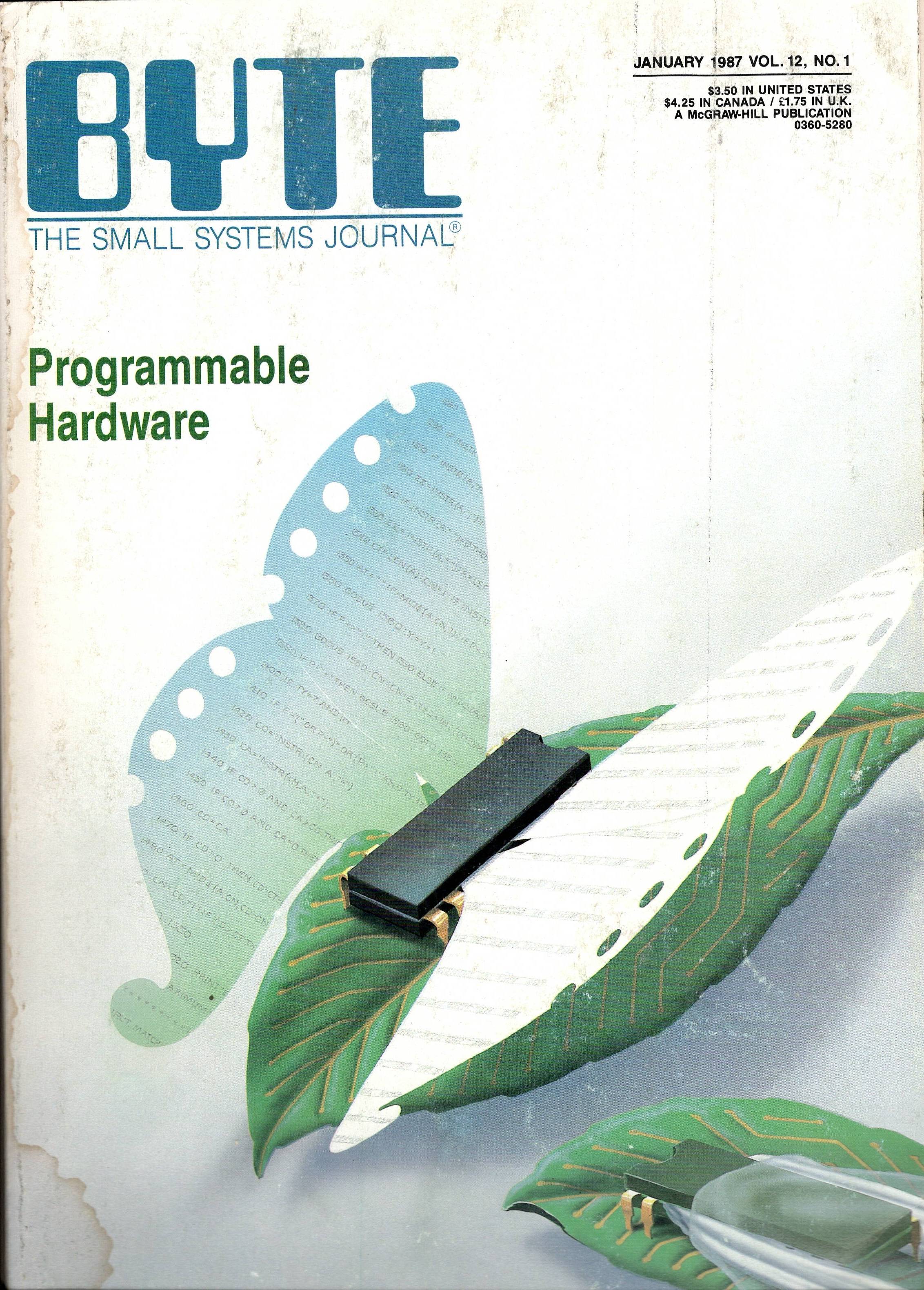
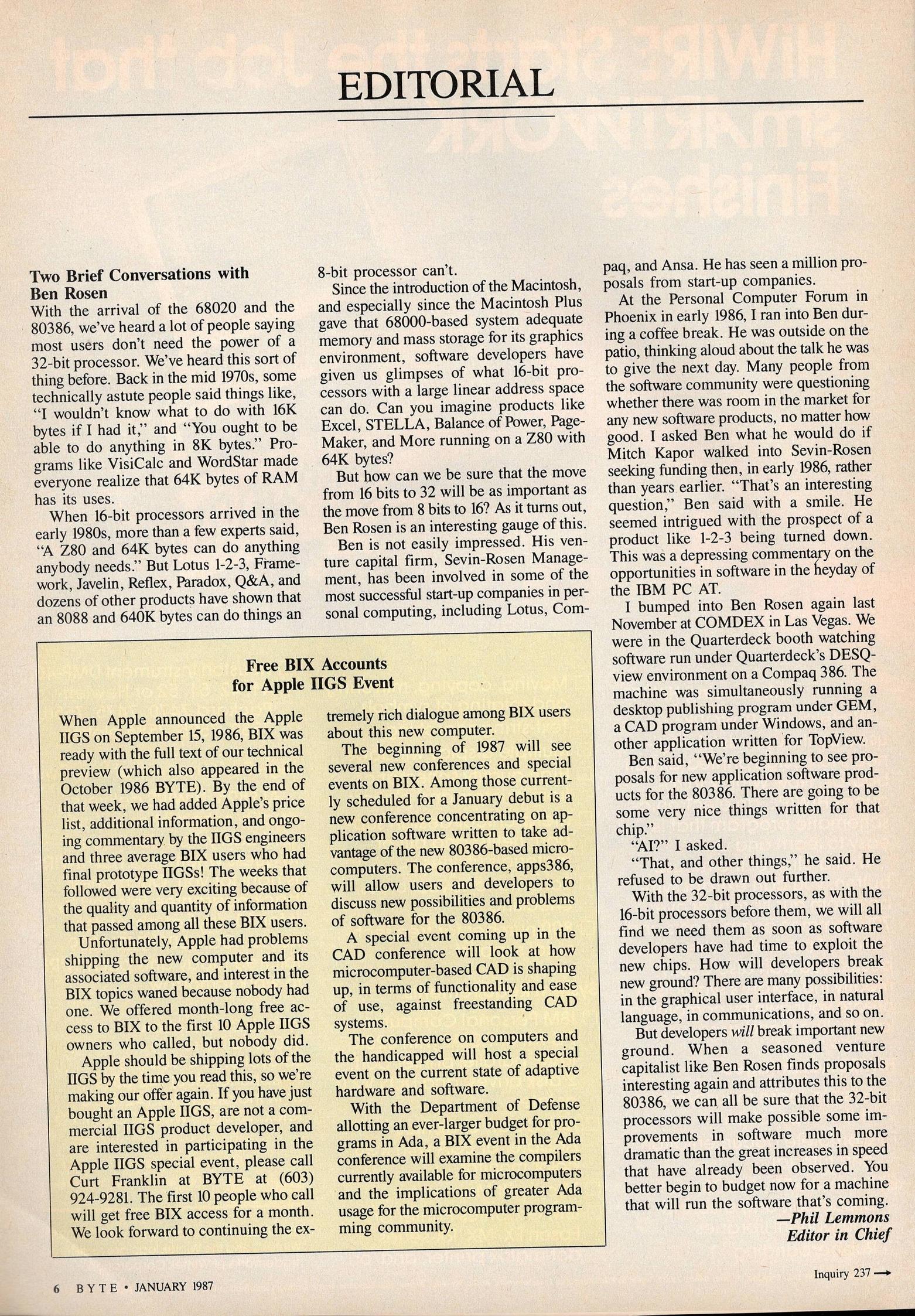
BYTE Magazine, January 1987. Cover and Editorial.
(I'll be posting every month, from 37 years ago if you like the idea)